
农业加工

Search documents
二季度A股或为震荡,关注红利与新能源板块
AVIC Securities· 2026-03-30 03:34
Market Outlook - The A-share market is expected to experience fluctuations in Q2, with a focus on dividend and new energy sectors[4] - High oil prices will likely remain a key trading theme in the coming months, influenced by ongoing Middle East conflicts[8] - The current market sentiment is cautious, with a conservative risk appetite anticipated in Q2[9] Economic Indicators - As of March 25, the probability of the Federal Reserve cutting interest rates in Q2 dropped from 45.7% to 0%, while the probability of maintaining rates increased from 54.3% to 88.2%[11] - The correlation between stock prices and earnings is at its highest in April, indicating a focus on sectors with strong fundamental performance[6] Sector Analysis - The new energy sector is poised to benefit significantly from the global energy transition, with China leading in renewable energy systems[16] - Industries such as fiberglass, batteries, computer equipment, software development, agricultural processing, cement, and energy metals are expected to show improved earnings in Q3 2025 and continued positive forecasts for 2026[6] Investment Recommendations - Investors are advised to focus on sectors with solid earnings support, particularly in the dividend and new energy sectors[4] - The commercial aerospace sector is gaining attention due to SpaceX's potential IPO, which could reshape valuation standards in the industry[24]
齐齐哈尔,如何找回失去的荣光?|故乡里的中国
Jing Ji Guan Cha Wang· 2026-02-22 05:09
Core Viewpoint - The article discusses the transformation of Qiqihar, a city that was once a significant industrial hub in China, highlighting its historical industrial decline and the emergence of new industries, particularly in agriculture and manufacturing, as it seeks to redefine its economic identity [2][8][30]. Industrial Transformation - Qiqihar was a key player in China's industrial landscape, particularly in heavy equipment manufacturing and special steel production, with its industrial output ranking among the top ten in the country during the 1980s [8][19]. - The city has experienced a significant population decline, losing nearly one million residents from 2010 to 2020, leading to visible signs of industrial decay, such as abandoned factories and closed shops [8][15]. - The local heavy machinery industry has seen a revival since 2000, with companies adapting to new market conditions and shifting from traditional manufacturing to specialized equipment production [20][21]. Agricultural Development - Qiqihar boasts fertile agricultural land, with a cultivated area of 35 million acres and a stable grain output exceeding 20 billion pounds annually, making it a crucial grain-producing region in China [24]. - The city has faced challenges with low-value agricultural production, where farmers often receive minimal profits from selling raw grains [24][30]. - Recent efforts have focused on enhancing agricultural value through processing, with local governments promoting strategies that connect farming with food processing and biological manufacturing [24][30]. Economic Resilience - The article emphasizes the resilience of Qiqihar as it navigates the loss of its former industrial glory and population, highlighting the emergence of new industries and the adaptation of existing ones to meet modern demands [31][33]. - The transformation reflects a broader economic logic where traditional industries must innovate and reposition themselves within the new market landscape, moving from production to providing comprehensive solutions [21][31].


注入源源不断红色动能,打造苏陕协作标杆园区
Xin Lang Cai Jing· 2026-02-10 22:10
Core Viewpoint - The Danyang Economic Development Zone Party Committee has strengthened cooperation with the Fuping High-tech Zone in Weinan City, Shaanxi Province, promoting industrial development through a model of integrating party building with industry and talent cultivation, resulting in significant achievements in the "District within a Park" initiative [1][2] Group 1: Industrial Development - The Danyang Economic Development Zone Party Committee has focused on characteristic industries, promoting deep processing and cultural tourism integration of products like goat milk cheese and persimmon [2] - The establishment of three major industrial clusters in dairy products, traditional Chinese medicine, and equipment manufacturing has been prioritized, with leading enterprises like Shengtang Dairy being introduced to form a complete industrial chain from breeding to sales [2] - In 2025, the park plans to introduce six new projects and has over 20 projects in reserve [2] Group 2: Community Engagement and Support - The Danyang Economic Development Zone Party Committee has initiated a "pairing" activity among towns, villages, and communities, establishing partnerships between three community party organizations and three village party organizations in Fuping [2] - A total of 3.882 million yuan has been allocated for over 20 livelihood projects, including the renovation of a convenience service center and the repair of water-damaged roads [2] - Community party organizations have actively participated in charitable activities, with significant donations made for cultural projects and infrastructure improvements [2]
统筹推动区域协调发展和城乡融合发展探索具有福建特色的共同富裕之路
Xin Lang Cai Jing· 2026-01-28 23:06
Core Viewpoint - The economic disparity between coastal cities and mountainous areas in the province presents an opportunity for resource integration and collaboration, with coastal cities' GDP being nearly six times that of mountainous areas [2] Group 1: Optimization of Collaboration - The proposal emphasizes the need to further optimize the collaboration layout between mountainous and coastal areas, particularly by enhancing the development capabilities of the Fuzhou and Xiamen-Zhangzhou-Quanzhou urban agglomerations [2] - It suggests the establishment of "industrial enclaves" to leverage the advantages of both the originating and receiving areas, facilitating a "two-way engagement" [2] Group 2: Industry Development Focus - The strategy calls for a more detailed approach to industry development in mountainous counties, focusing on targeted policies and "one county, one industry" initiatives [2] - For ecologically resource-oriented areas, it recommends innovating green financial tools such as carbon credits and water rights to stimulate the ecological consumption market [2] - For agriculture-driven regions, the focus should be on developing high-end processing industries like ready-to-eat agricultural products and biomedicine [2] - For industrial-driven areas, support is needed for establishing "innovation enclaves" from mountainous regions to coastal areas, promoting the transformation of research outcomes into production in mountainous areas [2] Group 3: Resource Activation - The proposal highlights the importance of effectively utilizing special funds to encourage investment from various sectors into regionally coordinated projects and public services [2] - It suggests revitalizing idle properties in mountainous areas, such as residential land, school buildings, and factories, to create a "scattered and blooming" development pattern [2] - The initiative includes talent development programs like "new farmers training," remote consulting, and migratory expert programs to achieve a balance between talent acquisition and income generation [2]

菏泽|菏泽“智改数转”打通竞速新赛道
Da Zhong Ri Bao· 2026-01-28 01:30
Core Viewpoint - The article highlights the transformation of traditional industries in Heze through "intelligent transformation and digital upgrading," showcasing how local enterprises leverage technology and innovation to enhance productivity and competitiveness [2][4]. Group 1: Company Innovations - Shandong Dazecheng Biotechnology Co., Ltd. has implemented an automated and digitalized production line for maltose, leading to improved production efficiency and product competitiveness. The company plans to invest an additional 2.45 billion yuan in new projects over the next three years, aiming for an output value exceeding 10 billion yuan [2]. - XinSen Apparel Co., Ltd. has adopted a fully automated production system, addressing traditional pain points such as low efficiency and high labor costs. This transformation has enabled the company to create a flexible manufacturing system that can quickly respond to market changes and consumer demands [3]. - Pingnai New Materials Technology (Shandong) Co., Ltd. focuses on high-performance coating materials, achieving breakthroughs in technology that replace imports and fill gaps in key areas. The company integrates digital management tools to enhance operational efficiency [4]. Group 2: Industry Trends - Heze is actively promoting the optimization and upgrading of traditional industries, with industrial technological transformation investments increasing by 9.1%. The coverage rate of transformation among regulated industrial enterprises has reached 85.5% [4]. - The city has seen a 22.4% increase in overall R&D investment, maintaining the highest growth rate in the province for two consecutive years. This reflects a strong emphasis on integrating technological and industrial innovation [4]. - The promotion of a "pay after use" mechanism for technological achievements has led to the emergence of three new specialized "little giant" enterprises and six provincial champions, marking significant progress in the local innovation landscape [4].
巴西新工业计划已提供贷款近6000亿雷亚尔
Shang Wu Bu Wang Zhan· 2026-01-01 16:46
Group 1 - The core point of the article is that Brazil's new industrial plan has provided preferential loans amounting to 588.4 billion reais from January 2024 to September 2025 [1] Group 2 - The infrastructure sector received the largest share of loans, totaling 254.4 billion reais [1] - The agricultural processing industry was allocated 125.7 billion reais [1] - Loans for digital transformation amounted to 98.9 billion reais [1] - The decarbonization and bioindustry sectors received 54.7 billion reais [1] - Defense sector loans totaled 29.6 billion reais [1] - The healthcare sector was allocated 24.9 billion reais [1]
云南省科学谋划“十五五”时期发展—— 发挥比较优势 谱写跨越新篇
Xin Lang Cai Jing· 2025-12-28 00:57
Core Viewpoint - Yunnan's economic development during the "14th Five-Year Plan" period focuses on leveraging comparative advantages to drive structural transformation and modernization, aiming for a total economic output exceeding 3 trillion yuan [1] Group 1: Comparative Advantages - Yunnan's development strategy emphasizes identifying and utilizing its unique comparative advantages to contribute to national economic goals [1][2] - The province is rich in natural resources, including biodiversity and mineral wealth, which serve as a strong foundation for economic growth [2] - Yunnan's electricity generation capacity exceeds 160 million kilowatts, with over 90% coming from green energy, supporting advanced manufacturing and international market access [2] Group 2: Geographical and Ecological Advantages - Yunnan serves as a key gateway for China's southwestern region and plays a vital role in the "Belt and Road" initiative, enhancing its connectivity with South Asia and Southeast Asia [3] - The province is actively improving its infrastructure, including the construction of major transportation corridors and the expansion of border trade zones [3] - Yunnan's diverse ecosystems and recent recognition of new ecological civilization demonstration zones highlight its commitment to green development [3] Group 3: Climate and Cultural Advantages - The province's unique climate allows for diverse agricultural production, including off-season crops and tourism opportunities [4] - Yunnan's rich cultural heritage, with numerous historical sites and ethnic festivals, enhances its appeal as a tourist destination [4] Group 4: Development Goals and Strategies - The provincial government aims to transform potential comparative advantages into real economic benefits by focusing on key industries such as clean energy, non-ferrous metals, and modern agriculture [5] - Yunnan is positioned to attract industrial transfers from other regions, supported by national policies encouraging development in the western provinces [6] Group 5: Reform and Efficiency - The province is implementing reforms to enhance market integration and improve operational efficiency, including a unified management system and measures to address local protectionism [7] - Efforts to streamline administrative processes and enhance service delivery are underway, contributing to a more business-friendly environment [7] Group 6: Future Outlook - Yunnan is committed to continuously leveraging its comparative advantages to achieve high-quality development and contribute to national economic goals [8]
精准服务小微经营主体(财经故事)
Ren Min Ri Bao· 2025-12-21 22:41
Group 1 - The core viewpoint of the articles highlights the positive impact of the Inner Mongolia Agricultural Bank's reforms on local agricultural enterprises, particularly in the starch production sector, facilitating better financial support and market expansion for farmers and companies [1][2][3] Group 2 - Inner Mongolia Huayou Starch Industrial Co., Ltd. has successfully increased its market presence and agricultural output by leveraging high-quality starch potato varieties, selling them at over 100 yuan per 100 kilograms [1] - The Inner Mongolia Agricultural Bank has raised its credit limit for the company to 60 million yuan, significantly aiding its cash flow needs for potato procurement [1] - The bank's total agricultural loan balance reached 220.9 billion yuan, with small and micro-enterprise loans amounting to 186.1 billion yuan as of the end of August [2] Group 3 - The reform of local financial institutions has improved their asset scale and risk management capabilities, allowing them to better serve small and medium enterprises and local industries [2][3] - The introduction of innovative financial products, such as patent pledge guarantees, has enabled companies to secure funding for technology development, exemplified by a 5 million yuan credit for potato deep processing technology [2] - The financial regulatory authorities are focusing on the prudent management of risks associated with small financial institutions, implementing tailored strategies for different regions to ensure effective and smooth reforms [3]
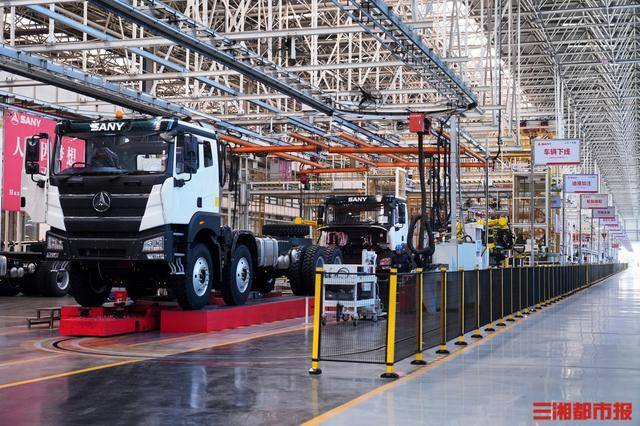
18分钟可造一台工程车,绝缘材料“冠军”领跑上市……硬核邵商“智造”突围|新征程,新样范
Sou Hu Cai Jing· 2025-12-03 13:54
Group 1 - The article highlights the resurgence of Shao merchants, emphasizing their entrepreneurial spirit and commitment to high-quality development in Hunan [1][7] - A significant event titled "New Journey, New Model" was held in Shaoyang to explore the practice of Chinese-style modernization and the high-quality development of the region [1][7] - The return of Shao merchants is characterized by their investment in technology, capital, and a strong emotional connection to their hometown, leading to new business opportunities [1][7][9] Group 2 - Hunan Guangxin Technology Co., Ltd. became the first company from Shaoyang to be listed on the Beijing Stock Exchange, marking a significant milestone for local enterprises [3][4] - The company has increased its R&D investment from 12.07 million yuan to 15.48 million yuan from 2022 to 2024, achieving a compound annual growth rate of 13.26% [3][4] - SANY Special Vehicle Co., Ltd. has transformed its production process, reducing the time to manufacture a customized engineering vehicle to just 18 minutes, while also achieving a 120% increase in capacity and a 30% reduction in manufacturing costs [4][5] Group 3 - The article discusses the entrepreneurial journey of notable Shao merchants, such as Zeng Xiaoshan, who founded the first private enterprise in Hunan and later established a major aluminum production company [5][6] - The second-generation entrepreneur Dai Runping returned to his hometown to enhance the local agricultural industry, specifically focusing on improving the quality and marketability of New Ning navel oranges [6][7] - The return of Shao merchants has led to the establishment of 101 new registered enterprises in Shaoyang in 2023, with an investment of 35.4 billion yuan, exceeding the annual target [7][8] Group 4 - The article emphasizes the cultural and emotional ties that drive Shao merchants to return to their roots, contributing to local economic development [8][9] - The Shao merchant spirit is described as a blend of resilience and innovation, which has enabled them to succeed in various industries while maintaining a commitment to their hometown [9]

农业银行梅州分行 金融活水赋能“百千万工程”提速增效
Zheng Quan Ri Bao Zhi Sheng· 2025-11-30 07:06
Core Insights - The "Hundred Million Project" is being effectively implemented in Meizhou, Guangdong, with Agricultural Bank of Meizhou Branch focusing on serving this initiative to promote local economic development through financial empowerment [1][2]. Group 1: Financial Support for Local Industries - Agricultural Bank of Meizhou Branch is targeting financial needs of local industries, particularly in advanced manufacturing sectors such as copper foil and automotive parts, to strengthen the county's economic foundation [2][3]. - The bank successfully provided a 10 million yuan "credit + guarantee" working capital loan to Meizhou Jinyou Kang Health Industry Technology Co., addressing their financing challenges due to lack of collateral [2]. Group 2: Support for Agricultural Development - The bank has established a comprehensive financial service system covering the entire agricultural value chain, including planting, processing, storage, marketing, and cold chain logistics, to enhance local specialty products [3]. - A case study of a local grapefruit farmer illustrates the bank's commitment to rural revitalization, as they provided a 200,000 yuan unsecured loan to support agricultural upgrades, significantly boosting the farmer's income prospects [4][5]. Group 3: Innovative Financial Services - Agricultural Bank of Meizhou Branch is innovating its services to meet diverse financial needs, establishing a "green channel" for credit approval to enhance efficiency for key projects and clients [7]. - The bank is also expanding its outreach through mobile banking and a rural financial service team, allowing farmers to access various banking services conveniently [7]. Group 4: Future Plans - The bank plans to continue increasing credit investments and optimizing financial service quality to further integrate into the "Hundred Million Project" [8].
