
粮食抗逆育种

Search documents
控制大麦种子休眠时间“开关”找到
Ke Ji Ri Bao· 2025-12-26 00:44
Core Insights - The research team from the Chinese Academy of Sciences has uncovered the genetic mechanisms behind barley seed dormancy, which is crucial for developing resilient crops and ensuring global food security [1][2] - The study highlights the dual regulatory mechanism of the MKK3 gene, which controls the dormancy period of barley seeds, impacting agricultural practices and crop yields [1] Group 1: Research Findings - Seed dormancy is defined as the biological characteristic where seeds do not germinate despite suitable conditions, which can lead to either premature germination or delayed planting [1] - The MKK3 gene regulates seed dormancy through a combination of gene copy number and kinase activity, where increased gene copies and stronger kinase activity correlate with reduced dormancy [1] Group 2: Global Implications - Analysis of over 1,000 barley seed samples revealed that different regions have selected various MKK3 gene types based on climate and agricultural needs, such as low-activity types in East Asia for resistance to ear germination and weak dormancy types in Northern Europe for brewing quality [2] - The findings provide actionable molecular modules for breeding resilient crops, allowing for fine-tuning of seed dormancy through genetic modifications, which is essential for sustainable agriculture under changing global climate conditions [2]
【中国新闻网】中外合作破解大麦种子休眠机制 青藏高原青稞拥有全球最强活性
Zhong Guo Xin Wen Wang· 2025-12-17 02:13
Core Viewpoint - Chinese scientists, in collaboration with global research institutions, have discovered that a gene named MKK3 regulates the dormancy rhythm of barley seeds across different climate zones, with the highest activity found in Tibetan barley, providing insights for sustainable agricultural systems and food security in the face of climate change [2][3]. Group 1: Research Findings - The study reveals that seed dormancy is a critical trait modified during the domestication of crops, acting as a double-edged sword where short dormancy can lead to premature germination and reduced yield, while long dormancy can affect planting timing and seed uniformity [3][4]. - The MKK3 gene controls seed dormancy traits in barley through dual regulation, where increased gene copy number and stronger kinase activity both contribute to weaker dormancy [4][5]. - The research analyzed over 1,000 barley seed samples globally, finding that climate and agricultural needs influence the selection of MKK3 types, with different regions favoring varying dormancy characteristics [4]. Group 2: Implications for Agriculture - The study highlights unique agricultural practices in the Tibetan Plateau, where barley is harvested before full maturity to adapt to extreme climate conditions, ensuring rapid seed activation post-sowing [4]. - The findings provide actionable molecular modules for breeding resilient crops, allowing for fine-tuning of seed dormancy through gene editing techniques, which is crucial for sustainable agricultural development under global climate change [5].

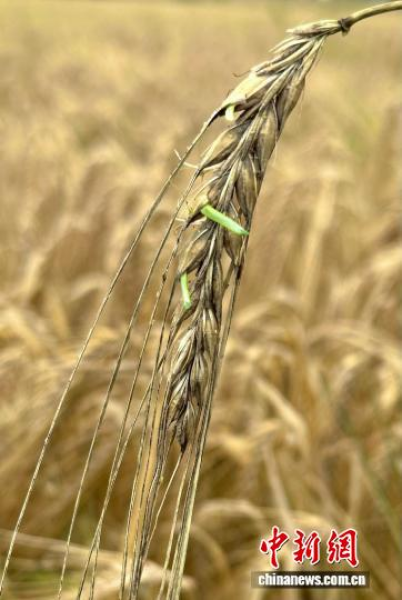
【人民网】研究破解种子“睡眠”时长奥秘
Ren Min Wang· 2025-12-17 02:13
Core Insights - The article discusses the challenges modern agriculture faces due to global population growth and climate change, particularly the economic losses from crop failures caused by premature germination, which can reach billions of dollars annually [1] - A collaborative research effort involving top global institutions has identified the genetic mechanisms behind barley seed dormancy, providing potential solutions for sustainable agricultural systems and food security in the face of climate change [1][4] Group 1: Genetic Mechanisms - The MKK3 gene plays a crucial role in regulating barley seed dormancy through a dual mechanism of "copy number + kinase activity," influencing the dormancy duration based on its genetic variations [2] - The presence of 1 to 15 tandem repeats of the MKK3 gene correlates with the expression levels and dormancy characteristics of barley seeds, where higher copy numbers and stronger kinase activity lead to weaker dormancy [2] Group 2: Adaptation to Climate - The research team analyzed over 1,000 barley seed samples to understand the evolutionary patterns of MKK3, revealing that climate and agricultural needs dictate the selection of MKK3 types across different regions [3] - In East Asia, a preference for "low activity mode" MKK3 allows for longer dormancy to avoid issues from humid conditions during harvest, while in the Tibetan Plateau, the highest activity mode of MKK3 has been selected to ensure rapid germination despite extreme conditions [3] Group 3: Implications for Agriculture - The findings provide actionable molecular modules for breeding resilient crops, allowing for adjustments in seed dormancy through genetic editing techniques, which can support sustainable agricultural development under changing climate conditions [4]

科学家破解大麦种子休眠关键机制 助力应对气候与粮食挑战
Yang Shi Xin Wen· 2025-12-15 03:20
Core Insights - The research team from the Chinese Academy of Sciences has identified the key mechanism behind barley seed dormancy, which could lead to sustainable high-performance agricultural systems through genomic design breeding, addressing food security challenges posed by extreme climate change and population growth [1][2]. Group 1: Seed Dormancy Mechanism - Seed dormancy allows seeds to remain inactive under suitable germination conditions until the environment is safe for germination, a critical trait modified during crop domestication [1]. - The MKK3 gene plays a crucial role in controlling the dormancy rhythm of barley across different climate zones through its copy number and amino acid variations affecting kinase activity [1][2]. - The research analyzed over 1,000 barley seed samples to understand the spatiotemporal evolution of MKK3, revealing that climate and agricultural demands influence the selection of MKK3 types by humans [1]. Group 2: Adaptation in High-Altitude Regions - Qingke barley has the highest MKK3 activity globally, exhibiting the weakest dormancy and strongest germination ability, which is crucial for adapting to the extreme climate of the Tibetan Plateau [2]. - Local agricultural practices involve harvesting barley before full maturity to mitigate low-temperature issues during the harvest season, followed by post-harvest treatments to facilitate winter storage and consumption [2]. - The dual regulatory mechanism of MKK3 provides actionable molecular modules for breeding resilient crops, supporting sustainable agricultural development under current global climate change conditions [2]. Group 3: Regional Variations in Dormancy - Short dormancy periods can lead to premature germination during continuous rainy weather, reducing yield and quality, while excessively long dormancy can affect replanting timing and seedling uniformity [3]. - The East Asian monsoon region favors a "low activity mode" of MKK3 for longer dormancy to avoid germination issues caused by humid and hot conditions during harvest [3]. - In contrast, the Tibetan Plateau's naked barley (Qingke) has adopted the "highest activity mode" globally to ensure rapid activation of seeds after early harvesting [3].