粮食收储

Search documents
大国粮仓家底更厚实
Jing Ji Wang· 2026-01-04 02:16
Group 1 - By 2025, various enterprises in China are expected to accumulate grain purchases reaching 830 billion jin, maintaining over 800 billion jin for three consecutive years [1] - As of the end of 2025, the national grain standard storage capacity is projected to exceed 730 million tons [1] - The national grain and material reserves work conference highlighted the robust state of China's grain reserves [1] Group 2 - In 2025, market-oriented grain purchases are expected to exceed 90%, improving grain circulation efficiency [2] - Policy-based grain storage measures were implemented in five provinces for wheat and six provinces for rice to stabilize market prices, with around 45 billion jin of minimum purchase prices for both crops [2] - The government aims to enhance farmers' confidence by ensuring that grain can be sold at good prices [2] Group 3 - The construction of grain storage facilities has been strengthened, with advancements in green storage technologies and increased storage capacity [3][4] - New storage technologies, such as internal circulation temperature control and carbon dioxide atmosphere storage, are being adopted to improve grain preservation [4] - The number of high-quality grain storage facilities is increasing, enhancing the overall storage conditions for grain [5] Group 4 - China's grain emergency guarantee system is being strengthened in response to frequent extreme weather events [6] - A four-level grain emergency plan system has been established, with regional emergency centers being developed across various key areas [7] - National and provincial-level grain emergency guarantee enterprises are being identified and supported to ensure rapid and efficient responses [8]
新华鲜报|2025,大国粮仓家底更厚!
Xin Lang Cai Jing· 2025-12-31 14:51
Core Insights - The article highlights the robust state of China's grain storage and procurement system, emphasizing the significant achievements in grain acquisition and storage capacity by 2025 [1][8]. Group 1: Grain Acquisition and Market Support - By 2025, various enterprises in China are expected to accumulate grain purchases reaching 830 billion jin, maintaining a level above 800 billion jin for three consecutive years [1] - The market-oriented grain acquisition strategy has been effective, with over 90% of grain being procured through market mechanisms, enhancing the efficiency of grain circulation [2] - Policy measures have been implemented to support grain prices during harvest seasons, including the activation of minimum purchase price policies for wheat and rice in several provinces, leading to the acquisition of approximately 45 billion jin of these grains [2] Group 2: Grain Storage Infrastructure - The construction of grain storage facilities has been prioritized, with the total storage capacity exceeding 730 million tons by the end of 2025, reflecting a significant increase in both scale and functionality [1][4] - Advanced storage technologies are being adopted, such as internal circulation temperature control and carbon dioxide gas storage techniques, which enhance the preservation of grain quality [4][5] Group 3: Emergency Grain Security - A comprehensive grain emergency response system has been established, comprising national, provincial, municipal, and county levels, to address challenges posed by extreme weather events [6][7] - The government is actively promoting the establishment of regional grain emergency centers and has designated key enterprises as national grain emergency support entities, ensuring rapid response and effective resource allocation [8]
秋收一线观察 | 告别“地趴粮” 住进“好房子” 各地秋粮收储有“粮”方
Yang Shi Wang· 2025-11-06 04:06
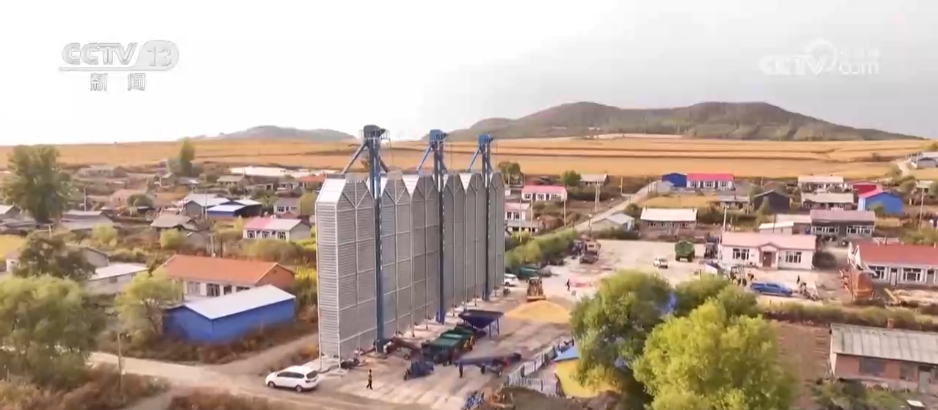
Group 1: Grain Storage Innovations - The traditional method of storing harvested corn, known as "ground grain," has been replaced by modern "grain apartments" in Qitaihe, Heilongjiang, enhancing storage quality and reducing spoilage [1][6] - The new storage facilities, or "grain apartments," are designed with durable materials and efficient ventilation systems, allowing for rapid moisture reduction in corn from 17%-18% to below standard levels within 5-7 days [8][10] - Qitaihe has constructed 18 drying warehouses this year, with a total storage capacity of nearly 4,000 tons, aimed at safeguarding food security and reducing losses [10] Group 2: Alternative Storage Solutions - In Henan, farmers have adopted "sunshine rooms," which are ventilated storage cages that elevate corn off the ground, preventing moisture damage and improving storage efficiency [11][14] - These "sunshine rooms" can hold over three times the amount of corn compared to traditional methods, significantly enhancing space utilization [18] - The reduction of grain loss by even 1% can equate to billions of pounds of grain saved, highlighting the importance of these innovative storage solutions in the grain supply chain [20] Group 3: Drying Technologies - In Shaanxi, drying towers have become essential for managing wet corn, with temperatures reaching 120℃-140℃ to quickly reduce moisture content from over 35% to below 23% [21][23] - The drying process includes a two-step method, where corn is first rapidly dried and then subjected to a slower, lower-temperature drying to meet national standards [23][25] - The drying facilities operate continuously, capable of processing 400 tons of corn daily, ensuring that small farmers can also access timely drying services [25][26]

粮库“吃得饱” 粮食住“空调房” 四川不断完善粮食收储之路 让每一捧好粮度过“清凉一夏”
Si Chuan Ri Bao· 2025-07-20 01:59
Core Insights - The article discusses the efforts of Sichuan province to enhance grain storage and supply, focusing on the new strategies for grain procurement and storage during the summer harvest season [3][4][5]. Group 1: Grain Procurement - Sichuan has allocated 2.8 billion yuan for grain procurement, extending its reach to local farmers [4]. - The province's summer grain production reached 4.762 million tons, an increase of 112,000 tons year-on-year, with wheat yields per acre rising by 8.4 kg, the highest in the country [4][5]. - Local service centers play a crucial role in facilitating grain sales, providing real-time price updates and quality testing services to farmers [5]. Group 2: Grain Storage Capacity - Sichuan has freed up over 1.27 million tons of storage capacity through various measures, including the rotation of local reserve grains [7][9]. - New high-standard grain storage facilities are set to be completed soon, including a center in Dayi County with a capacity of 52,000 tons and another project in Chongzhou with a planned capacity of 150,000 tons [9]. Group 3: Innovative Storage Solutions - The Qingbaijiang National Grain Reserve Warehouse maintains an optimal storage temperature of 20 degrees Celsius, utilizing a solar power system to support its cooling needs [10][11]. - The province has implemented a smart circulation system for temperature control, significantly reducing electricity costs for grain storage [11].