系统级设计

Search documents
万亿美金芯时代提前到来,STCO承载英伟达“极限协同”下的物理重压?
半导体行业观察· 2026-03-29 01:46
Core Insights - The article discusses the significant transformation in the semiconductor industry driven by AI computing power, predicting that the "trillion-dollar chip era" may arrive by the end of 2026, ahead of the previously expected 2030 timeline [4][5] - Three major trends are identified: the rise of AI computing power, a storage revolution, and technology-driven industrial upgrades [5][6] Group 1: AI Computing Power - By 2026, global spending on AI infrastructure is expected to reach $450 billion, with inference computing power surpassing 70% for the first time, leading to strong demand for GPUs, HBM, and high-speed network chips [5][6] - The industry is experiencing a shift from "pursuing process miniaturization" to "pursuing system integration" as the demand for inference computing power increases [4][5] Group 2: Storage Revolution - Storage is becoming a core strategic resource for AI infrastructure, with global storage output projected to exceed wafer foundry output for the first time, marking it as the primary growth driver in the semiconductor sector [5] Group 3: Technology-Driven Industrial Upgrades - As the 2nm and below process approaches physical limits, advanced packaging is becoming strategically important, driving industry upgrades through a dual focus on "advanced processes + advanced packaging" [5][6] - The need for a new "operating system" to manage the complexities of the transition from chips to data centers is emphasized, as traditional methods are insufficient to meet the demands of AI [6][8] Group 4: System-Level Design - The concept of "Extreme Co-design" is emerging as a new paradigm in AI hardware development, shifting the focus from efficiency to survival as the industry faces unprecedented complexity [8][9] - The traditional EDA tools are becoming inadequate, necessitating a new approach called STCO (System Technology Co-Optimization) to address the industry's challenges [11][13] Group 5: STCO Strategy - STCO aims to redefine the design perspective from "IC" to "System," focusing on system interconnectivity rather than just individual chips [13] - The core value of STCO lies in "virtual rehearsal," allowing for costly physical trial-and-error to be shifted to virtual spaces, ensuring designs are correct on the first attempt [14] - EDA vendors are evolving from mere tool providers to becoming ecological platforms that connect chip design, wafer manufacturing, packaging testing, and system vendors [15] Group 6: Conclusion - The article concludes that mastering system-level design capabilities will be crucial for companies to establish a solid physical foundation for the AI era, as the industry transitions from "single chip" to "computing factories" [17][18]



AI算力逼疯芯片设计!国产EDA龙头芯和彻底彻底升维系统级
是说芯语· 2026-03-25 01:05
Core Viewpoint - The semiconductor industry is undergoing a significant transformation, with companies like Chip and Semiconductor redefining their roles from traditional EDA tool providers to comprehensive system design leaders, addressing the challenges posed by the AI era's demand for increased computational power [1][3]. Group 1: Industry Transformation - The traditional reliance on Moore's Law for semiconductor performance is becoming obsolete as AI models require exponentially more computational power, necessitating a shift from single-chip performance to system-level integration [3][5]. - The industry is moving towards a focus on system-level design, where factors such as advanced packaging, heterogeneous integration, and overall system architecture must be considered to avoid critical design failures [3][5]. Group 2: Chip and Semiconductor's Strategic Shift - Chip and Semiconductor's brand upgrade marks a transition from being a mere EDA tool provider to a system design navigator, expanding its services to cover advanced packaging, AI servers, and autonomous driving, thus tapping into a growing market driven by AI hardware proliferation [5][6]. - The company aims to enhance design accuracy and reduce costs by utilizing its unique multi-physical field coupling simulation engine, which allows for risk assessment in a virtual environment, thereby minimizing costly errors during production [6][7]. Group 3: Domestic EDA Landscape - The domestic EDA market has seen significant growth, with the number of companies increasing from a handful to over 120, and the domestic market share rising from 5% in 2019 to approximately 25% currently, with expectations to exceed 40% by 2026 [9][11]. - Despite the growth, many domestic EDA firms have focused on traditional chip design tools, leaving a gap in system-level EDA solutions, which Chip and Semiconductor aims to fill, positioning itself against established foreign competitors [9][11]. Group 4: Future Outlook - The transition to a system design navigator is not only a milestone for Chip and Semiconductor but also signals a broader shift in the domestic EDA industry from a follower to a leader in the post-Moore's Law era [11][12]. - By leveraging its STCO methodology and comprehensive system-level EDA platform, Chip and Semiconductor is poised to assist domestic chip and AI hardware companies in mitigating design risks and reducing R&D costs, thereby enhancing their competitiveness in the global AI computing landscape [12].

行业聚焦:全球光学设计软件行业头部企业市场份额及排名情况(附厂商名单)
QYResearch· 2025-12-02 04:37
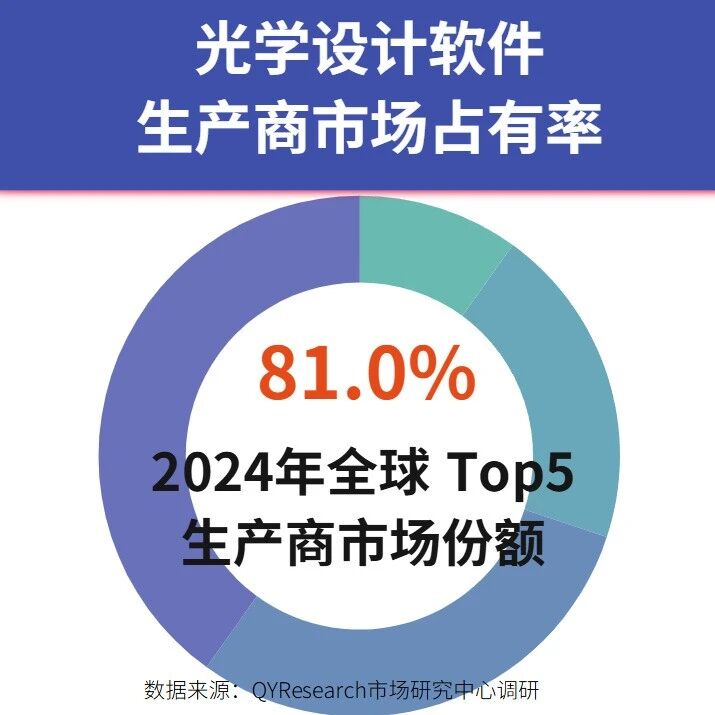
Core Insights - The global optical design software market is projected to reach $400 million by 2031, with a compound annual growth rate (CAGR) of 8.6% in the coming years [5]. - The market is characterized by a strong presence of leading manufacturers, with the top five companies holding approximately 81.0% of the market share in 2024 [9]. - The primary product type is locally deployed software, accounting for about 85.9% of the market, while optical instruments represent the main application area, capturing around 65.1% of the demand [12][14]. Market Trends - The optical design software industry is increasingly integrating with the optoelectronic sector, driven by the rapid growth in demand for high-performance optical systems in emerging fields such as 5G communication, autonomous driving, AR/VR, and biomedical imaging [17]. - Multi-physics simulation and system-level design are becoming mainstream, as future optical systems require integration of optical, thermal, structural, and electrical simulations [18]. - The adoption of intelligent and automated design optimization is accelerating, with AI technologies enabling features like automatic layout and parameter optimization, significantly reducing product development cycles [19]. - Cloud collaboration and ecosystem development are evolving, with a shift from local installations to cloud-based solutions that support multi-user collaboration and on-demand payment models [21]. Key Drivers - The demand for optical design software is expanding from traditional optical systems to comprehensive optoelectronic system designs, influenced by advancements in autonomous driving, AR/VR, and other high-tech applications [22]. - Multi-physics coupling and cross-platform collaboration are becoming standard, as applications in high-power lasers and aerospace require integrated design processes that assess the impact of various physical factors on imaging quality [23]. - The industry is increasingly leveraging intelligent optimization and automation to enhance efficiency in complex design scenarios, allowing engineers to focus on defining requirements and evaluating solutions [24]. - The transition to cloud-based deployment and the establishment of integrated service ecosystems are being driven by the need for localized support and collaboration across different regions [25]. Market Challenges - The optical design software market is characterized by high entry barriers and strong user loyalty, making it difficult for new entrants to compete with established players [26]. - There is a scarcity of skilled talent capable of utilizing optical design software effectively, which limits software utilization rates and affects renewal intentions [27]. - Localized demands coexist with competition from international giants, creating challenges for domestic software providers in meeting both global standards and local expectations [28]. - Issues related to software piracy and the need for ecosystem development are pressuring profit margins, as customers increasingly seek comprehensive solutions that combine software with databases and support services [29].
EDA三巨头为何集体押注汽车系统仿真?
3 6 Ke· 2025-07-23 00:57
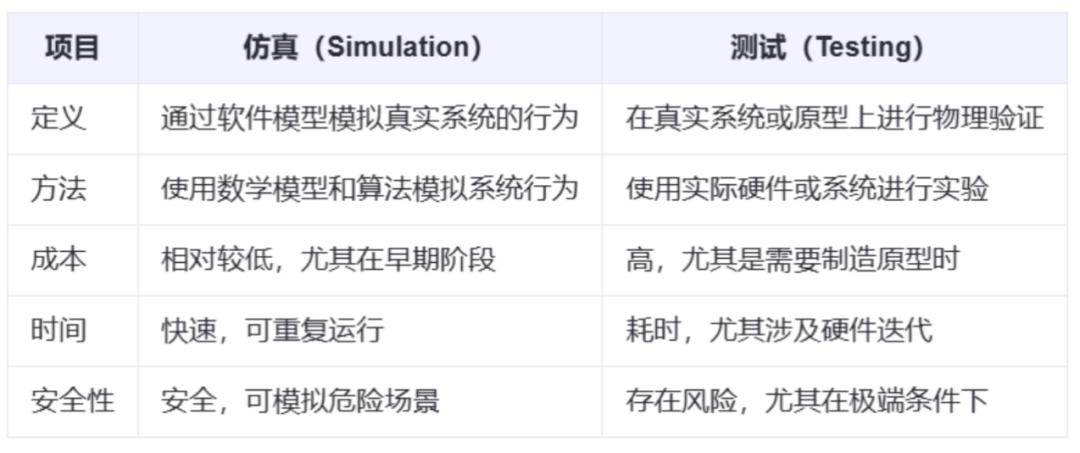
Core Insights - The automotive industry is rapidly transitioning towards electrification, intelligence, and autonomous driving, creating unprecedented opportunities for the Electronic Design Automation (EDA) industry [1] - Major EDA players like Synopsys, Siemens, and Cadence are competing fiercely in the automotive electronics sector through technological innovation and strategic acquisitions [1][25][38] - The complexity and safety requirements of automotive electronic systems necessitate a closer relationship between chip design and system-level development, leading to increased demand for simulation and verification [3][41] Group 1: Mergers and Acquisitions - Synopsys announced the completion of a $35 billion acquisition of Ansys, marking a significant milestone in the EDA industry's shift towards system-level design [8][18] - Siemens completed a $10.6 billion acquisition of Altair Engineering to enhance its system-level software capabilities in the automotive electronics field [25][26] - Cadence acquired BETA CAE Systems for $1.24 billion, expanding its presence in automotive and aerospace simulation [38][39] Group 2: Importance of Simulation - Simulation is increasingly critical in automotive electronics due to the rapid evolution of technologies like autonomous driving and battery management systems [3][6] - Compared to physical testing, simulation is more cost-effective, faster, and safer, allowing for early-stage verification and rapid iteration [4][5][6] - Simulation can cover a broader range of test cases and scenarios, which is essential for complex systems like autonomous vehicles and battery management systems [5][6] Group 3: Market Growth and Trends - The total addressable market (TAM) for Synopsys is expected to grow 1.5 times to approximately $31 billion post-acquisition of Ansys, driven by the increasing demand for electronic and physical integration [20] - The combined market for system-level simulation and EDA revenue is projected to equalize, particularly in aerospace, industrial, automotive, and server markets [24] - The automotive electronics sector is experiencing unprecedented development cycles, necessitating a shift towards system-level simulation and virtual testing [41]