素食文化

Search documents
研判2025!一文读懂大豆蛋白行业市场现状及未来发展前景(智研咨询发布)
Xin Lang Cai Jing· 2025-11-27 12:27
Core Insights - The article highlights the growing recognition of plant-based proteins, particularly soybean protein, as a healthier alternative to animal protein, driven by the increasing popularity of vegetarianism and clean eating trends [2][3] - The soybean protein market in China is projected to reach a scale of 16.161 billion yuan in 2024, reflecting a year-on-year growth of 4.47% [2] Industry Overview - Proteins are essential for life, composed of amino acids, with 20 types present in the human body. Among these, 8 are essential amino acids that must be obtained from food [3] - Plant-based proteins, particularly from grains and legumes, are lower in cholesterol and saturated fats, making them suitable for individuals with liver diseases and for preventing cardiovascular diseases [3] Soybean Protein Characteristics - Soybean protein, extracted from soybeans, contains nearly 20 types of amino acids, including essential amino acids and histidine, which is crucial for infant health [5] - It possesses various functional properties such as gelation, water absorption, oil absorption, solubility, foaming, and dispersion, making it widely applicable in the food processing industry [5] Industry Barriers to Entry - The food safety quality is strictly regulated by national laws and policies, requiring production enterprises to have a sound management system and pass rigorous inspections to obtain necessary licenses [7] - The processing technology and craft of soybean protein significantly influence its quality, taste, and nutritional value, creating high barriers for new entrants lacking technical expertise [7] Market Policies - The Chinese government has implemented various policies to enhance soybean production and ensure quality control, including the "Implementation Opinions on Promoting Rural Revitalization" and "Food Safety Risk Control Lists" [9][11] - These policies aim to increase self-sufficiency in soybean supply and enforce strict production and safety standards for soybean protein [9] Industry Chain - The soybean protein industry consists of upstream (soybean planting, procurement, production equipment), midstream (soybean protein production), and downstream (various applications including meat processing, snacks, and nutritional products) sectors [12] - In meat processing, soybean protein can significantly enhance texture and nutritional balance by forming gels and emulsions with water and fats [12] Cost Structure - The production cost of soybean protein is primarily driven by direct materials, accounting for over 60% of total costs, with soybean being the key raw material [12] - In 2023, China's soybean planting area reached 10,473.84 thousand hectares, with a production of 20.8417 million tons, indicating a solid foundation for the soybean protein industry [12]

研判2025!中国大豆蛋白行业进入壁垒、市场政策、产业链、市场规模、竞争格局及发展趋势分析:市场需求旺盛[图]
Chan Ye Xin Xi Wang· 2025-11-17 02:00
Core Insights - The plant protein industry, particularly soybean protein, is experiencing rapid growth due to increasing awareness of health and nutrition, with the market size in China projected to reach 16.161 billion yuan in 2024, a year-on-year increase of 4.47% [1][10]. Overview - Protein is essential for life and is composed of amino acids, with 20 types in total. Among these, 8 are essential and must be obtained from food. Plant proteins, particularly from beans, are lower in cholesterol and saturated fats, making them suitable for individuals with liver diseases and for preventing cardiovascular diseases [2][4]. Industry Barriers - The soybean protein industry is subject to strict regulations and quality control measures, including licensing and traceability requirements. New entrants face high technical barriers due to the established production processes and technology of existing players [6][7]. Market Policies - The Chinese government has implemented various policies to enhance soybean self-sufficiency and ensure quality control in soybean protein production. These policies promote the development of the soybean industry and require strict adherence to safety and quality standards [8]. Industry Chain - The soybean protein industry encompasses upstream activities such as soybean cultivation and procurement, midstream production, and downstream applications in various sectors including meat processing, snacks, dairy, and pharmaceuticals. The cost structure indicates that direct materials account for over 60% of production costs, with soybean being the primary raw material [8][9]. Current Development - Soybean is recognized for its high protein content and nutritional value, with various health benefits including cholesterol reduction and improved gut health. The domestic market for soybean protein is maturing rapidly, with significant growth in applications across multiple sectors [10][11]. Competitive Landscape - The soybean protein industry in China has seen the emergence of several key players, including Shandong Yuwang Ecological Food Co., Ltd., and Ningbo Suobao Protein Technology Co., Ltd. These companies are expanding their product offerings and market presence [11][12]. Future Trends - The soybean protein industry is shifting towards high-end products, with increasing production of high-purity and organized proteins. Innovations in processing technologies are expected to enhance the application of soybean protein in emerging fields such as pharmaceuticals and 3D printing [14][15].



“一口湖素·千年运味”等你来解锁
Hang Zhou Ri Bao· 2025-09-23 01:39
Core Viewpoint - The article highlights the emergence of unique vegetarian dining experiences in Hangzhou, particularly through the "Lake Vegetarian Culture Festival," which aims to promote a healthy and culturally rich lifestyle in the city [2][3]. Group 1: Event Overview - The "Lake Vegetarian Culture Festival" was launched on September 19, showcasing a variety of vegetarian dishes that reflect seasonal ingredients [2][3]. - The festival features three signature vegetarian dishes, including the "Autumn Flavor" vegetarian set, which emphasizes local ingredients like Qiantang rice and seasonal vegetables [3]. Group 2: Cultural Significance - The "Ten-Mile Silver Lake" area is positioned as a key node in the Grand Canal Cultural Belt, with deep historical ties to Song Dynasty vegetarian culture [4]. - The street has developed a "Vegetarian Culture Street," featuring over ten vegetarian restaurants that cater to a wide range of price points, appealing to local residents [4]. Group 3: Community Engagement - A new vegetarian self-service restaurant, "Miao Tianghu," offers affordable dining options for seniors, promoting accessibility to vegetarian cuisine [4]. - The initiative aims to enhance the cultural identity of the area, attracting both local residents and tourists to experience the vegetarian dining scene [4]. Group 4: Future Plans - The Lake District plans to create an immersive vegetarian culture experience line, integrating healthy living into the community and supporting qualifying vegetarian industry projects [5].

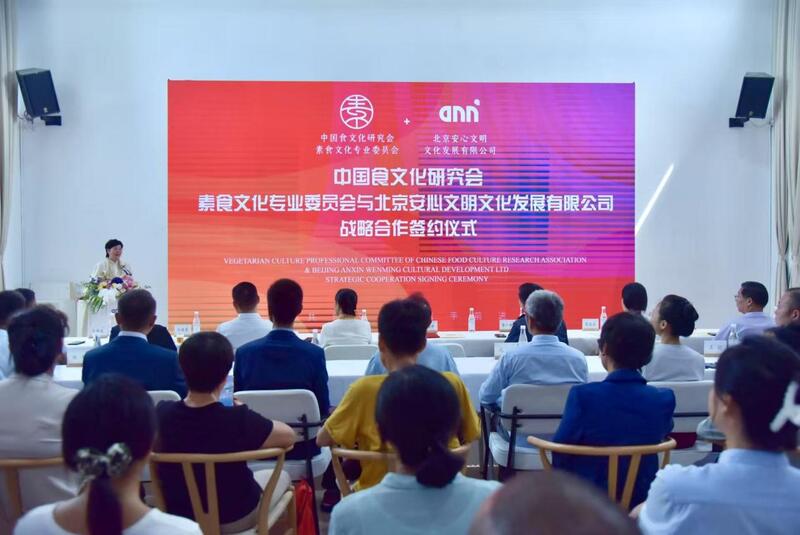
素食文化引领新社区 强强联合发展新文明——“安心文明”与“素委会”在北京签署战略合作协议
Zhong Guo Shi Pin Wang· 2025-08-27 03:40
Core Viewpoint - The strategic cooperation between Anxin Civilization and the Vegetarian Culture Professional Committee aims to promote the development of the vegetarian industry in China, focusing on standardization, ecological development, and cultural innovation [1][6][8]. Group 1: Strategic Cooperation Details - Anxin Civilization and the Vegetarian Culture Professional Committee will collaborate in seven key areas, including the establishment of industry standards, the creation of an ecological platform for vegetarian products, and the promotion of vegetarian culture [17]. - The partnership will also involve training and empowering vegetarian enterprises, building demonstration parks for vegetarian communities, and conducting domestic and international exchanges in the vegetarian industry [17]. Group 2: Leadership and Vision - Anxin Civilization's CEO, Wang Xin, emphasized the importance of this cooperation as a significant milestone in the company's history, aiming to create a community that embodies health, civilization, and environmental sustainability [4]. - The Director of the Vegetarian Culture Professional Committee, Wan Dehua, highlighted that this collaboration is a crucial step towards the standardized and ecological development of the vegetarian industry in China [6]. Group 3: Community and Cultural Impact - The cooperation will also focus on promoting vegetarian culture through various media and educational initiatives, enhancing public understanding of vegetarianism [17]. - Anxin Civilization has established a partnership with the Red Army Primary School, donating 6,000 reading cards to support cultural education for youth [17].