红利指数调仓机制

Search documents
年度调仓大揭秘!红利指数是怎么调整的?
Zhi Tong Cai Jing· 2025-12-03 13:57
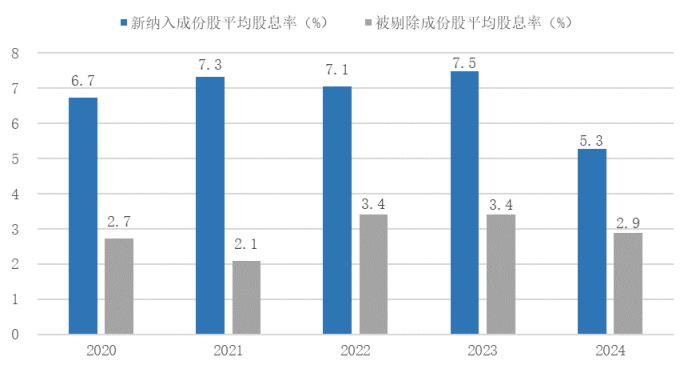
Group 1 - The core mechanism of the dividend index involves an annual "metabolism" process, where stocks with lower dividend yields are removed and replaced with those offering higher yields, ensuring a focus on high-dividend quality assets [1] - In 2024, the CSI Dividend Index adjusted 20 constituent stocks, with new additions having an average dividend yield above 5%, while those removed had an average yield below 3% [1] - Over the past five years, the average dividend yield of newly added stocks has consistently been significantly higher than that of removed stocks, reinforcing the index's focus on companies with strong dividend capabilities [1] Group 2 - The dividend index is not limited to specific industries; its core principle is maintaining high dividend yields, with current bank sector weight at 23%, compared to nearly zero in 2009 [4] - The coal sector's weight increased from less than 1% in 2016 to 18% in 2024, while the real estate sector, which was the largest weight from 2018 to 2021, has significantly decreased [4] - Investors should understand the dynamic adjustment mechanism of the dividend index, which automatically shifts focus away from overvalued sectors and towards those with stable fundamentals that may be temporarily overlooked [5] Group 3 - The "ironclad dividend, flowing industry" characteristic allows the dividend index to continuously lock in high-quality dividend assets [6] - In a low-interest-rate environment, the dividend index provides a simple, effective, and reliable investment tool through strict dividend yield screening and dynamic adjustment mechanisms [9] - Market products such as the E Fund Dividend ETF (515180) and the Low Volatility Dividend ETF (563020) track the CSI Dividend Index and the CSI Low Volatility Dividend Index, both featuring a low management fee of 0.15% per year, facilitating low-cost access to high-dividend investment opportunities [9]