
红利税

Search documents
AH溢价逼近十年新低!收窄交易近尾声后市怎么走?
Xin Lang Cai Jing· 2025-09-30 06:01
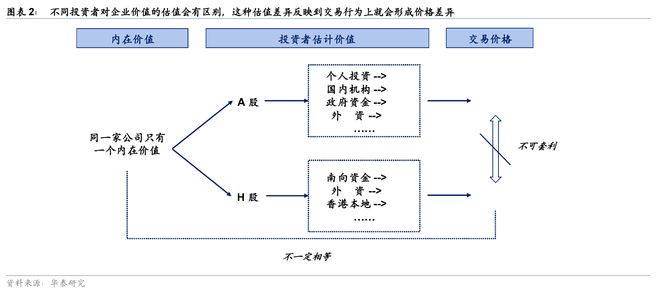
Core Viewpoint - The recent decline in the AH premium index, approaching a 10-year low, has raised concerns among investors regarding the significant price differences of the same companies listed in both A-shares and H-shares markets [1][3]. Group 1: AH Premium Performance - The AH premium index has dropped from 134 in May to 117, marking the lowest level since 2018, leading to widespread market confusion about the reasons behind this decline [1][3]. - Historical data indicates that the AH premium does not exhibit a tendency for short-term rapid mean reversion, with average premiums varying significantly over different periods [3][4]. Group 2: Fundamental Reasons for AH Premium - The fundamental reason for the AH premium lies in the differing valuations by investors in the two markets, as there is no sufficient arbitrage mechanism allowing for easy conversion between A-shares and H-shares [4][6]. - The differences in investor structure and trading systems between the two markets contribute to the observed price discrepancies, with foreign capital playing a larger role in the H-share market [6][7]. Group 3: Quantitative Analysis of Factors - The impact of dividend tax on the price difference is estimated to be around 5%, contrary to the common belief of 25%, indicating a more nuanced understanding of the factors affecting the AH premium [7][10]. - A comprehensive analysis suggests that the long-term theoretical center for the AH price difference may be around 26% to 27%, but this is subject to significant variability due to the lack of effective short-term theoretical centers [10][12]. Group 4: Future Outlook on AH Premium - The current trading dynamics suggest that while the AH premium may remain low, it does not guarantee a reversal opportunity, as external factors like the strength of the US dollar and market trends play a crucial role [10][12]. - Predictions indicate that if the US dollar weakens and the Hang Seng Index valuation rises, the AH premium could potentially decline further to below 15% [10][12]. Group 5: Investment Strategy - In investment decisions, it is essential to consider both capital gains and dividend returns, with capital gains being significantly more impactful than dividend yields [11][12]. - The assessment of AH premium trends is critical for stock selection between A-shares and H-shares, as the dividend yield advantage of H-shares may not compensate for capital gains from A-shares if the AH premium expands [12][13].

一年多次分红常态化倒逼红利税问题尽快解决
Guo Ji Jin Rong Bao· 2025-08-29 05:47
Group 1 - In 2024, a record 3,720 listed companies implemented cash dividends totaling 2.4 trillion yuan, marking a historical high [1] - Over 400 companies disclosed interim dividend plans in this year's mid-year report, with a proposed total dividend amount of 180 billion yuan, indicating that interim dividends are becoming a norm for many listed companies [1] - The management encourages cash dividends as a direct and effective way to return value to investors, with policies like the "New National Nine Articles" emphasizing the need for enhanced regulation on cash dividends [1] Group 2 - The normalization of multiple dividends per year is pressuring the resolution of the dividend tax issue, as the current tax system is linked to the holding period of shares [2] - The dividend tax system imposes a differentiated tax rate based on the holding period, which can be seen as unreasonable, especially for individual investors who often face losses [2] - The introduction of multiple dividends per year highlights the unfairness of the dividend tax, as it increases the tax burden on investors who receive interim dividends [3] Group 3 - Two potential solutions to the dividend tax issue are proposed: either abolishing the dividend tax entirely or reforming the tax system to reduce the holding period for tax exemption from 12 months to 6 months [3]