经济殖民

Search documents
中美会谈:美国再提4项霸王条款,我国强硬回击,特朗普最新表态
Sou Hu Cai Jing· 2025-07-30 14:38
Core Points - The latest round of US-China trade talks in Sweden ended without new progress, with both sides agreeing to extend previously reached tariff agreements [1] - The US presented four unreasonable demands to China, including importing thousands of billions of dollars worth of goods, implementing zero tariffs, opening all sectors to US capital, and ceasing imports of energy from Russia and Iran [1][3] - The US's demands are viewed as economic colonialism, reflecting a strategy previously used against the EU and Japan [3] - The US Treasury Secretary turned the talks into a threat, insisting on halting energy purchases from Russia and Iran, which could destabilize China's energy supply and economy [5] - China's trade representative firmly rejected the US's unreasonable demands, indicating a strong stance against potential tariffs [7] - The US's threats of reinstating high tariffs are seen as ineffective, given the current economic conditions in the US [7] - China emphasized its control over 60% of global rare earth refining, which could be leveraged in response to US tariffs, highlighting its strategic advantage [9] - Trump's contradictory statements about China's market openness and strong attitude reflect frustration over the failed negotiations [9]


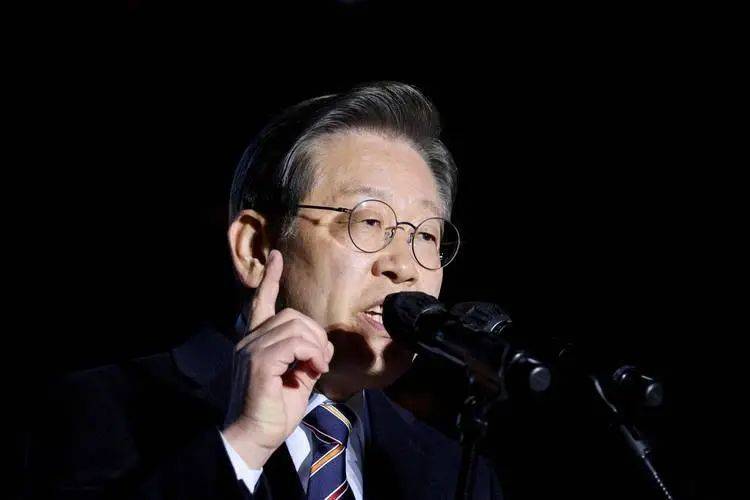
韩国天塌了,特朗普一开口就是4000亿美元,李在明想跟中方亲近都不敢?
Sou Hu Cai Jing· 2025-07-21 04:48
Group 1 - South Korea is facing an unprecedented dual crisis of diplomacy and economy due to the U.S. demands for a $400 billion investment fund, which represents 80% of South Korea's annual fiscal revenue [1][3] - The U.S. has threatened high tariffs if South Korea does not comply with the demands, putting the country's export industries at severe risk [1][3] - The $400 billion requirement is viewed as a "protection fee" rather than a cooperative investment, with the U.S. insisting that the funds be used for investments in American industries [3][8] Group 2 - The economic burden of the $400 billion investment is significant, equating to 22% of South Korea's GDP, and could severely impact domestic investment in key sectors like semiconductors and automotive [3][5] - South Korea's government is in a difficult position, with internal estimates suggesting that fulfilling the U.S. demands could deplete national resources and weaken industrial competitiveness [3][5] - The South Korean government is exploring alternatives to reduce reliance on the U.S., including promoting a trilateral free trade agreement with China and Japan, which could mitigate the impact of U.S. tariffs [5][9] Group 3 - The U.S. strategy appears to be aimed at extracting resources from allies to maintain its hegemony, with the $400 billion fund being a clear example of economic colonialism [8] - There are warnings that if South Korea and Japan concede to U.S. demands, it could lead to the establishment of a unified Western market, further entrenching U.S. dominance [8][9] - The outcome of this geopolitical struggle will have significant implications for the future balance of power in East Asia and globally [9]