经济民生

Search documents
特朗普发表史上最长国情咨文演讲,夸夸其谈难掩政策挫败
2 1 Shi Ji Jing Ji Bao Dao· 2026-02-25 14:08
Group 1 - The core message of Trump's State of the Union address highlights a significant gap between his proclaimed economic achievements and the actual sentiments of the American public, reflecting the polarization in U.S. politics and the challenges faced by citizens [1][2] - Trump emphasized that the U.S. is in a "golden age," claiming it is "stronger, better, and richer than ever," while asserting that he has curbed inflation and driven stock prices to new highs [2][3] - Despite claims of economic improvement, a poll indicated that 55% of respondents believe the U.S. is in a worse state than a year ago, showcasing a disconnect between political rhetoric and public perception [3] Group 2 - Trump's key policies on tariffs and immigration are facing setbacks, with a recent Supreme Court ruling limiting his authority to impose large-scale tariffs, which he criticized as "completely wrong" [4][5] - The Department of Homeland Security is experiencing a partial shutdown due to a lack of consensus on funding, exacerbated by violent incidents involving immigration enforcement [4] - The complexities surrounding the potential refund of tariffs already paid by companies could lead to lengthy legal challenges, impacting the overall trade environment [5]
大选临近,泰国各大政党竞选活动进入最后冲刺
Huan Qiu Shi Bao· 2026-02-06 22:49
Group 1 - The core viewpoint of the articles highlights the intensifying election campaigns in Thailand as the election date approaches, with major political parties holding final rallies and emphasizing their key messages [1] - The People's Party is leading in polls, advocating for public-driven political reform and citizen participation, while the Pheu Thai Party focuses on economic issues such as lowering living costs and job creation [1] - The Palang Pracharath Party emphasizes grassroots economic development and public health, promoting a narrative of "stability and security" without advocating for comprehensive institutional reforms [1] - The Democrat Party promotes political stability and transparency, positioning itself as a "safe choice" for voters [1] - Recent political turmoil in Thailand, including changes in leadership and the dissolution of major opposition parties, has made "stability" a key concern for voters, with only about 14% of voters undecided prior to the election [1] Group 2 - To ensure a smooth election process, Thailand's election management and security agencies are operating at high intensity, with the Election Commission mobilizing voting efforts across various regions [2] - Political party leaders are held accountable for the actions of their members, with potential long-term bans from politics for those violating election regulations [2] - Over 120,000 police officers have been deployed to maintain public order and safety during the election period [2]
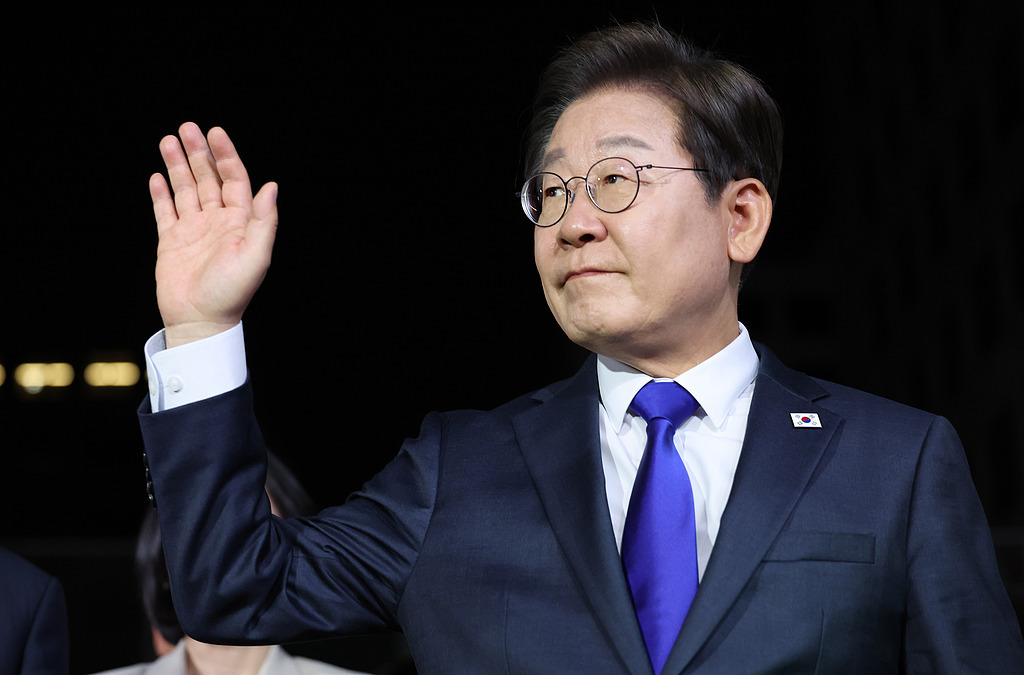
李在明赢得韩国大选,韩国新总统面临多重考验
Huan Qiu Shi Bao· 2025-06-03 22:40
Group 1 - The core viewpoint of the articles highlights the significance of the recent South Korean presidential election, which is seen as a pivotal moment for the country's political future following months of turmoil and the impeachment of former President Yoon Seok-youl [1][9][10] - The election saw a high voter turnout of 79.4%, the highest in 28 years, indicating strong public engagement and concern regarding the political situation [6][8] - Lee Jae-myung of the Democratic Party is projected to win with a significant lead of 51.7% in the polls, while his main opponent, Kim Moon-soo of the People Power Party, garnered 39.3% [1][6] Group 2 - The new president will face multiple challenges, including economic recovery, national security issues, and the need to bridge the divide between conservative and progressive factions in South Korea [9][10] - The election is viewed as a potential turning point for South Korea, with hopes that it will restore stability and address the dissatisfaction among voters regarding previous administrations [8][10] - The new administration will need to navigate complex international relations, particularly with the United States and China, balancing traditional alliances with pragmatic cooperation [9][10]