政治稳定

Search documents
高市早苗胜选提振政治稳定预期 日股外资流入规模创2014年来新高
Zhi Tong Cai Jing· 2026-02-19 11:07
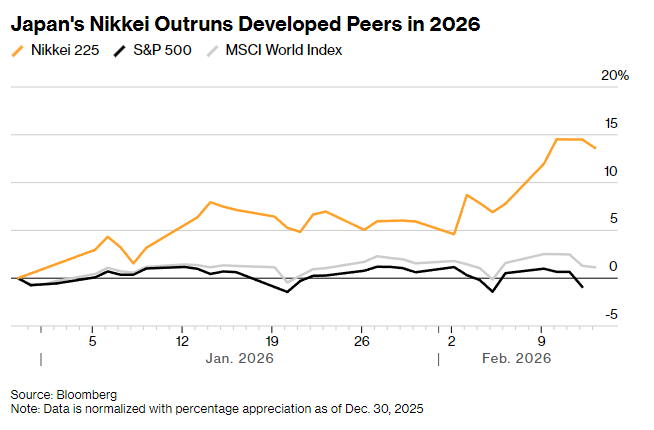
Core Viewpoint - The historic victory of Prime Minister Sanna Takashi has boosted expectations for political stability in Japan, leading to significant foreign investment inflows into Japanese stocks and futures, reaching the highest level since 2014 [1] Group 1: Political Stability and Market Reaction - Foreign investors net bought 1.78 trillion yen (approximately 11.5 billion USD) of Japanese stocks and index futures in the week ending February 13, marking the largest scale since November 2014 [1] - The victory of the ruling coalition, consisting of the Liberal Democratic Party (LDP) and the Japan Innovation Party, has created a "supermajority" in the House of Representatives, which is expected to enhance policy clarity and reduce the risk of adverse fiscal scenarios [1] - The LDP secured 316 seats and the Japan Innovation Party obtained 36 seats in the 465-seat House of Representatives, facilitating easier legislative passage for the ruling coalition [1] Group 2: Investment Sentiment and Economic Outlook - The influx of funds reflects a growing attractiveness of the Japanese stock market as global investors seek stable returns while diversifying away from the U.S. market, with the broader Tokyo Stock Exchange index rising 13% this year, outperforming the modest gains of the S&P 500 [1] - Market optimism regarding Takashi's expansionary fiscal plans, which are expected to boost various sectors including AI, energy, and shipbuilding, serves as a major driving force [2] - The weakening yen benefits exporters and ongoing pressure from activist investors also supports the market, while concerns over AI and geopolitical risks have diminished the appeal of the U.S. stock market [2]
日股2026开局杀疯了!高市早苗胜选点火 全球牛股榜日本霸屏前三
智通财经网· 2026-02-13 06:50
Group 1 - Japan's stock market has experienced a remarkable start to 2026, driven by Prime Minister Kishi's economic growth policies, with sectors like chips and defense leading the gains in developed markets [1] - The top three performing stocks in the MSCI global index this year are Japanese companies, with Kioxia Holdings leading at nearly 120% increase, followed by Kawasaki Heavy Industries and JX Advanced Metals, both exceeding 60% [1] - Following the historic election victory of Kishi's Liberal Democratic Party, the Tokyo Stock Exchange index and Nikkei 225 both reached all-time highs, with the Nikkei index rising over 5% post-election, significantly outperforming the S&P 500's 1.4% decline during the same period [1] Group 2 - Goldman Sachs has upgraded the rating of the Japanese stock market to overweight, anticipating benefits for sectors such as defense, key resources, shipbuilding, and energy due to a period of political stability [4] - Kawasaki Heavy Industries, a major stock in the MSCI index, surged 20% last week, benefiting from better-than-expected earnings and expectations that Kishi will relax constitutional restrictions on military capabilities [4] - Kioxia, which has already led the index in 2025, saw a 15% increase after raising its annual earnings forecast, driven by surging demand for storage chips in the AI industry, with its cumulative increase over the past 12 months exceeding 10 times [4] Group 3 - There are emerging concerns regarding the sustainability of the recent surge in Japan's stock market, with warnings that the positive news has largely been priced in and risks are accumulating [5] - The market's tolerance for underperformance is narrowing, and technical indicators suggest that the Nikkei 225 is currently in an overbought territory [5]

分析师:泰国股市可能受到政治稳定支撑
Jin Rong Jie· 2026-02-10 03:28
Core Viewpoint - The expectation of political stability following the ruling party's election victory is likely to support the Thai stock market [1] Group 1: Election Results and Market Impact - The Palang Pracharath Party won the election with a significant margin, granting it strong governing authority [1] - Maybank Securities now projects a target of 1,500 points for the Stock Exchange of Thailand by the end of 2026 [1] Group 2: Economic Growth and Policy Support - Anticipated political stability is expected to aid in the revaluation of stock values [1] - A series of policy supports are projected to boost economic growth starting in the second half of the year [1] - The latest closing of the Stock Exchange of Thailand index was at 1,400.89 points [1]
大选临近,泰国各大政党竞选活动进入最后冲刺
Huan Qiu Shi Bao· 2026-02-06 22:49
Group 1 - The core viewpoint of the articles highlights the intensifying election campaigns in Thailand as the election date approaches, with major political parties holding final rallies and emphasizing their key messages [1] - The People's Party is leading in polls, advocating for public-driven political reform and citizen participation, while the Pheu Thai Party focuses on economic issues such as lowering living costs and job creation [1] - The Palang Pracharath Party emphasizes grassroots economic development and public health, promoting a narrative of "stability and security" without advocating for comprehensive institutional reforms [1] - The Democrat Party promotes political stability and transparency, positioning itself as a "safe choice" for voters [1] - Recent political turmoil in Thailand, including changes in leadership and the dissolution of major opposition parties, has made "stability" a key concern for voters, with only about 14% of voters undecided prior to the election [1] Group 2 - To ensure a smooth election process, Thailand's election management and security agencies are operating at high intensity, with the Election Commission mobilizing voting efforts across various regions [2] - Political party leaders are held accountable for the actions of their members, with potential long-term bans from politics for those violating election regulations [2] - Over 120,000 police officers have been deployed to maintain public order and safety during the election period [2]
【特稿】委石油已成囊中物? 美油企高管持异议
Sou Hu Cai Jing· 2026-01-06 08:56
Group 1 - The article discusses President Trump's potential misjudgment regarding U.S. energy companies' ability to access Venezuela's vast oil resources, highlighting that industry executives are unlikely to invest due to various uncertainties and the aging oil infrastructure in Venezuela [1][2] - Significant investment, estimated to be in the hundreds of billions of dollars, would be required to improve Venezuela's oil industry, but current low oil prices, below $60 per barrel and down 20% from the previous year, do not support such investments [1][3] - A source indicated that U.S. oil companies have a low willingness to invest in Venezuela, citing uncertainty about the local government's future and a lack of communication between the White House and the industry prior to recent actions [1][2] Group 2 - Venezuela holds the world's largest proven oil reserves, surpassing those of Iraq, Russia, and the U.S. combined, but only a few U.S. companies possess the financial and technical capacity to develop these resources [3] - Chevron, based in Houston, is noted as the only major Western oil company maintaining significant operations in Venezuela, currently producing approximately 150,000 barrels of oil per day [3] - Investors are advised to prepare for ongoing political instability in Venezuela, which may include large-scale civil unrest and continued U.S. sanctions [3]

【环球财经】是否辞职?石破茂澄清
Xin Hua She· 2025-07-23 09:48
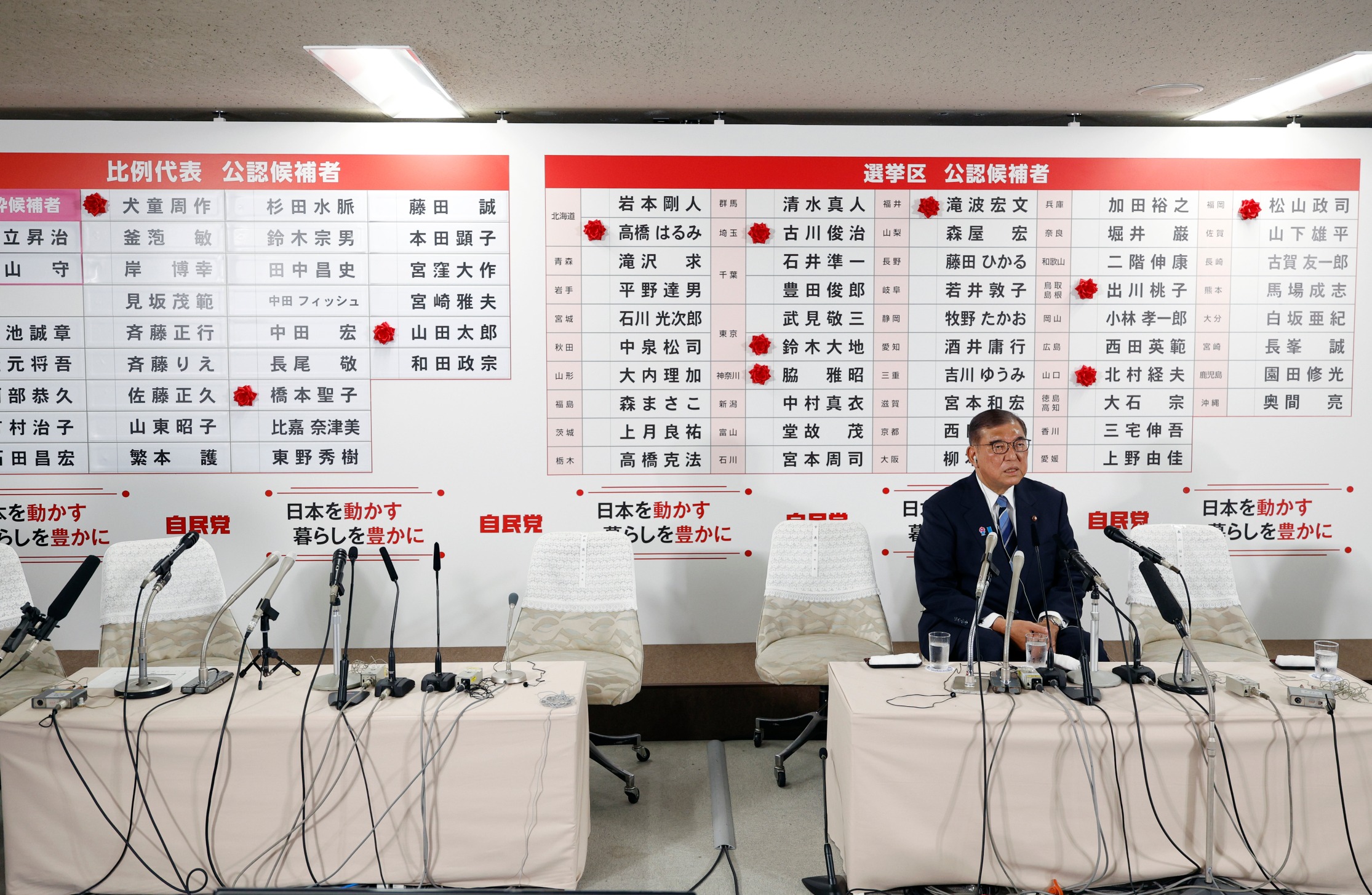
Core Viewpoint - Japanese Prime Minister Shigeru Ishiba is reportedly considering resigning by the end of August due to the ruling coalition's poor performance in the recent House of Councillors election, although he publicly stated his intention to remain in office, claiming media reports about his resignation are inaccurate [1][2][7]. Group 1: Election Results and Political Implications - The ruling coalition secured 47 seats in the recent House of Councillors election but failed to maintain a majority, marking the first time since the Liberal Democratic Party's (LDP) establishment in 1955 that it lost majorities in both houses [9]. - Following the election, Ishiba expressed regret over the loss and acknowledged factors such as political reform and rising prices as reasons for the defeat, indicating a need for analysis and response [2][8]. Group 2: Public and Party Sentiment - A recent poll indicated that Ishiba's cabinet support rate has dropped to 22.9%, with 51.6% of respondents believing he should resign, reflecting significant public discontent [11]. - There are growing calls within the LDP for Ishiba to step down, with some party members publicly stating that leadership should take responsibility for the electoral outcome [11][12]. Group 3: Internal Party Dynamics - Ishiba held discussions with senior party members, including former Prime Ministers, emphasizing the need for political stability and the avoidance of party division following the election loss [8]. - The LDP's internal rules allow for a new party president election if a majority of party members and local representatives request it, which could lead to Ishiba's removal despite his current term lasting until September 2027 [12].