经济自救

Search documents
加中战略合作落地:中国电车绕过美国,北美防线出现裂口
Sou Hu Cai Jing· 2026-01-19 04:13
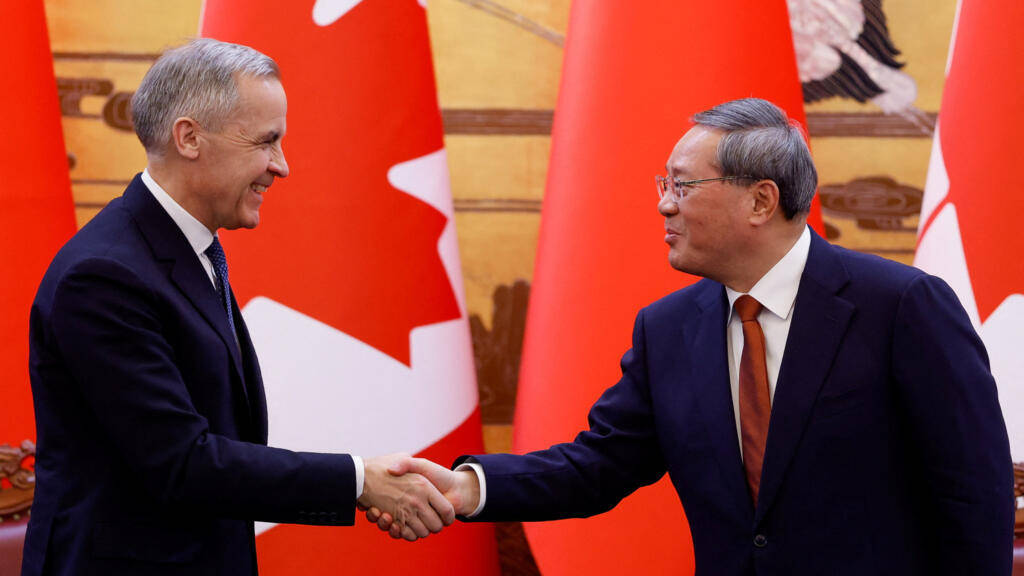
Group 1 - Canada has decided to eliminate 100% tariffs on electric vehicles from China, marking a significant shift in its trade policy and a move away from U.S. influence [1][3] - The agreement allows 49,000 Chinese electric vehicles to enter Canada at a reduced Most Favored Nation tax rate of 6.1%, while China will lower tariffs on Canadian canola from 84% to approximately 15% by March 1 [1][5] - This deal is seen as a strategic maneuver for Canada to address domestic agricultural issues and to gain access to the Chinese market, which is crucial for its resource-dependent economy [3][5] Group 2 - The relationship between Canada and the U.S. has become strained, with Canada feeling that U.S. policies have been detrimental to its interests, particularly in the context of tariffs on aluminum, steel, and softwood [3][5] - The Canadian government under Prime Minister Carney is taking a calculated risk by engaging with China, as it seeks to stabilize its economy and support its agricultural sector while potentially facing U.S. retaliation [5][7] - This shift indicates a broader trend of allies seeking more flexible relationships and prioritizing national interests over traditional alliances, reflecting a potential decline in U.S. hegemony [7]