经营主体

Search documents
努力为经营主体搭好“戏台”
Xin Lang Cai Jing· 2026-01-11 22:25
Core Viewpoint - The vitality index of business entities in a region directly determines the development heat of that area, emphasizing the importance of a favorable business environment for economic progress [1][2]. Group 1: Business Entity Development - The number of business entities in Guizhou is projected to grow from 3.887 million at the end of 2021 to 4.841 million by 2025, indicating significant market vitality and development [2]. - The focus on nurturing and expanding business entities is seen as the "bull's eye" of Guizhou's economic work, with a call for concentrated resources and collaborative efforts to support these entities [1][2]. Group 2: Government and Market Interaction - The dialectical approach of "effective market + proactive government" is essential, where the market plays a leading role in resource allocation while the government acts as a service provider and protector [2]. - The government aims to provide precise support to businesses at every stage of development, facilitating investment, innovation, and job creation [2]. Group 3: Business Environment Improvement - Guizhou is committed to optimizing its business environment by addressing issues such as bureaucratic inefficiencies and ensuring a supportive atmosphere for investment and entrepreneurship [3]. - The government plans to implement the "Overall Plan for Optimizing the Business Environment" through strict regulations and improved service quality, aiming to enhance the "Guizhou Service" brand [3]. Group 4: Tailored Support for Different Business Types - A differentiated approach is necessary for various types of businesses, with specific strategies for private enterprises, individual businesses, and state-owned enterprises to ensure equitable treatment and support [4]. - The government aims to foster large enterprises as industry leaders while also providing timely assistance to small and medium-sized enterprises to enhance their resilience [4]. Group 5: Economic Ecosystem - The diverse business entities in Guizhou create an economic ecosystem, where large enterprises are likened to tall trees, medium-sized enterprises to shrubs, and individual businesses to seedlings, all contributing to a robust economic landscape [4]. - The recent conference has set the tone for high-quality development of business entities, with a call for government officials to actively support and nurture these key players in the economy [4].
中国社会科学院学部委员高培勇:经营主体不等于企业,覆盖范围远远大于企业
Xin Lang Cai Jing· 2025-12-09 02:52
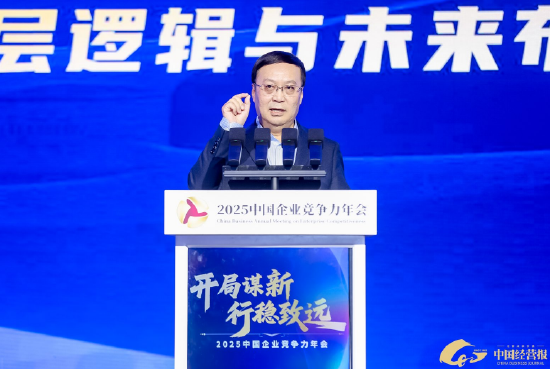
Core Insights - The "2025 China Enterprise Competitiveness Conference" was held in Beijing on December 9-10, emphasizing the distinction between operating entities and enterprises, with a focus on enhancing the business environment to stimulate the vitality of various operating entities [1][3]. Group 1: Definition and Scope of Operating Entities - Current statistics indicate that there are 188 million operating entities in China, while the number of enterprises stands at 60.2 million, highlighting a significant difference primarily due to individual businesses and agricultural cooperatives [3][5]. - Operating entities encompass all economic units contributing to GDP within China, providing a crucial foundation for understanding the implementation of new productive forces [5]. Group 2: Development of New Productive Forces - The development of new productive forces is characterized by innovation, which begins with technology, thrives in industry, and is realized through capital [5]. - The main battleground for developing new productive forces is within operating entities, with enterprises representing the primary driving force [5]. - To promote the development of new productive forces, it is essential to focus on fully stimulating the vitality of various operating entities [5].

高培勇:营商环境好不好 经营主体最有发言权
Zheng Quan Shi Bao Wang· 2025-11-15 03:03
Core Viewpoint - The development of new quality productivity is essential for achieving high-quality growth, requiring a focus on local conditions and the active involvement of various business entities [1][2]. Group 1: New Quality Productivity - New quality productivity represents a transformative shift from traditional productivity, characterized by five key aspects: starting with "new," emphasizing "quality," driven by technological innovation, deeply rooted in green principles, aligned with new development concepts, and necessitating compatible production relations [1]. - The integration of technological innovation resources is crucial for leading strategic emerging industries and future industries [1]. Group 2: Business Entities - The definition of "business entities" includes not only enterprises but also individual businesses, agricultural cooperatives, and other forms of organizations, totaling 188 million registered entities in China, with 60.2 million being enterprises [2]. - To promote new quality productivity and achieve high-quality development, it is vital to stimulate the vitality of all types of business entities and ensure that policy measures focus on their needs [2]. Group 3: Business Environment - A first-class business environment is characterized by seven key areas: property rights protection, industrial subsidies, environmental standards, labor protection, government procurement, e-commerce, and finance, which must be interconnected to support the development of new quality productivity [3]. - The assessment of the business environment should be based on the real experiences of business entities, emphasizing the need for reforms and policies that address their challenges in developing new quality productivity [3].
经营主体规模再创新高
Jing Ji Ri Bao· 2025-08-14 22:06
Core Insights - In the first half of this year, a total of 13.278 million new business entities were established nationwide, indicating a stable growth trend across various types of business entities [1] - The new enterprises accounted for 4.62 million, individual businesses for 8.629 million, and farmer cooperatives for 29,000, reflecting a robust increase in the quantity and quality of business entities due to accelerated implementation of supportive policies [1] - Business entities are considered the cells of economic operation and a vital source for promoting high-quality economic development [1] Policy Recommendations - There is a need to continuously optimize the business environment by deepening the "streamlining administration, delegating power, and improving services" reform to enhance the confidence of business entities [1] - Precise implementation of supportive policies is essential to ensure that the benefits reach the businesses quickly and effectively [1] - Further improvements in market access and exit systems are necessary, along with strict adherence to a unified management model and the implementation of fair competition review regulations [1] - A cautious and inclusive regulatory approach should be adopted for new business models and formats to provide more development space for business entities [1]
大江时评:经营主体“枝繁叶茂”,中国经济“春色满园”
Sou Hu Cai Jing· 2025-08-14 03:37
Core Insights - The market regulatory authority reported that in the first half of the year, 13.278 million new business entities were established in China, including 4.62 million new enterprises, 8.629 million new individual businesses, and 29,000 new farmers' cooperatives, indicating a stable growth trend across various business types [1] - The vitality of business entities is crucial for economic development, contributing significantly to employment, growth stabilization, and improving livelihoods [1] - The data shows a positive trend for private and foreign-funded enterprises, with 4.346 million new private enterprises established, a year-on-year increase of 4.6%, and 33,000 new foreign-funded enterprises, a year-on-year increase of 4.1% [1] Group 1 - The total number of business entities is vast and widely distributed, essential for economic prosperity [2] - The industrial structure of business entities is continuously optimizing, with 25.361 million registered "four new" (new technology, new industry, new business format, new model) economic enterprises, a year-on-year increase of 6.6%, accounting for 40.2% of the total number of enterprises [2] - To strengthen and expand business entities, it is necessary to develop new productive forces and focus on innovation to enhance product quality and production efficiency [2] Group 2 - A large number of business entities represent the resilience of China's economy and the foundation for future development [3] - Continuous optimization of the business environment and stimulation of innovation and entrepreneurship are essential for high-quality development [3]