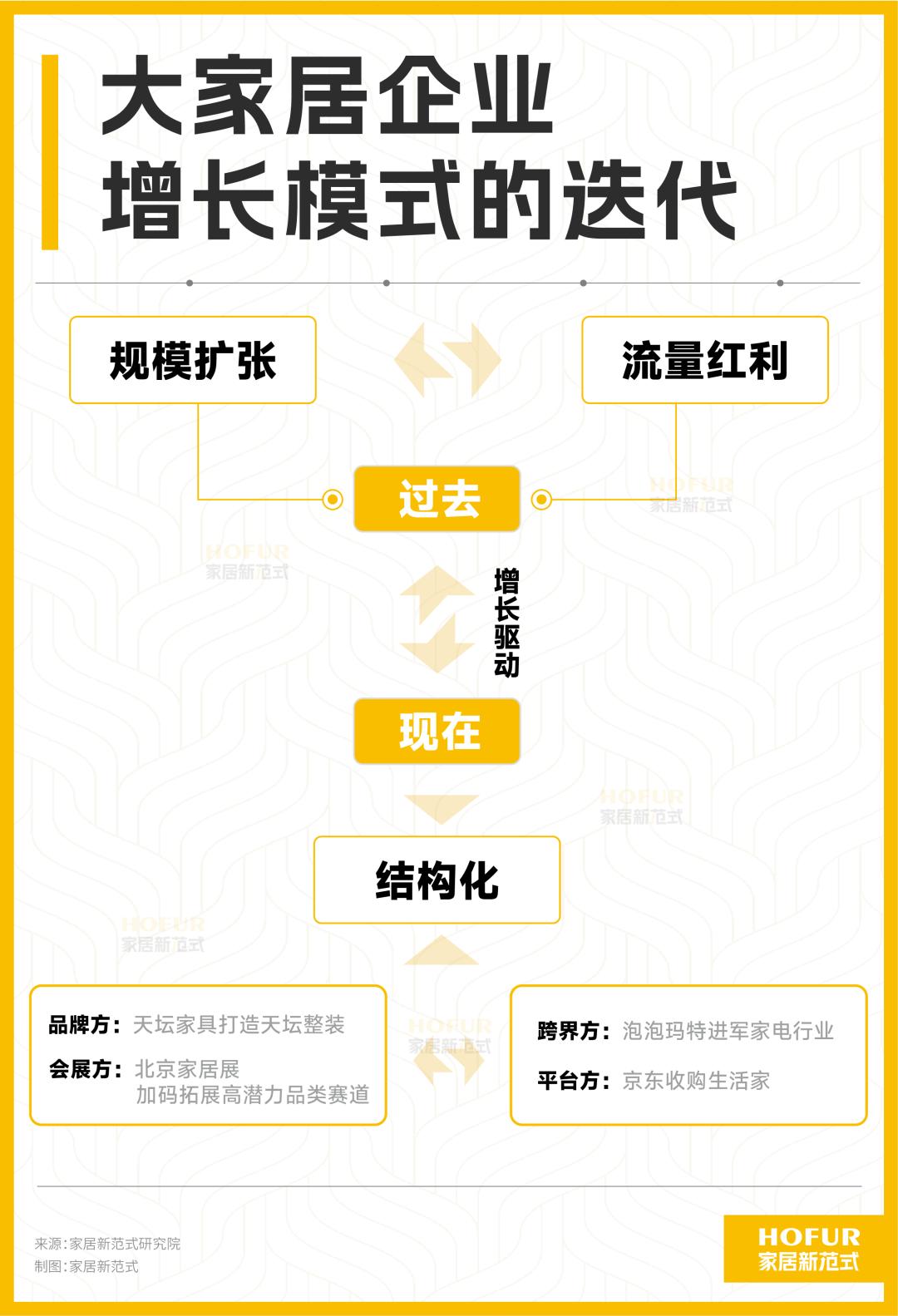
结构化增长

Search documents
内外双卷不确定下找到百亿品牌的持续结构增长逻辑?
Jing Ji Guan Cha Bao· 2025-11-14 02:23
Core Insights - The article discusses the challenges and strategies for companies transitioning from a billion-level revenue to a hundred-billion-level brand, emphasizing the need for a deep understanding of core advantages and strategic optimization in a competitive market [1][38]. Group 1: Current Challenges in Revenue Growth - Companies face significant challenges in revenue growth due to market saturation and intensified competition, with traditional linear growth models becoming ineffective [3]. - The loss of clear causal relationships complicates growth strategies, making it difficult for companies to predict and drive growth as they scale [3]. - Increased market uncertainty from macroeconomic changes, technological advancements, and competitor strategies further complicates long-term planning [3]. Group 2: Differences in Growth Logic - Companies at the billion-level focus on product line breakthroughs, optimizing existing products and expanding variations to meet diverse consumer needs [5][6]. - In contrast, hundred-billion-level brands shift focus to brand expansion, enhancing brand influence and market positioning through diversified product portfolios [6][7]. - Successful large enterprises recognize the limitations of relying on a single product line and adopt multi-faceted strategies for sustained revenue growth [6][7]. Group 3: Strategic Approaches for Growth - The transition from billion to hundred-billion revenue requires a shift from a map strategy, which relies on clear market positioning and plans, to a puzzle strategy that emphasizes flexibility and adaptability in a dynamic market [8][9]. - Companies must integrate various business units and market opportunities to create a complex growth network, allowing for rapid adaptation to market changes [9]. Group 4: Building a Hundred-Billion Brand - Companies should focus on core advantage development and reasonable structural extensions to diversify and expand their market presence [11]. - The growth process should transition from category expansion to business expansion, ultimately enhancing brand value and market leadership [13][14]. - Successful examples include Huawei, which leveraged its core technology in telecommunications to expand into smartphones and smart home products [12]. Group 5: Multi-Category and Multi-Business Strategies - Companies should start with a strong single product and then expand into related categories based on market validation [15][16]. - The example of Bosideng illustrates how a focus on a core product can lead to successful category expansion, achieving significant revenue growth [17]. Group 6: Multi-Brand Strategy - Companies can consider a multi-brand strategy when market maturity limits growth potential, leveraging established brand reputation to enter new markets [22]. - Anta's multi-brand strategy demonstrates how a company can cover various market segments, enhancing competitiveness and brand influence [24]. Group 7: Internal and Structural Growth - Companies must recognize external challenges and effectively integrate internal resources to achieve structural growth [36][37]. - The experiences of Haier, Midea, and Gree highlight the importance of understanding core brand genes—service, channel, and product—as pathways to growth [34][35]. Group 8: Future Growth Pathways - The article outlines a framework for companies to transition from billion to hundred-billion brands, emphasizing the importance of strategic planning and resource optimization [39][42]. - The future growth stages include transitioning to a thousand-billion platform and a ten-thousand-billion ecosystem, requiring a comprehensive understanding of market dynamics and consumer needs [41][44].
结构性变革中,家居行业优等生们的五大动作出奇一致
3 6 Ke· 2025-07-18 02:15
Core Insights - The home furnishing industry is facing significant challenges, with key metrics showing declines in revenue, exports, and investment returns, indicating a need for a shift in growth strategies [1][2] - The concept of "structured growth" is introduced as a new paradigm for companies to achieve sustainable growth, moving away from traditional methods of scale expansion and traffic acquisition [1][2] Structured Growth Definition - Structured growth is defined by three characteristics: systematic thinking, collaborative synergy, and iterative development, which together drive internal and external efficiencies [2] Industry Examples - The 2026 Beijing Home Furnishing Expo will focus on high-potential sectors such as smart home, outdoor furniture, and elderly-friendly products, aiming to create a cross-age and cross-category industrial network [5] - Companies like Beijing Jinyu Tiantan Furniture and Pop Mart are leveraging their brand advantages and exploring new markets through innovative strategies [5] - Xiaomi's recent financial performance highlights its successful product iterations and market positioning, with significant rankings in various categories [5] Five Actions for Structured Growth - The five key actions identified for achieving structured growth include organizational adjustments, product innovation, user engagement, channel optimization, and content strategy [6][9] - Organizational adjustments involve significant leadership changes to align with structured growth strategies, with over 100 executives leaving or being reassigned in the first half of the year [9] - Product innovation focuses on establishing new standards based on price, functionality, technology, and design, moving away from price wars [9][10] - User engagement emphasizes understanding user demographics and needs, particularly in targeting specific groups like the elderly [12] - Channel optimization requires a strategic approach to different market segments, ensuring effective reach to existing and new customers [12][13] - Content strategy is about enhancing brand communication through various media to build customer loyalty [12][16] Lessons for Achieving Structured Growth - Companies must avoid pitfalls such as excessive structuring that leads to disjointed operations and unclear roles within departments [17] - A focus on core competencies and understanding competitive boundaries can enhance resource connections and business model iterations [18] - Cost reduction and efficiency should guide growth strategies, ensuring unified understanding and focused efforts across the organization [18][19]