
绿色催化

Search documents
精工研材 绘就应用新图景
Huan Qiu Wang Zi Xun· 2026-01-12 01:54
Group 1: Russia - In 2025, Russia's new material research shows a clear trend of converting military advantages to civilian applications and breakthroughs in extreme environment materials [1] - The All-Russian Institute of Aviation Materials has developed a new generation of fluoropolyurethane ceramic paint, reducing weight by 35% and halving the coating cycle, significantly improving maintenance efficiency for domestic aviation equipment [1] - The Kurchatov Institute has showcased cold-resistant steel and ultra-low temperature tough materials designed for polar scientific research, ensuring equipment maintains excellent mechanical properties at -60°C [1] - A new catalyst based on synthetic silicoaluminate has been developed for efficient conversion of wood waste into high-value pharmaceutical and fragrance compounds [1] - A high-load bimetallic nickel-based catalyst has been created to enhance the selectivity and stability of the dehydrogenation process for liquid organic hydrogen carriers, supporting clean energy technology [1] Group 2: United States - In 2025, the U.S. achieved key material breakthroughs in microelectronics, including new high-conductivity films and semiconductor-compatible superconducting materials [2][3] - Stanford University invented an amorphous niobium phosphide film that surpasses copper in conductivity at atomic thickness, compatible with existing low-temperature chip processes [3] - An international team led by New York University developed germanium materials with superconducting properties, enabling potential large-scale expansion of quantum devices based on mature semiconductor processes [3] - The Army Research Laboratory and Lehigh University developed a nanostructured copper-tantalum-lithium alloy, noted for its exceptional elasticity, mechanical strength, and thermal stability [3] - Innovations in 3D printing technology have accelerated the penetration of materials into high-end applications, including record-performance superconductors for medical imaging magnets and quantum devices [5] Group 3: United Kingdom - In 2025, UK researchers made significant breakthroughs in new carbon structures and efficient catalytic materials, providing critical support for electronics, communications, and green chemistry [6] - The University of Oxford synthesized a new carbon structure resembling "molecular chains," enabling detailed studies of cyclic carbon molecules at room temperature, potentially revolutionizing electronic devices and quantum technology [6] - The University of Cambridge developed innovative "molecular antenna" technology, achieving electroluminescence in insulating nanoparticles and creating ultra-pure near-infrared light-emitting diodes [8] Group 4: France - France developed the world's first infinitely recyclable organic silicon recovery process, providing a solution for polymer material pollution [11] - Research revealed the mechanism of extreme "physical phase transition" of water, which can transform into a superacid under extreme conditions, opening new pathways for diamond synthesis and efficient refining [11] - A collaboration between Strasbourg University and the University of Manchester led to the development of artificial micro-motors mimicking natural protein mechanisms, advancing targeted drug delivery and nanorobotics [11] Group 5: Germany - In 2025, Germany's new materials sector focused on overcoming core material bottlenecks required for energy, manufacturing, and information technology, highlighting trends in digitalization, sustainability, and functional composites [13] - The Fritz Haber Institute achieved advancements in single-atom catalysts, enhancing selectivity in methane conversion pathways [13] - Karlsruhe Institute of Technology developed low-iridium or iridium-free proton exchange membrane electrolyzer catalysts, maintaining high activity while improving stability [13] - Innovations in energy storage and photovoltaic technology showcased strong engineering capabilities, with significant improvements in solid-state battery manufacturing and solar cell efficiency [14] Group 6: South Korea - In 2025, South Korea demonstrated a strong focus on "efficiency revolution" and "technological self-reliance" in new material research [15] - The Korea Atomic Energy Research Institute developed an eco-friendly extraction technology for lithium from lithium iron phosphate batteries, achieving a recovery rate of 99.8% without generating acidic wastewater [15] - A quantum technology-based design platform was launched to accelerate the development of efficient energy storage and carbon capture materials [15] - The Korea Institute of Materials Science developed a van der Waals magnetic material with ultra-high storage density, enhancing information storage capabilities by tenfold [16] Group 7: South Africa - In 2025, South Africa made significant advancements in new materials, focusing on sustainability, energy transition, and functional materials for industrial and social applications [18] - The country allocated 1.2 billion rand for advanced materials, fostering the growth of 14 startups specializing in graphene composites and rare earth magnet regeneration [18] - The University of Cape Town developed an iron-nitrogen-carbon electrocatalyst that performs at 90% of platinum-based systems while reducing costs to below 10% [18] - Local adaptations in energy storage and functional materials were demonstrated, including sodium manganese oxide cathode materials with over 4000 cycles and self-healing concrete [19] Group 8: Japan - In 2025, Japan's strategic innovation research plan prioritized "quantum material research" and the creation of new materials through wave control [20] - Kyoto University constructed a three-dimensional van der Waals open framework, stable at temperatures up to 593K, with applications in gas storage and catalysis [20] - An international team developed a titanium-aluminum-based superelastic alloy, setting a new benchmark for superelastic materials and introducing innovative design concepts [20] - Hokkaido University researchers created an AI-assisted design for super-adhesive hydrogels, inspired by natural adhesive proteins, with potential applications in plumbing and underwater adhesion [22]

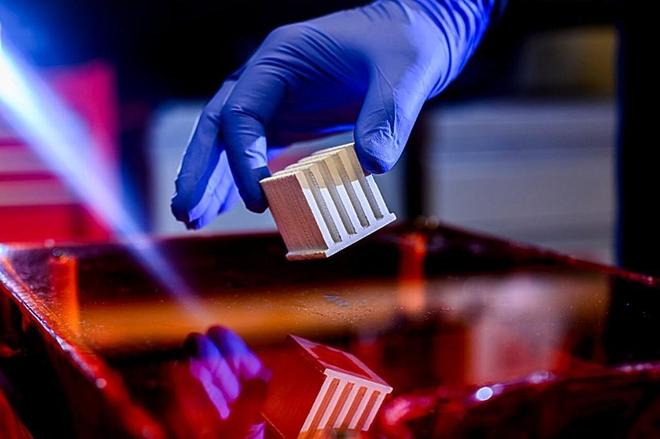
肯特催化上市后首份半年报业绩稳健 下游应用广阔新兴领域增长值得期待
Mei Ri Jing Ji Xin Wen· 2025-08-26 03:57
Core Viewpoint - Kent Catalysts, a leading domestic catalyst manufacturer, demonstrated strong operational resilience and maintained stable profitability in its first half of 2025, achieving revenue of 296 million yuan and a net profit of approximately 39.35 million yuan, despite a challenging market environment and raw material price fluctuations [1][2]. Financial Performance - In Q1 2025, the company reported revenue of 144 million yuan, a year-on-year increase of 6.75%, and a net profit of approximately 17.56 million yuan, up 20.27% year-on-year [2]. - For the first half of 2025, the operating cash flow net amount reached approximately 53.81 million yuan, a year-on-year increase of 23.72%, indicating improved cash flow conditions [3]. - The company's asset-liability ratio was 11.95%, down 5.69 percentage points year-on-year, reflecting a further reduction in debt levels [3]. Product and Market Expansion - Kent Catalysts has diversified its product offerings beyond phase transfer catalysts to include molecular sieve template agents, curing accelerators, and electrolyte additives, enhancing its competitive edge across various sectors such as fine chemicals, molecular sieves, polymer materials, battery electrolytes, and oilfield chemicals [1][2]. - The company’s main products include quaternary ammonium salts, quaternary ammonium bases, quaternary ammonium salts, and crown ethers, with significant contributions to revenue and varying gross profit margins [3]. R&D and Technological Advancements - The company has invested in R&D, with expenses increasing by 7.68% year-on-year, and holds a total of 53 authorized invention patents, 178 utility model patents, and 15 software copyrights, establishing a strong technological moat in the quaternary ammonium compound sector [3][4]. - Kent Catalysts is committed to green catalysis and has developed advanced process technologies aimed at achieving efficient and environmentally friendly production [4]. Industry Context - The catalyst industry in China has seen significant growth, with the market size expected to increase from 843.9 billion yuan in 2019 to 1,042.7 billion yuan by 2024, reflecting a compound annual growth rate of 4.32% [6]. - The industry is moving towards professionalization and scale, with a focus on low-carbon and environmentally friendly practices, leading to the gradual elimination of less competitive firms [6]. Future Growth Opportunities - Kent Catalysts is targeting emerging markets, particularly in the battery electrolyte sector, where demand for electrolyte additives is driven by the booming electric vehicle and consumer electronics markets [9]. - The company is also developing electronic-grade quaternary ammonium bases for use in semiconductor and display panel cleaning, etching, and developing processes, with significant market potential in the wet electronic chemicals sector [10][11].
肯特催化2025年中报:稳健经营彰显韧性,拟10派4元
Quan Jing Wang· 2025-08-20 07:36
Core Viewpoint - Kent Catalysts has demonstrated strong financial performance in the first half of 2025, achieving a revenue of 296 million yuan and a net profit of approximately 39.35 million yuan, reflecting its resilience in a challenging market environment [1][4] Group 1: Financial Performance - The company reported a year-on-year increase of 23.72% in net cash flow from operating activities, showcasing its robust financial health [1] - A cash dividend of 4 yuan per 10 shares was announced, amounting to a total cash dividend of approximately 36.16 million yuan, indicating confidence in cash flow management [4] Group 2: Business Operations and Market Position - Kent Catalysts specializes in the research, production, and sales of quaternary ammonium compounds, with a diverse product range that includes quaternary ammonium salts and ethers, applied in strategic emerging fields [2] - The company has maintained stable operating scale and profitability despite fluctuations in raw material prices, highlighting its strong risk resistance as an industry leader [2] Group 3: Technological Advancements - The company holds 53 authorized invention patents and 178 utility model patents, establishing a strong technological barrier in the field of transfer catalysts [2] - Advanced technologies such as DCS automation control systems and optimized electrolysis cell designs have significantly improved product quality and market competitiveness [2] Group 4: Market Expansion and R&D - Kent Catalysts has built a robust customer network across key sectors like petroleum refining and pharmaceuticals, ensuring stable performance through deep partnerships [3] - The company has adopted a "parallel R&D" model, collaborating with clients during the product development phase to meet customized needs, thereby securing market supply rights [3] - Continuous investment in R&D with a focus on "green catalysis" has led to efficient and low-carbon production processes, aligning with national carbon reduction strategies [3]
第四期新酶设计及酶技术应用专题培训班
合成生物学与绿色生物制造· 2025-04-29 14:19
主 办 单 位 各 有 关 单 位 各有关单位: 近年来,人工智能与合成生物学的快速发展给我国生物智造领域带来了巨大活力。其中,酶技术的 发展与应用是重要环节。 酶 具 有 加 速 或 减 慢 化 学 反 应 的 作 用 , 因 其 反 应 特 点 可 发 展 许 多 应 用 场 景 , 如 化 工 、 食 品 、 医 药、材料、医美、环境保护等多种领域。当前,科学家们已经可以通过人工智能设计新酶来实现新 场景应用,而 新酶的设计及酶技术的开发与应用对未来绿色催化领域的发展具有重要意义。所以 ,为了进一步提高从业者专业素质,促进酶技术的应用与发展,加快绿色经济生物智造进程,我单 位定于 2 0 2 5年5月2 3 - 2 5日 在 杭州 举 办 " 第 四 期 新 酶 设 计 及 酶 技 术 应 用 专 题 培 训 班 " 届 时将 邀 请行业内知名专家针对 相 关内 容 进 行 讲 解 与 探讨 。 参 会 名 额 有 限 , 望 各 有 关 单 位 积 极 转 发 或 组织相关人员 尽快报名 参加。现将有关事项通知如下: 会 议 安 排 会议地点 : 杭州(具体地点直接通知报名单位) 5月2 3日:全天报 ...