新材料研发

Search documents
上海交大教授创业,用AI研发新材料,交大系基金投资|早起看早期
36氪· 2026-03-14 00:59
Core Viewpoint - The article discusses the recent seed round funding of over 10 million yuan for the startup Sogou Zhichuan, which focuses on using AI to address challenges in new materials research and development, particularly through innovative algorithms and hardware solutions [5][15]. Funding and Company Overview - Sogou Zhichuan was established in September 2025, with a founding team from Shanghai Jiao Tong University, led by Professor Xu Zhenli [5]. - The funding round was led by Qigao Capital, with participation from other investors, aimed at enhancing the development of their AI computing engine and expanding their research team [5][15]. Technological Innovations - The company aims to solve the long development cycles and high costs in new materials research using its core technology, the SOG-Net, which efficiently models long-range interactions in materials [6][10]. - Sogou Zhichuan has developed the RBMD molecular dynamics simulation software and the NanoTitan integrated simulator, which can simulate millions of atoms on a single GPU, significantly speeding up the research process from years to months [8][10]. Business Model and Market Strategy - The company operates a dual business model targeting both consumer (to C) and business (to B) markets, providing solutions to academic institutions and large enterprises [10]. - Sogou Zhichuan has established partnerships in key areas such as rare earth permanent magnets and lithium battery materials, collaborating with companies like Tianhe Magnetic Materials and CATL [11][12]. Future Development Plans - Post-funding, the company plans to expand its core research team and accelerate the application of its algorithms across various scenarios, solidifying its technological advantages in the new materials sector [14]. - The company aims to transition from research-focused efforts to market expansion, laying a foundation for scalable growth [14]. Investor Perspectives - Investors express confidence in the potential of the AI for Materials sector, highlighting Sogou Zhichuan's innovative algorithms and integrated hardware as key competitive advantages [15][17]. - The company is seen as a leader in the AI-enabled new materials research field, with a clear commercial outlook in critical areas such as batteries and semiconductors [15][16].


中国中化,战略投资又一新材料独角兽
DT新材料· 2026-02-17 16:17
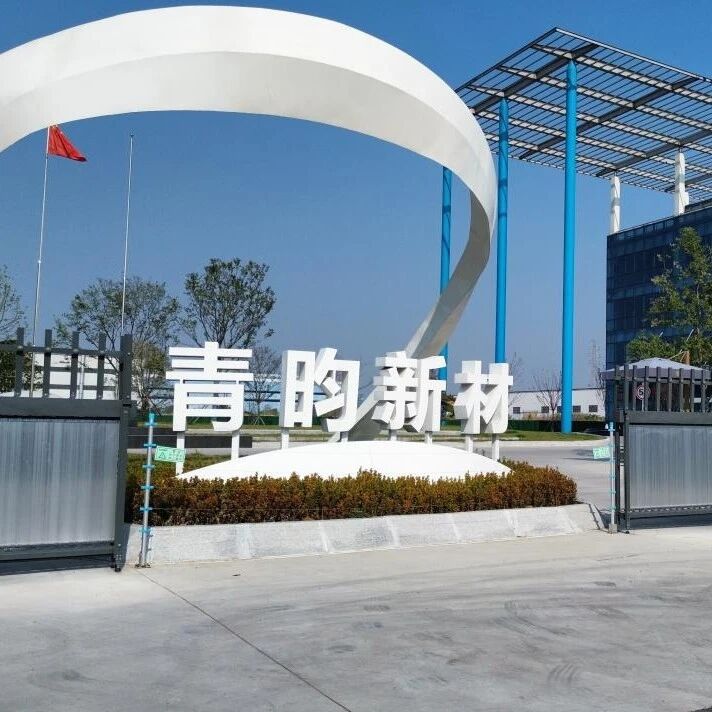
Group 1 - The core viewpoint of the article highlights Qingyun New Materials' successful completion of a C+ round strategic financing, led by Zhonghua Capital and Guoxin Investment Fund, aimed at enhancing technology innovation in the flash evaporation material sector [1][2] - The financing will focus on advancing core technologies related to phase change materials, facilitating their large-scale application across various scenarios [1][2] - Qingyun New Materials has established itself as a leader in the domestic flash evaporation supermaterial field, breaking the long-standing foreign monopoly on flash spinning technology and developing the Kunlun™ series of supermaterials with unique properties [1][2] Group 2 - The demand for phase change materials, known for their efficient heat storage and temperature control, is rising in sectors such as building energy conservation, new energy vehicle thermal management, and energy storage systems [2] - Flash evaporation technology enhances the stability and thermal conductivity of phase change materials, addressing industry challenges such as leakage and poor thermal conductivity [2] - The recent financing will provide sufficient momentum for Qingyun New Materials' R&D efforts, focusing on the integration of flash evaporation technology with phase change materials to optimize product formulations and production processes [2]
青昀新材完成C+轮战略融资,助力闪蒸法迭代创新升级
IPO早知道· 2026-02-11 05:31
Core Viewpoint - Jiangsu Qingyun New Materials Co., Ltd. (referred to as "Qingyun New Materials") has completed a C+ round of strategic financing led by Zhonghua Quanzhou Fund and Guoxin Fund, which will accelerate its technological innovation in flash evaporation materials and strengthen its global leading position in this field [3][5]. Group 1 - Qingyun New Materials has broken through a 60-year technology blockade by overseas companies, achieving a breakthrough from 0 to 1 in the flash evaporation process, with its independently developed Kunlun material filling a domestic gap [3][5]. - The Kunlun material developed by the company features excellent properties such as waterproof breathability, lightweight high strength, and 100% green environmental recyclability, surpassing international counterparts and has passed global certifications like EU RoHS/REACH and US FDA [3][5]. - The strategic investment from Guoxin Fund and Zhonghua Quanzhou Fund is a recognition of Qingyun's technological strength and industrial value, enabling significant upgrades and innovations in its technology and products [5][6]. Group 2 - Qingyun New Materials is the only company in China to achieve engineering mass production and commercial sales of flash-spun materials in high-end applications such as medical packaging [5][6]. - The investment will help expand the application of Kunlun materials in emerging fields such as high-end medical, green buildings, personal protection, and modern agriculture, while promoting strategic collaboration with state-owned enterprises [5][6]. - The completion of the C+ round financing will support key technological breakthroughs and capacity expansion in flash evaporation materials, contributing to the high-quality development of China's new materials industry [6].
四川省教科文卫工会以“引智助企”小切口赋能产教融合
Xin Lang Cai Jing· 2026-02-10 16:58
Core Viewpoint - The Sichuan Provincial Education, Culture, and Health Workers' Union is implementing the "Intelligence Assistance for Enterprises" project to help companies overcome technological bottlenecks in smart manufacturing and new material research, resulting in over 200 cases of school-enterprise cooperation and establishing a collaborative work mechanism for deep integration of industry and education [1][2]. Group 1 - The project aims to break through supply-demand barriers by creating a precise matching mechanism, having identified over 800 usable demands through visits to nearly 500 enterprises and collaboration with local unions [1][2]. - A multi-level collaborative model has been established, involving various unions and organizations to support enterprises in key technology breakthroughs and digital transformation, including organizing negotiation meetings and tracking project progress [2]. - The "Intelligence Assistance for Enterprises" initiative has been incorporated into the key work of the union, with a memorandum signed to establish regular communication and cooperation mechanisms, and local governments providing financial incentives to encourage participation [3]. Group 2 - The initiative includes the development of an online platform via the "Chuan Gong Zhi Jia" APP, allowing enterprises to upload their development constraints and intelligence needs while showcasing expert capabilities from universities [3]. - Expert service teams have been formed to provide on-site technical guidance based on the specific needs reported by enterprises, enhancing the support provided to companies undergoing transformation [2]. - The project has successfully coordinated with 14 provincial industrial unions and various research institutions to match over 20 universities and experts to address enterprise needs [1].
硬核科技集结,中关村前沿大赛新材料领域十强出炉
Bei Jing Ri Bao Ke Hu Duan· 2026-02-09 13:39
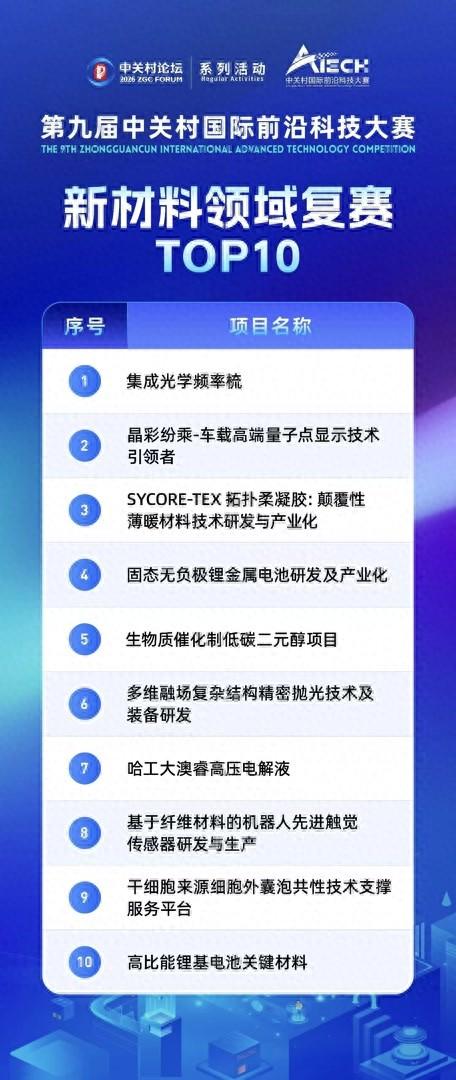
Core Insights - The 9th Zhongguancun International Frontier Technology Competition recently held its semifinals in the new materials sector, showcasing innovative projects such as "Integrated Optical Frequency Comb" and "High-end Quantum Dot Display for Vehicles" [1] Group 1: New Materials Innovations - The "Integrated Optical Frequency Comb" project by Qiming Photonics Technology is notable for its ability to output 34 or more evenly spaced wavelengths through a single chip, addressing bandwidth and power consumption challenges in optical interconnect technology [1][2] - The project utilizes a modified "optical frequency comb" technology that previously required expensive equipment, achieving chip-level integration that simplifies control logic and reduces power consumption and costs [2] - Other top projects include "Topological Soft Gel for Winter Protection," "Advanced Tactile Sensors for Robots," and a platform for "Extracellular Vesicles from Stem Cells," indicating significant advancements in various fields such as smart equipment, biomedical applications, and advanced displays [3] Group 2: Competition Structure and Evaluation - The competition features a jury of experts from academia, investment, and industry who evaluate projects based on technological advancement and market potential, providing professional advice for innovation and long-term development [6] - The 9th Frontier Competition is organized by the Beijing Municipal Science and Technology Commission and the Zhongguancun Management Committee, with the semifinals scheduled for March 2026 and the finals during the Zhongguancun Forum annual meeting [6]

职工微创新激发全员创新活力
Xin Lang Cai Jing· 2026-01-27 21:05
Group 1 - The core viewpoint is that the establishment of 33 employee micro-innovation studios in Le Ling City has led to significant technological advancements, including 75 invention patents and 268 utility model patents, generating an expected economic benefit of 35 million yuan [1] - The local government has issued a notice to encourage the creation of micro-innovation studios and the evaluation of employee innovation achievements, focusing on the "Five Small" activities (small inventions, small creations, small innovations, small designs, small suggestions) [1] - Since 2024, 33 micro-innovation studios and 8 provincial model innovation studios have collaborated to collect 1,200 "Five Small" results, distributing 1.82 million yuan in bonuses and driving economic benefits exceeding 30 million yuan [1] Group 2 - Shandong Anshun Pharmaceutical Co., Ltd. has collected 463 micro-innovation ideas with a participation rate of 90%, generating annual revenue of 9.9384 million yuan and distributing rewards totaling 335,900 yuan [2] - Shandong Youyan Guojinghui New Material Co., Ltd. has applied for 40 national patents, including 21 invention patents, and achieved a cumulative effect of 2 million yuan from its "Five Small" innovation results [2]
华锡有色等在广西成立关键金属研究院公司,注册资本5亿
Zhong Guo Neng Yuan Wang· 2026-01-23 10:31
Core Viewpoint - The establishment of Guangxi Key Metals Research Institute Co., Ltd. signifies a strategic move in the field of new materials technology and engineering services, with a registered capital of 500 million RMB [1] Group 1: Company Overview - Guangxi Key Metals Research Institute Co., Ltd. has been recently founded with a legal representative named Hu Mingzhen [1] - The company has a registered capital of 500 million RMB [1] - The business scope includes research and development in new materials technology, professional design services, engineering and technical research, and experimental development, as well as foreign contracting projects [1] Group 2: Shareholding Structure - The company is jointly held by Guangxi Financial Investment Co., Ltd., Central South University Science Park Development Co., Ltd., and Huaxi Nonferrous Metals Co., Ltd. (stock code: 600301) [1]

浙江黄岩:概念验证驱动产业升级
Jing Ji Ri Bao· 2026-01-15 02:14
Core Insights - The article highlights the advancements in AI breeding technology by Huazhong Agricultural University, which has developed over 800 new citrus polyploid germplasm resources and successfully bred a new variety called "Huayan Honey Orange No. 1" [1] - The initiative aims to integrate cutting-edge molecular design results into real planting environments to efficiently select and cultivate the next generation of excellent varieties in the citrus industry [1][2] Group 1: Technological Advancements - Huazhong Agricultural University utilizes molecular design and cell engineering to upgrade traditional breeding processes into predictable and targeted operations [1] - The Huangyan Citrus Germplasm Research Center serves as a practical implementation site for these advanced breeding technologies [1] Group 2: Government Support and Infrastructure - The local government has established a comprehensive concept verification system to bridge the gap between laboratory results and industrial application, providing testing grounds, funding pools, and application scenarios for innovative technologies [2] - Huangyan has invested in several high-level public platforms, including the Southeast Zhejiang Bio-based New Materials Intelligent Innovation Center and the Citrus Germplasm Research Center, which act as shared laboratories for SMEs [2] Group 3: Financial Incentives for Innovation - Huangyan offers direct subsidies in the form of "computing vouchers" and "model vouchers," allowing companies to deduct up to 60 million yuan annually from R&D expenses [2] - A 1 billion yuan industrial guidance fund has been established to support promising projects through concept verification and subsequent investments [2] Group 4: Talent Acquisition and Development - Huangyan has successfully attracted 8 provincial-level talents and implemented a talent-sharing mechanism with 15 "technology vice presidents" and "industry professors" [3] - The region has seen successful industrialization of advanced technologies, such as the nano-light valve film technology, demonstrating the effectiveness of the concept verification system [3] Group 5: Future Strategic Focus - Huangyan plans to enhance its concept verification system as a core strategic pivot, focusing on key areas like new energy materials, smart molds, and modern agriculture [3] - The region aims to deepen the integration of industry, academia, and research, establishing collaborative mechanisms to accelerate the transfer and transformation of cutting-edge technologies [3]
AI技术助力变革能源等领域材料研发范式
Huan Qiu Wang Zi Xun· 2026-01-12 09:30
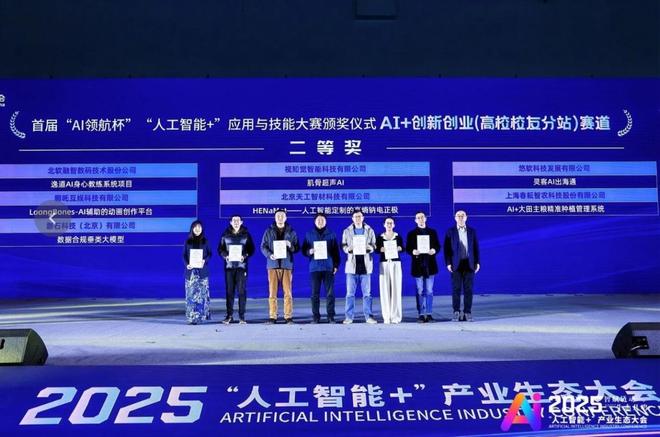
Group 1 - The core focus of TianGong Intelligent Materials Technology Co., Ltd. is the integration of "artificial intelligence + new materials" to drive the research paradigm from traditional trial-and-error to data-driven approaches, aiding the upgrade of the new materials industry [1] - TianGong has developed a pioneering HENaMat model for sodium-ion battery anode materials, which won second place at the 2025 "AI Navigation Cup" competition organized by the China Internet Association [1] Group 2 - Traditional lithium-ion batteries are nearing their physical energy density limits, while sodium-ion batteries, despite their potential in resources and costs, are limited by lower energy density and cycle life, primarily used in two-wheeled vehicles, low-speed vehicles, and backup power for base stations [3] - TianGong's team has constructed an artificial intelligence prediction model based on crystal graph convolutional neural networks (CGCNN) for sodium-ion battery anode materials, achieving over 90% accuracy in predicting band gaps, voltages, and specific capacities, while reducing computation time from thousands of hours to minutes, enhancing efficiency by approximately 3000 times [3] - The company has established a complete performance evaluation system that extends from band gap prediction to voltage and specific capacity assessment, providing scalable solutions for materials gene engineering, applicable not only to sodium-ion battery anode development but also extendable to lithium-ion batteries and other energy materials [3]
精工研材 绘就应用新图景
Huan Qiu Wang Zi Xun· 2026-01-12 01:54
Group 1: Russia - In 2025, Russia's new material research shows a clear trend of converting military advantages to civilian applications and breakthroughs in extreme environment materials [1] - The All-Russian Institute of Aviation Materials has developed a new generation of fluoropolyurethane ceramic paint, reducing weight by 35% and halving the coating cycle, significantly improving maintenance efficiency for domestic aviation equipment [1] - The Kurchatov Institute has showcased cold-resistant steel and ultra-low temperature tough materials designed for polar scientific research, ensuring equipment maintains excellent mechanical properties at -60°C [1] - A new catalyst based on synthetic silicoaluminate has been developed for efficient conversion of wood waste into high-value pharmaceutical and fragrance compounds [1] - A high-load bimetallic nickel-based catalyst has been created to enhance the selectivity and stability of the dehydrogenation process for liquid organic hydrogen carriers, supporting clean energy technology [1] Group 2: United States - In 2025, the U.S. achieved key material breakthroughs in microelectronics, including new high-conductivity films and semiconductor-compatible superconducting materials [2][3] - Stanford University invented an amorphous niobium phosphide film that surpasses copper in conductivity at atomic thickness, compatible with existing low-temperature chip processes [3] - An international team led by New York University developed germanium materials with superconducting properties, enabling potential large-scale expansion of quantum devices based on mature semiconductor processes [3] - The Army Research Laboratory and Lehigh University developed a nanostructured copper-tantalum-lithium alloy, noted for its exceptional elasticity, mechanical strength, and thermal stability [3] - Innovations in 3D printing technology have accelerated the penetration of materials into high-end applications, including record-performance superconductors for medical imaging magnets and quantum devices [5] Group 3: United Kingdom - In 2025, UK researchers made significant breakthroughs in new carbon structures and efficient catalytic materials, providing critical support for electronics, communications, and green chemistry [6] - The University of Oxford synthesized a new carbon structure resembling "molecular chains," enabling detailed studies of cyclic carbon molecules at room temperature, potentially revolutionizing electronic devices and quantum technology [6] - The University of Cambridge developed innovative "molecular antenna" technology, achieving electroluminescence in insulating nanoparticles and creating ultra-pure near-infrared light-emitting diodes [8] Group 4: France - France developed the world's first infinitely recyclable organic silicon recovery process, providing a solution for polymer material pollution [11] - Research revealed the mechanism of extreme "physical phase transition" of water, which can transform into a superacid under extreme conditions, opening new pathways for diamond synthesis and efficient refining [11] - A collaboration between Strasbourg University and the University of Manchester led to the development of artificial micro-motors mimicking natural protein mechanisms, advancing targeted drug delivery and nanorobotics [11] Group 5: Germany - In 2025, Germany's new materials sector focused on overcoming core material bottlenecks required for energy, manufacturing, and information technology, highlighting trends in digitalization, sustainability, and functional composites [13] - The Fritz Haber Institute achieved advancements in single-atom catalysts, enhancing selectivity in methane conversion pathways [13] - Karlsruhe Institute of Technology developed low-iridium or iridium-free proton exchange membrane electrolyzer catalysts, maintaining high activity while improving stability [13] - Innovations in energy storage and photovoltaic technology showcased strong engineering capabilities, with significant improvements in solid-state battery manufacturing and solar cell efficiency [14] Group 6: South Korea - In 2025, South Korea demonstrated a strong focus on "efficiency revolution" and "technological self-reliance" in new material research [15] - The Korea Atomic Energy Research Institute developed an eco-friendly extraction technology for lithium from lithium iron phosphate batteries, achieving a recovery rate of 99.8% without generating acidic wastewater [15] - A quantum technology-based design platform was launched to accelerate the development of efficient energy storage and carbon capture materials [15] - The Korea Institute of Materials Science developed a van der Waals magnetic material with ultra-high storage density, enhancing information storage capabilities by tenfold [16] Group 7: South Africa - In 2025, South Africa made significant advancements in new materials, focusing on sustainability, energy transition, and functional materials for industrial and social applications [18] - The country allocated 1.2 billion rand for advanced materials, fostering the growth of 14 startups specializing in graphene composites and rare earth magnet regeneration [18] - The University of Cape Town developed an iron-nitrogen-carbon electrocatalyst that performs at 90% of platinum-based systems while reducing costs to below 10% [18] - Local adaptations in energy storage and functional materials were demonstrated, including sodium manganese oxide cathode materials with over 4000 cycles and self-healing concrete [19] Group 8: Japan - In 2025, Japan's strategic innovation research plan prioritized "quantum material research" and the creation of new materials through wave control [20] - Kyoto University constructed a three-dimensional van der Waals open framework, stable at temperatures up to 593K, with applications in gas storage and catalysis [20] - An international team developed a titanium-aluminum-based superelastic alloy, setting a new benchmark for superelastic materials and introducing innovative design concepts [20] - Hokkaido University researchers created an AI-assisted design for super-adhesive hydrogels, inspired by natural adhesive proteins, with potential applications in plumbing and underwater adhesion [22]