绿色港口发展

Search documents
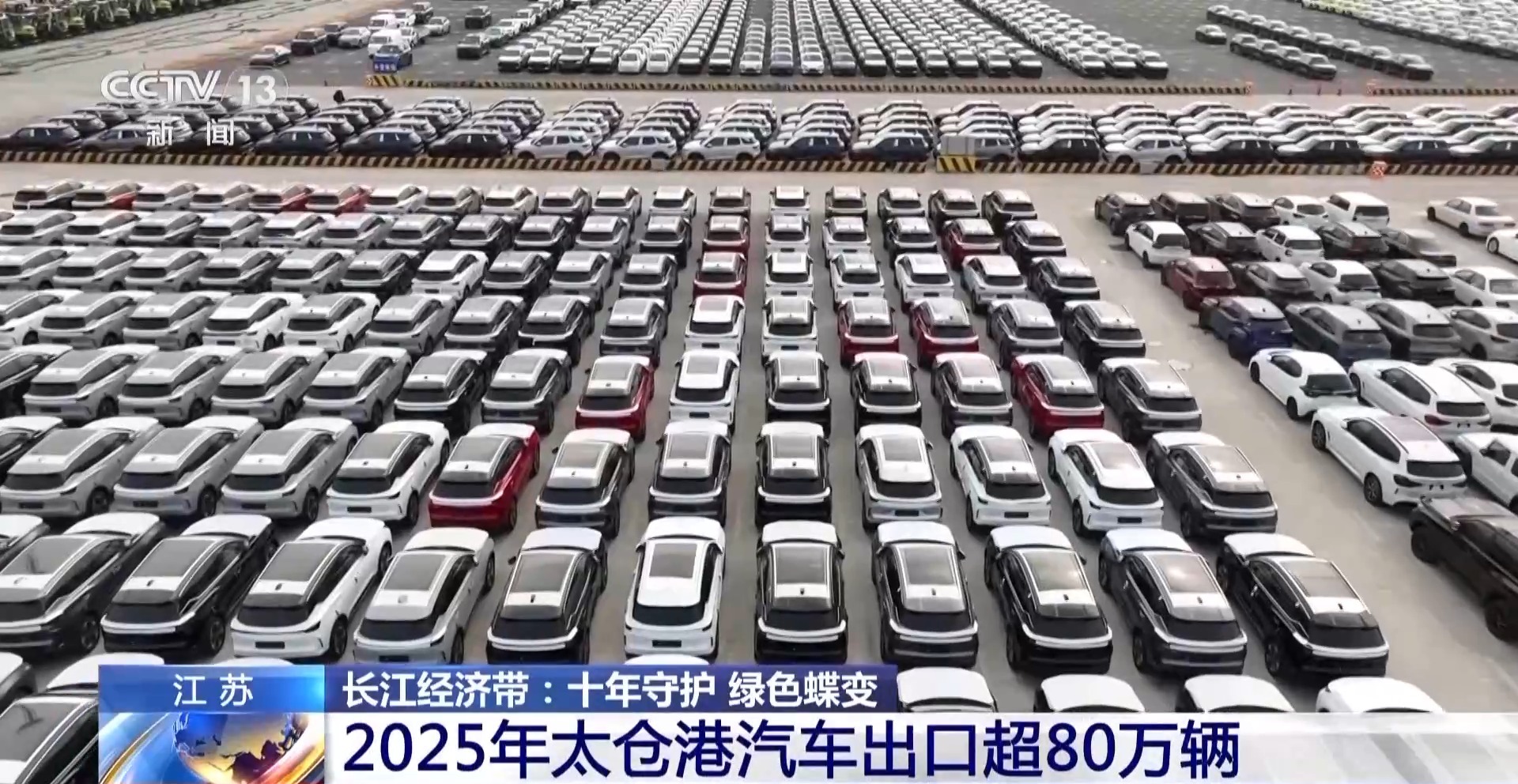
视频丨去年汽车出口超80万辆 太仓港见证中国制造“出海”加速度
Yang Shi Xin Wen Ke Hu Duan· 2026-01-09 03:22
Core Viewpoint - The Yangtze River Economic Belt, covering 11 provinces and cities, plays a crucial role in China's economy, with significant growth in transportation infrastructure and export activities, particularly in the automotive sector from Taicang Port [1][10]. Group 1: Economic and Transportation Development - The Yangtze River Economic Belt accounts for approximately half of China's population and economic output, with the construction of a comprehensive transportation corridor along the river [1]. - The high-level navigable waterways of the Yangtze River have increased from 8,000 kilometers to 11,000 kilometers over the past decade, and the cargo throughput at major ports has grown by 71%, reaching 4.2 billion tons [1]. Group 2: Taicang Port's Automotive Export Growth - Taicang Port has seen a rapid increase in automotive exports, with over 800,000 vehicles exported in 2025, representing at least one out of every ten vehicles exported from China [6][4]. - The port serves as a critical hub for vehicles produced in regions like Chongqing, Hubei, and Anhui, facilitating their global distribution [8]. Group 3: Strategic Advantages and Innovations - Taicang Port benefits from a strategic location with a 38-kilometer golden coastline and deep-water channels exceeding 12 meters, accommodating both inland and ocean-going vessels [8]. - The port has implemented a regional customs integration with Shanghai, simplifying the customs process to "one declaration, one inspection, one release," which enhances efficiency for high-value exports [12]. Group 4: Green Development Initiatives - Taicang Port has adopted smart management systems, utilizing digital twin technology for comprehensive control of port operations, transitioning from manual responses to intelligent interventions [14]. - The port has also completed a pilot project for pile foundation protection in deep-water, high-flow environments, contributing to the safety of the Yangtze River shoreline [16].

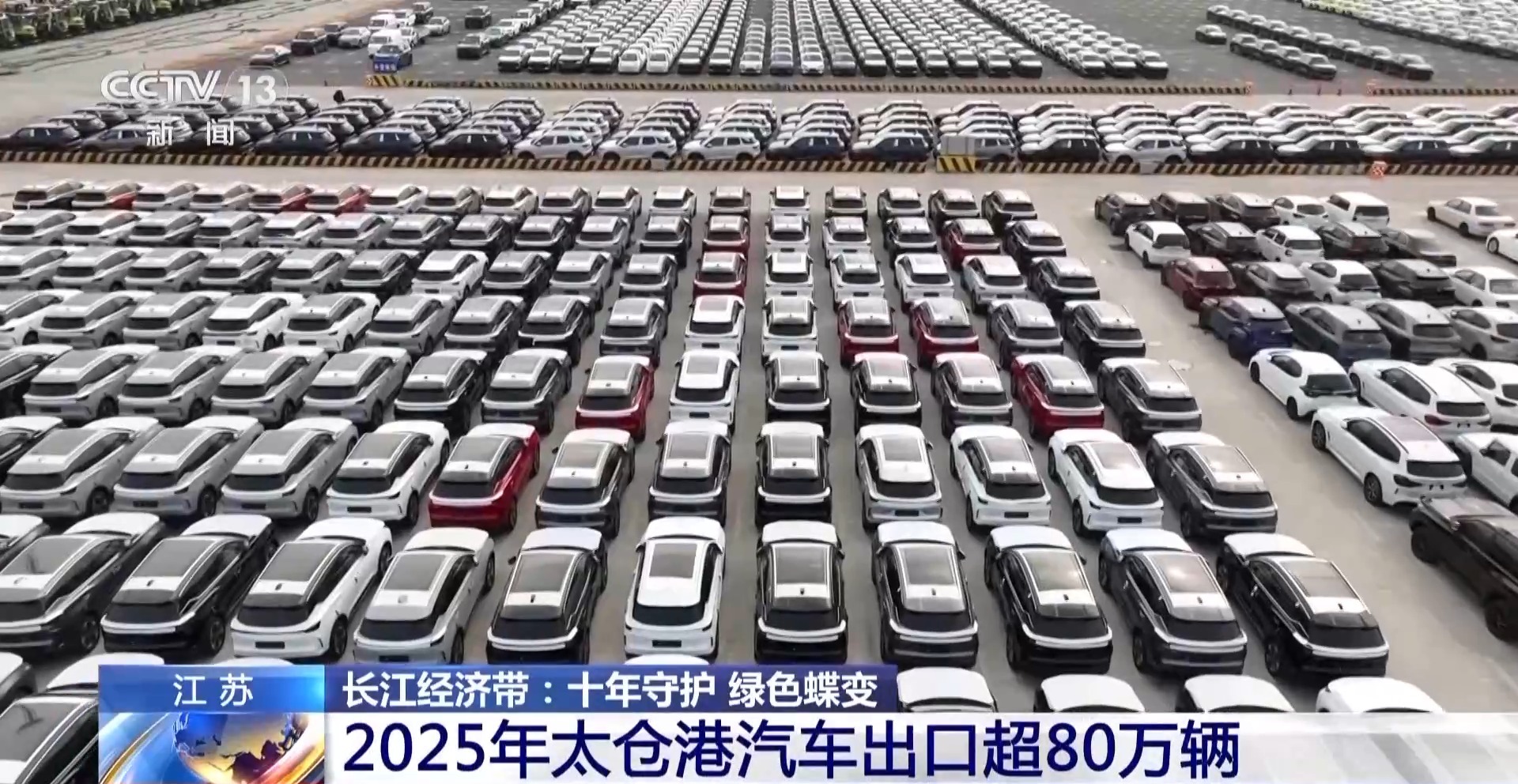
去年汽车出口超80万辆 太仓港见证中国制造“出海”加速度
Yang Shi Xin Wen Ke Hu Duan· 2026-01-09 01:48
Core Insights - The Yangtze River Economic Belt, covering 11 provinces and cities, accounts for about half of China's population and economic output, with significant infrastructure developments over the past decade [1] - The Taicang Port has seen a rapid increase in automobile exports, with over 800,000 vehicles exported in 2025, representing a substantial portion of China's total automobile exports [3] - Taicang Port's strategic location and deep-water channels enhance its capacity to handle both inland and ocean-going vessels, facilitating efficient logistics for automobile exports [5] Group 1: Infrastructure and Economic Impact - The Yangtze River's high-level navigation channels have expanded from 8,000 kilometers to 11,000 kilometers, and the cargo throughput at major ports has increased by 71% to 4.2 billion tons [1] - Taicang Port is recognized as the largest foreign trade port along the Yangtze River, benefiting from regional integration and institutional innovations in the Yangtze River Delta [7] Group 2: Export Growth and Product Diversification - In 2025, Taicang Port's automobile export volume surpassed 800,000 units, indicating that at least one out of every ten exported vehicles in China originated from this port [3] - The port is not only focused on automobiles but also sees growth in high-value products such as lithium batteries and photovoltaic products, contributing to the diversification of exports [9] Group 3: Technological and Environmental Innovations - Taicang Port has implemented smart scheduling and control systems, achieving a closed-loop management process for terminal operations, which enhances efficiency and safety [11] - The port has also completed a pilot project for pile foundation protection in deep-water, high-flow environments, showcasing its commitment to green development and the protection of the Yangtze River shoreline [13]