
绿色药物合成

Search documents
“直接脱氨”策略有望降低药物成本
Huan Qiu Wang Zi Xun· 2025-11-20 03:33
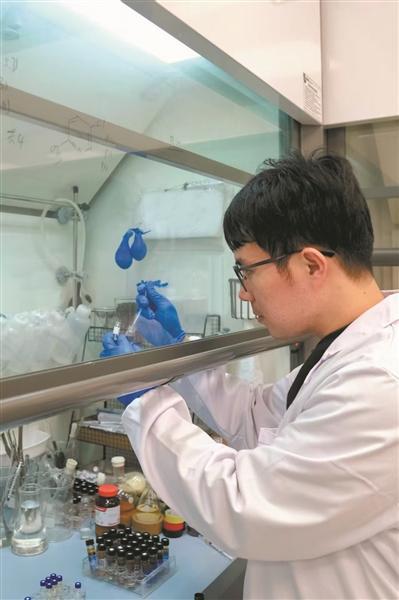
Core Viewpoint - The research team led by Zhang Xiaoheng from the University of Chinese Academy of Sciences has developed a new method for modifying aromatic amines, which could significantly reduce costs in cancer drug production and eliminate risks associated with traditional methods [2][5]. Group 1: Research Breakthrough - The team published their findings in "Nature," highlighting a novel "direct deamination" strategy that replaces stable carbon-nitrogen bonds in aromatic amines with various functional chemical bonds using inexpensive reagents [2][5]. - This new method avoids the use of unstable diazonium salt intermediates, which pose explosion risks and contribute to heavy metal pollution [4][5]. Group 2: Industrial Implications - The traditional method for removing amino groups from aromatic amines has been in use for over 140 years, but it is inefficient and environmentally unfriendly, leading to high costs in drug production [3][4]. - The new approach is expected to lower the production costs of certain drug intermediates by 40%-50% and facilitate large-scale green production [8]. Group 3: Methodology and Process - The research involved extensive experimentation, leading to the discovery that N-nitrosoamines, initially considered a minor byproduct, play a crucial role in mediating the synthesis of target products [6][7]. - The team developed a one-pot deamination cross-coupling strategy, allowing multiple reactions to occur within the same system, enhancing operational convenience [7]. Group 4: Future Prospects - The new method has been tested on various nitrogen-containing intermediates commonly used in the pharmaceutical industry, showing applicability across different types of drug precursors [8]. - While initial laboratory-scale validations have been completed, further research and industrial testing are required to fully realize the method's potential and ensure safety in larger-scale applications [9].

真正的杰作!国科大团队破解百年应用难题!
2 1 Shi Ji Jing Ji Bao Dao· 2025-11-03 06:29
Core Viewpoint - The research team led by Zhang Xiaoheng at the University of Chinese Academy of Sciences has developed a new technique called "molecular editing" that allows for the safe and efficient conversion of C-N bonds in aromatic amines, facilitating the synthesis of key drug components without hazardous intermediates [1][2]. Group 1 - The "molecular editing" technique enables a smooth and controllable process, allowing ordinary pharmaceutical workers to operate it easily [1]. - This method bypasses the high-risk "diazotization" process that has been used for over a century, making it both safer and more environmentally friendly [1]. - The technique can connect multiple coupling reactions in a single pot, significantly speeding up the modification of drug molecules [1]. Group 2 - The new method is adaptable to nearly all drug molecular structures and can reduce the cost of certain drug intermediates by 40%-50% [1]. - The Zhang Xiaoheng team has already engaged with pharmaceutical companies for the synthesis of intermediates for anti-cancer drugs, indicating practical applications of their research [1]. - The rapid publication of their findings in Nature, just one month after submission, highlights the efficiency and significance of their work, receiving high praise from reviewers and industry experts [1][2]. Group 3 - The breakthrough has been described as a "Nobel Prize-level breakthrough" by Zhou Hongyi, chairman of 360, emphasizing its potential impact [2]. - The research reflects a shift in China's scientific capabilities from following to leading in innovative processes, with more breakthroughs anticipated in green drug synthesis and other areas [2].