绿色走廊

Search documents
新春走基层丨江豚跃水 百舸争流 离不开长江黄金水道上的这份守护
Yang Shi Xin Wen· 2026-02-27 08:59
Core Viewpoint - The article highlights the importance of the Yangtze River as a vital waterway for transportation and the efforts of the maritime enforcement team to ensure safety and environmental protection in the region [1][5]. Group 1: Maritime Safety and Enforcement - The Wangjiawu anchorage in Wuhan is the largest dry bulk ship anchorage in the middle reaches of the Yangtze River, serving over a hundred vessels daily during the busy spring transportation period [1]. - Lin Weixin, a deputy captain of the maritime enforcement team, has been dedicated to maritime safety for eight years, emphasizing the need for safety education among crew members through a "crew mobility classroom" initiative [2]. - The enforcement team has implemented measures to close sewage discharge valves on ships using lead seals to maintain water quality, requiring personnel to access confined spaces within vessels [3]. Group 2: Environmental Protection Efforts - Since 2016, the enforcement team has focused on protecting the Yangtze River's environment, aligning with the "protect the environment, not develop excessively" philosophy [2]. - The number of pollution reception vessels has increased from 121 to 167 over the past decade, with over 3,300 docks now equipped with pollution reception facilities, achieving a zero discharge model for shipborne pollutants [3]. - The return of the Yangtze River dolphin is seen as a positive indicator of the environmental improvements made in the region [3][4]. Group 3: Future Aspirations - Lin Weixin expresses hope for a greener future for the Yangtze River, with the introduction of new energy vessels and the establishment of green ports and zero-carbon docks [4]. - The vision for the Yangtze River includes a beautiful scene of orderly navigation and a clean environment, reflecting the successful efforts of the maritime enforcement team [4][5].
新春走基层 | 守护长江水上安澜 描绘生态发展绿色画卷
Yang Shi Wang· 2026-02-26 02:51
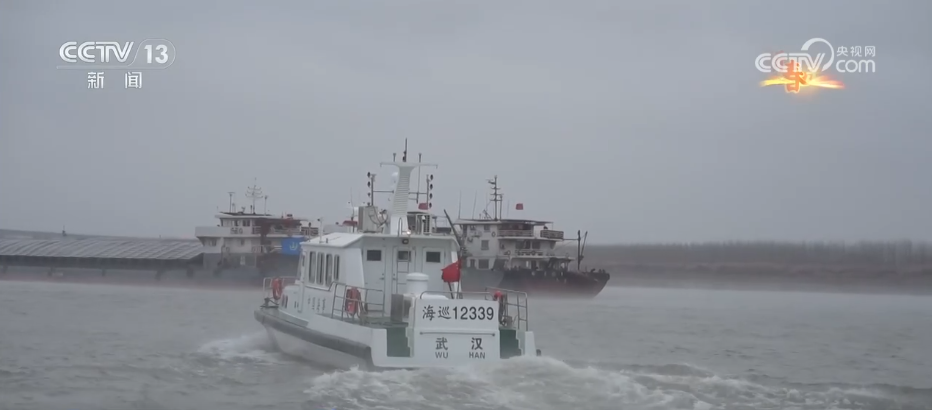
Core Viewpoint - The Yangtze River serves as a crucial waterway for transportation in China, with the Wangjiawu anchorage in Wuhan being the largest dry bulk ship anchorage in the middle reaches of the Yangtze River, facilitating the supply chain of essential materials during the Spring Festival [1][3]. Group 1: Operational Insights - The Wangjiawu anchorage operates as a "water parking lot," accommodating over a hundred vessels daily for docking, resupply, and cargo waiting [1]. - During the Spring Festival, the cargo transport on the Yangtze River remains busy to ensure the continuous supply of energy and raw materials to the central China region [3]. - The maritime law enforcement team actively monitors the anchorage, ensuring the safety of each vessel amid adverse weather conditions [5]. Group 2: Safety and Environmental Protection - The maritime enforcement team has established a "crew mobility classroom" to educate crew members about legal regulations and safety practices, addressing past issues of limited legal knowledge among them [7]. - Since 2016, the enforcement team has focused on environmental protection, aligning with the "protect the Yangtze River" initiative, which emphasizes ecological preservation over development [11]. - The implementation of sealed valves to prevent wastewater discharge from vessels has led to a zero-emission model for shipborne pollutants, with significant improvements in water quality observed [13][17]. Group 3: Personal Stories and Achievements - Lin Weixin, a dedicated member of the maritime enforcement team, has been instrumental in promoting safety awareness among crew members, stemming from his own experiences with maritime accidents [9]. - The increase in pollution reception facilities along the Yangtze River has significantly improved the management of shipborne waste, contributing to the revival of local wildlife, such as the Yangtze River dolphin [17]. - The commitment of the maritime team to maintaining order and ecological beauty in the Yangtze River is reflected in their daily efforts, which have resulted in a cleaner and more organized waterway [19].