
不搞大开发

Search documents
新春走基层丨江豚跃水 百舸争流 离不开长江黄金水道上的这份守护
Yang Shi Xin Wen· 2026-02-27 08:59
Core Viewpoint - The article highlights the importance of the Yangtze River as a vital waterway for transportation and the efforts of the maritime enforcement team to ensure safety and environmental protection in the region [1][5]. Group 1: Maritime Safety and Enforcement - The Wangjiawu anchorage in Wuhan is the largest dry bulk ship anchorage in the middle reaches of the Yangtze River, serving over a hundred vessels daily during the busy spring transportation period [1]. - Lin Weixin, a deputy captain of the maritime enforcement team, has been dedicated to maritime safety for eight years, emphasizing the need for safety education among crew members through a "crew mobility classroom" initiative [2]. - The enforcement team has implemented measures to close sewage discharge valves on ships using lead seals to maintain water quality, requiring personnel to access confined spaces within vessels [3]. Group 2: Environmental Protection Efforts - Since 2016, the enforcement team has focused on protecting the Yangtze River's environment, aligning with the "protect the environment, not develop excessively" philosophy [2]. - The number of pollution reception vessels has increased from 121 to 167 over the past decade, with over 3,300 docks now equipped with pollution reception facilities, achieving a zero discharge model for shipborne pollutants [3]. - The return of the Yangtze River dolphin is seen as a positive indicator of the environmental improvements made in the region [3][4]. Group 3: Future Aspirations - Lin Weixin expresses hope for a greener future for the Yangtze River, with the introduction of new energy vessels and the establishment of green ports and zero-carbon docks [4]. - The vision for the Yangtze River includes a beautiful scene of orderly navigation and a clean environment, reflecting the successful efforts of the maritime enforcement team [4][5].
峡江两岸的绿色蜕变——三峡库区“共抓大保护,不搞大开发”实践报告
Xin Hua Wang· 2026-01-27 02:12
Core Viewpoint - The article emphasizes the dual challenges faced by the Three Gorges Reservoir area: ecological fragility and industrial emptiness, highlighting the need for a balance between ecological protection and economic development [1][5][12]. Group 1: Ecological Protection - The Three Gorges Reservoir area has seen significant ecological changes, with the water quality of the Yangtze River in Wushan maintaining a Class II standard for eight consecutive years [4]. - The region is a key ecological function area, providing 35% of the country's freshwater resources and ensuring drinking water safety for over 300 million people [4]. - The Chinese government has prioritized ecological protection, with President Xi Jinping emphasizing the importance of safeguarding the Three Gorges Reservoir and the Yangtze River for long-term development [5][6]. Group 2: Economic Development - The article discusses the transition from coal mining to green industries in Fengjie County, where the coal industry once contributed 50% of the local GDP but was closed to promote ecological restoration and sustainable agriculture [11][12]. - Fengjie County has successfully developed a citrus industry, covering 38,300 acres and generating over 6.5 billion yuan in comprehensive output value, demonstrating a win-win for ecological and economic benefits [12][13]. - The article highlights the emergence of new industries, such as the production of Wushan crispy plums and the integration of tourism with agriculture, contributing to local economic growth and job creation [13][21]. Group 3: Community Impact - The ecological restoration efforts have led to improved living conditions for local residents, with many benefiting from increased income through agricultural activities and eco-tourism [20][21]. - The article notes that the citrus industry in Fengjie has created significant employment opportunities, with many farmers earning substantial incomes through innovative sales methods like live streaming [20]. - The overall improvement in environmental quality has enhanced the quality of life for residents, allowing them to enjoy a cleaner and healthier living environment [18][19].

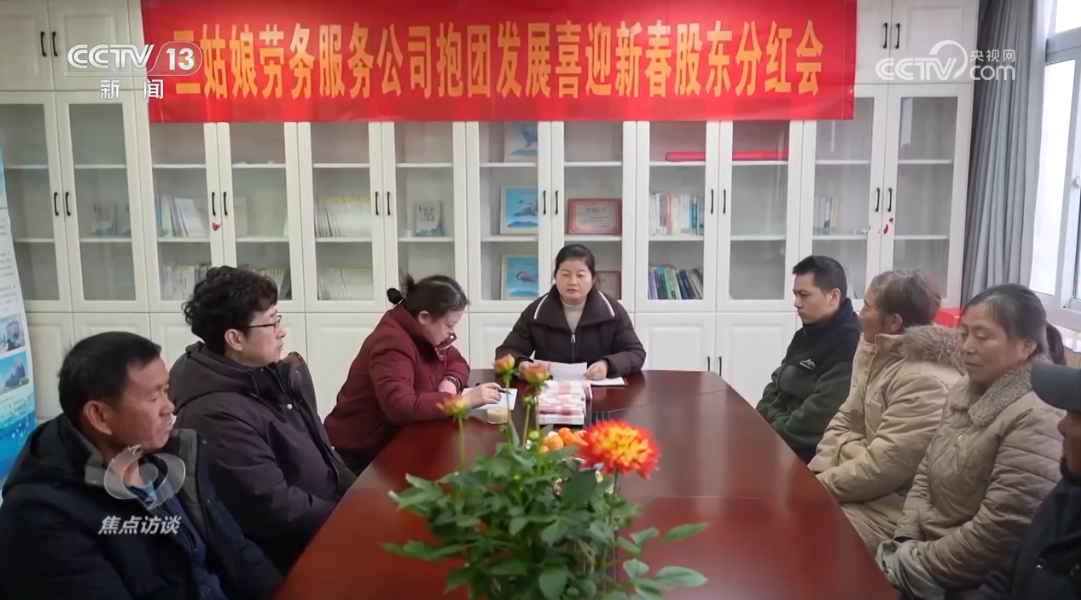
焦点访谈|了不起的长江十年蝶变 绘就生态与民生共兴图景
Yang Shi Wang· 2026-01-08 13:31
Core Viewpoint - The implementation of the "coordinated protection and no large-scale development" strategy over the past decade has significantly improved the living conditions and economic opportunities for residents along the Yangtze River Economic Belt, which covers 11 provinces and municipalities, accounting for about one-fifth of the country's area and over 40% of its population [1][22]. Group 1: Economic Transformation - The Yangtze River Economic Belt has seen a substantial increase in regional GDP, now accounting for nearly half of the national total [1]. - The per capita disposable income of residents in the 11 provinces and municipalities has nearly doubled from 23,000 yuan to 44,000 yuan over the past decade [20]. - The number of retired fishermen who have been resettled and found new employment has reached 231,000, with all capable individuals now engaged in new occupations [10]. Group 2: Environmental Restoration - The strategy has led to significant ecological improvements, with a focus on banning illegal fishing and restoring aquatic ecosystems, including a ten-year fishing ban implemented in January 2021 [7][9]. - The transformation of areas like Xuejiawa, which previously suffered from ecological degradation, showcases the successful shift from fishing to alternative livelihoods, such as labor services [5][9]. Group 3: Infrastructure Development - The infrastructure within the Yangtze River Economic Belt has undergone historic advancements, with the addition of approximately 470,000 kilometers of new roads and 134,000 new bridges over the past decade [20]. - The railway operating mileage has increased from 36,600 kilometers to 53,000 kilometers, enhancing connectivity and facilitating economic activities across the region [20]. Group 4: Community and Social Impact - The stories of individuals like Chen Lanxiang, who transitioned from fishing to running a labor company, reflect the broader trend of fishermen finding new paths to stability and prosperity [3][9]. - The establishment of cooperatives and the cultivation of cash crops, such as citrus fruits, have empowered local communities and improved their economic conditions [12][16].
主播说联播丨长江经济带十年,“清新”之变!
Yang Shi Xin Wen Ke Hu Duan· 2026-01-06 14:13
Core Insights - The Yangtze River Economic Belt has seen a significant improvement in water quality, with the proportion of good water quality rising from 67% to 96.5% over the past decade, alongside a more than doubling of regional GDP [1][3] - The strategic direction of "promoting major protection and not major development" has been emphasized since a meeting chaired by President Xi Jinping in January 2016, leading to a consensus on prioritizing ecological restoration [3][4] Environmental Developments - The Yangtze River has maintained a Class II water quality for six consecutive years, with the cleanup of 1,361 illegal docks and the near elimination of black and odorous water bodies in cities along the river [3] - The ecological environment has transformed from being severely polluted to a state where "the water is clear and fish are jumping" [3] Economic Developments - The economic development of the Yangtze River Economic Belt has shifted from extensive growth to innovation-driven growth, with the establishment of international innovation centers in Shanghai and regional centers in Wuhan and Chengdu-Chongqing [3] - A total of 41 national advanced manufacturing clusters and 30 strategic emerging industry clusters have been cultivated, highlighting the emergence of innovative companies such as DeepSeek and Yushu Technology [3] Strategic Direction - The "14th Five-Year Plan" suggests the continuous advancement of the Yangtze River Economic Belt, reinforcing the commitment to the strategy of "promoting major protection and not major development" [4]

十年来 优良水质比例增近三成 地区生产总值翻一番多 长江经济带绿色发展成效显著
Jing Ji Ri Bao· 2026-01-05 22:49
Core Insights - The Yangtze River Economic Belt has seen a significant improvement in water quality, with the proportion of good water quality rising from 67% to 96.5% over the past decade, while the regional GDP has more than doubled, increasing its share of the national GDP from 42.2% to 47.3% [1] Group 1: Environmental Protection and Green Development - The principle of "coordinated protection, not large-scale development" has been firmly established in the Yangtze River Economic Belt, leading to enhanced ecological quality [2] - Over the past decade, more than 1,300 national nature reserves have completed rectification of key ecological issues, and 17 integrated ecological protection and restoration projects have been implemented [2] - The region has established 24 national carbon peak pilot cities and parks, and 14 zero-carbon parks, while supporting the scrapping and updating of approximately 10,000 old operating vessels [2] Group 2: Technological and Industrial Innovation - The Yangtze River Economic Belt has become a hub for technological resources and innovation, with the establishment of 3 technology innovation centers and 8 national laboratories, leading to breakthroughs in key core technologies [3] - The region has cultivated 41 national advanced manufacturing clusters and 30 strategic emerging industry clusters, contributing nearly half of the national GDP while accounting for about one-third of energy consumption and carbon emissions [3] Group 3: Infrastructure and Transportation - The development of the Yangtze River Economic Belt has focused on enhancing the functionality of the Yangtze Golden Waterway, with the high-grade navigable waterways increasing from 8,000 kilometers to 11,500 kilometers [3] - The cargo throughput of major ports has increased by 71%, reaching 4.2 billion tons, maintaining its position as the world's leading inland waterway [3] Group 4: Social Welfare and Livelihood Improvement - The implementation of a 10-year fishing ban has led to improved biodiversity and stable management of fishing resources, with nearly 100% employment rate for retrained fishermen [4] - Measures have been taken to ensure social security for 231,000 retrained fishermen, including pension insurance and basic living guarantees for 12,000 low-income fishermen [4] Group 5: Cultural Heritage and Community Development - The Yangtze River Economic Belt emphasizes the protection and promotion of cultural heritage, with initiatives to enhance the cultural landscape and integrate traditional culture with modern development [5] - The region has achieved a harmonious coexistence between people and nature, fostering industrial upgrades and cultural tourism [5] Group 6: Future Development Plans - The Yangtze River Economic Belt is entering its second decade of development, with plans to implement a comprehensive development strategy focusing on ecological, innovative, open, cultural, and happy development [6]
十年护江路,一部山河志
Jiang Nan Shi Bao· 2026-01-05 15:00
Core Viewpoint - The publication of the long-form report literature "Wind from the River" highlights the ecological protection practices in Jiangsu as part of the national strategy of "promoting major protection and not major development" for the Yangtze River, marking a significant shift in development paths and emphasizing the importance of ecological preservation in China's modernization journey [1][2]. Group 1: Jiangsu's Role in Ecological Protection - Jiangsu, as the last stop before the Yangtze River flows into the sea, has the longest river coastline in the country and has historically been economically prosperous due to its connection with the river [3]. - The province has faced severe ecological challenges due to intensive development, with 47% of its area accommodating 60% of the population, 70% of investments, and 80% of economic output [3]. - Since 2016, Jiangsu has closed over 50,000 "scattered and polluting" enterprises and shut down more than 4,900 low-quality chemical companies, significantly increasing the ecological shoreline to 64.5% [4]. Group 2: Achievements in Water Quality and Biodiversity - The water quality of the Yangtze River in Jiangsu has consistently met Class II standards for seven consecutive years, with 100% of tributaries achieving Class III quality [4]. - The ecological restoration efforts have led to the return of the Yangtze River dolphin and improved aquatic life, showcasing a harmonious relationship between urban development and nature [4]. Group 3: Literary Contribution and Societal Impact - The author, Zhang Maolong, spent nearly three years documenting the ecological transformation along the Yangtze River in Jiangsu, emphasizing the collaborative efforts across regions and sectors [5][6]. - The work illustrates the successful integration of ecological protection with economic development, arguing that green transformation is essential for achieving a higher quality and more sustainable future [7].
十年,十个字,重塑长江
Xin Lang Cai Jing· 2026-01-05 14:33
Core Viewpoint - The development of the Yangtze River Economic Belt is crucial for the overall national development strategy, emphasizing ecological protection over extensive development [3][4]. Group 1: Ecological Protection and Governance - The Yangtze River, as a vital waterway, faces severe ecological challenges due to long-term extensive development, leading to issues like droughts in key lakes and a decline in biodiversity [1]. - The concept of "coordinated protection" has been established to address fragmented governance, promoting a collaborative approach across provinces for ecological compensation and joint management of river basins [6][7]. - Over the past decade, significant progress has been made in ecological protection, including the closure of illegal docks and improvements in water quality, with the Yangtze's water quality upgraded from class V to class II [9]. Group 2: Economic Development and Innovation - The principle of "coordinated protection, not extensive development" aims to enforce ecological priorities, driving industrial transformation and achieving high-quality development [10]. - The Yangtze River Economic Belt is positioned as a key area for ecological priority and green development, fostering innovation and the growth of competitive industries, such as automotive manufacturing and electronics [10]. - By 2025, the cargo throughput of the Yangtze River's mainline ports is projected to reach 4.2 billion tons, maintaining its status as the world's leading inland river [10].
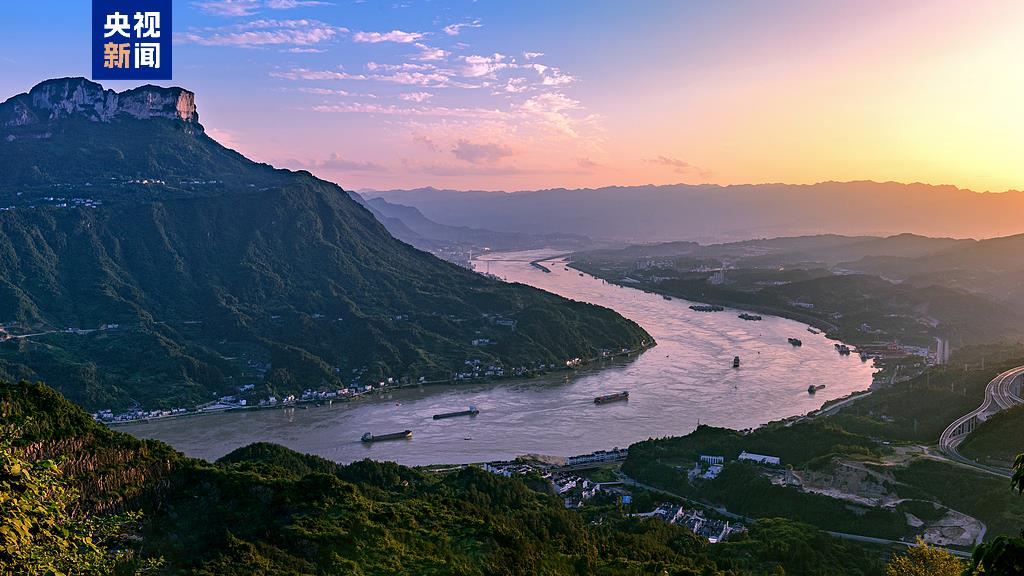
“共抓大保护,不搞大开发”,长江经济带十年绘就壮美画卷
Xin Lang Cai Jing· 2026-01-04 01:29
Core Viewpoint - The article emphasizes the importance of ecological protection over large-scale development in the Yangtze River Economic Belt, highlighting a decade of progress in balancing economic growth with environmental sustainability [2][10][11]. Group 1: Ecological Protection - The Yangtze River Economic Belt covers 11 provinces and municipalities, accounting for about one-fifth of China's land area and half of its population and economic output [2]. - Since 2020, the Yangtze River has maintained a Class II water quality for six consecutive years, with increased biodiversity and aquatic resources [2][10]. - The initiative "co-grasp major protection, not engage in major development" reflects a shift towards high-quality, green, and low-carbon development [3][11]. Group 2: Economic Development - By November 2025, the foreign trade import and export value of the 11 provinces and municipalities along the Yangtze River reached 19.12 trillion yuan, accounting for 46.4% of the national total [2]. - The Yangtze River Economic Belt has formed five major industrial clusters, including electronics, high-end equipment, automobiles, home appliances, and textiles, with a projected GDP of over 63 trillion yuan in 2024, growing at 5.4% [22]. Group 3: Policy and Governance - The article discusses the establishment of a comprehensive ecological protection and governance system, including measures like a ten-year fishing ban and pollution control initiatives [10][18]. - Collaborative mechanisms among provinces have been strengthened to ensure coordinated management of the river basin, enhancing ecological compensation and protection efforts [19][20]. - The government is promoting innovative approaches to ecological protection, such as the river and lake chief system, which assigns responsibility for every river and lake [21]. Group 4: Community Engagement and Sustainable Practices - Local communities are actively involved in ecological protection, with initiatives to train fishermen in alternative livelihoods and promote eco-tourism [27][28]. - The article highlights successful case studies where ecological restoration has led to improved local economies, such as the transformation of polluted areas into recreational spaces [28]. Group 5: Future Outlook - The article concludes with a vision for the Yangtze River Economic Belt to become a model of harmonious coexistence between nature and development, ensuring sustainable benefits for future generations [28].
“共抓大保护,不搞大开发” 长江经济带十年绘就壮美画卷 “现在路子是对的,要继续走下去”
Ren Min Ri Bao· 2026-01-03 22:17
Core Viewpoint - The development of the Yangtze River Economic Belt emphasizes ecological protection over large-scale development, aiming for a harmonious coexistence between nature and economic growth [1][5][9]. Economic Development - By November 2025, the foreign trade import and export value of the 11 provinces and cities along the Yangtze River Economic Belt reached 19.12 trillion yuan, accounting for 46.4% of the national total, marking a historical high [2]. - The Yangtze River Economic Belt has formed five major industrial clusters, including electronic information and high-end equipment, with a projected GDP of over 63 trillion yuan in 2024, growing at 5.4% [20]. Ecological Protection - Since 2020, the main stream of the Yangtze River has maintained a Class II water quality for six consecutive years, indicating significant ecological recovery [1][2]. - The initiative "coordinated protection, no large-scale development" has led to major achievements in ecological protection and restoration, including a ten-year fishing ban and pollution control measures [8][10]. Biodiversity and Species Recovery - The successful artificial breeding of the Chinese sturgeon has established a self-sustaining population, with significant increases in their numbers observed in the Yangtze River [2][3]. - The monitoring of sturgeon migration has shown positive results, indicating a recovery in the ecological health of the Yangtze River [3][4]. Systematic Governance - The governance approach has shifted from fragmented management to a comprehensive system that emphasizes collaboration among provinces for ecological protection [18][19]. - Innovative compensation mechanisms have been introduced to enhance ecological protection efforts, transitioning from a focus solely on water quality to a more integrated ecological service model [18]. Green Development - The Yangtze River Economic Belt is exploring a new path of ecological priority and green development, with initiatives to promote low-carbon industries and sustainable practices [11][20]. - The transformation of industrial zones from pollution-heavy to eco-friendly areas has been highlighted, showcasing the potential for economic growth alongside environmental stewardship [10][11].
纪检监察工作高质量发展·践悟 | 以高质量监督促进长江流域高水平保护
Zhong Yang Ji Wei Guo Jia Jian Wei Wang Zhan· 2025-11-11 00:32
Core Viewpoint - The article emphasizes the importance of strengthening political supervision to ensure the high-quality development of the Yangtze River Economic Belt, which is a significant national strategy. It highlights the need for collaboration among various departments and regions to effectively implement policies and address challenges in ecological protection and sustainable development [2][15]. Group 1: Political Supervision and Responsibilities - The Yangtze River Water Resources Commission plays a crucial role in political supervision, focusing on disaster prevention and ensuring the safety of the river, which is vital for the region's development [3][5]. - Local governments, such as Huangshi and Yunyang, are implementing specific action plans to align with national strategies, emphasizing the importance of political supervision and accountability in executing development tasks [4][6]. - The article discusses the establishment of a comprehensive supervision mechanism that integrates responsibilities across various levels of government and departments to enhance the effectiveness of oversight [9][10]. Group 2: Collaborative Mechanisms - A communication and coordination mechanism has been established among water resource supervision bodies to address challenges in the Yangtze River Economic Belt, promoting a collaborative approach to governance [7][8]. - The article outlines the importance of cross-regional and cross-departmental collaboration in supervision, highlighting the need for joint efforts to tackle systemic issues affecting the economic belt [11][12]. - The integration of technology and data sharing among departments is emphasized as a means to enhance supervision capabilities and improve the overall governance of the Yangtze River Economic Belt [12][13]. Group 3: Focus on Ecological Protection - The article stresses the necessity of prioritizing ecological protection while pursuing economic development, advocating for a balance between environmental sustainability and growth [6][15]. - Specific measures are being taken to address water pollution and enhance the management of significant projects, ensuring that ecological considerations are integrated into development plans [5][6]. - The need for continuous monitoring and assessment of ecological conditions in the Yangtze River region is highlighted to ensure compliance with environmental standards and regulations [8][10].