美国全球霸权

Search documents
美国防战略报告,“对抗中国”提法变了!
Xin Lang Cai Jing· 2026-01-26 01:07
Core Viewpoint - The U.S. Department of Defense released the 2026 Defense Strategy Report, prioritizing domestic security and interests in the Western Hemisphere, which has raised concerns among American allies and countries in the Americas [1][2]. Group 1: Strategic Priorities - The report emphasizes the need to ensure U.S. military and commercial access to key areas from the Arctic to South America, particularly Greenland, the Gulf of Mexico, and the Panama Canal [2]. - It criticizes allies in Europe and Asia for their long-standing reliance on the U.S. for defense, demanding that they take on more responsibility [2]. Group 2: China Relations - The new strategy does not mention "Taiwan" and shifts the focus away from "confronting China," instead advocating for deterrence through strength rather than direct opposition in the Indo-Pacific region [2]. - Analysts suggest that while the U.S. appears to be retreating from global hegemony, it still aims to maintain its absolute power advantage worldwide [2].
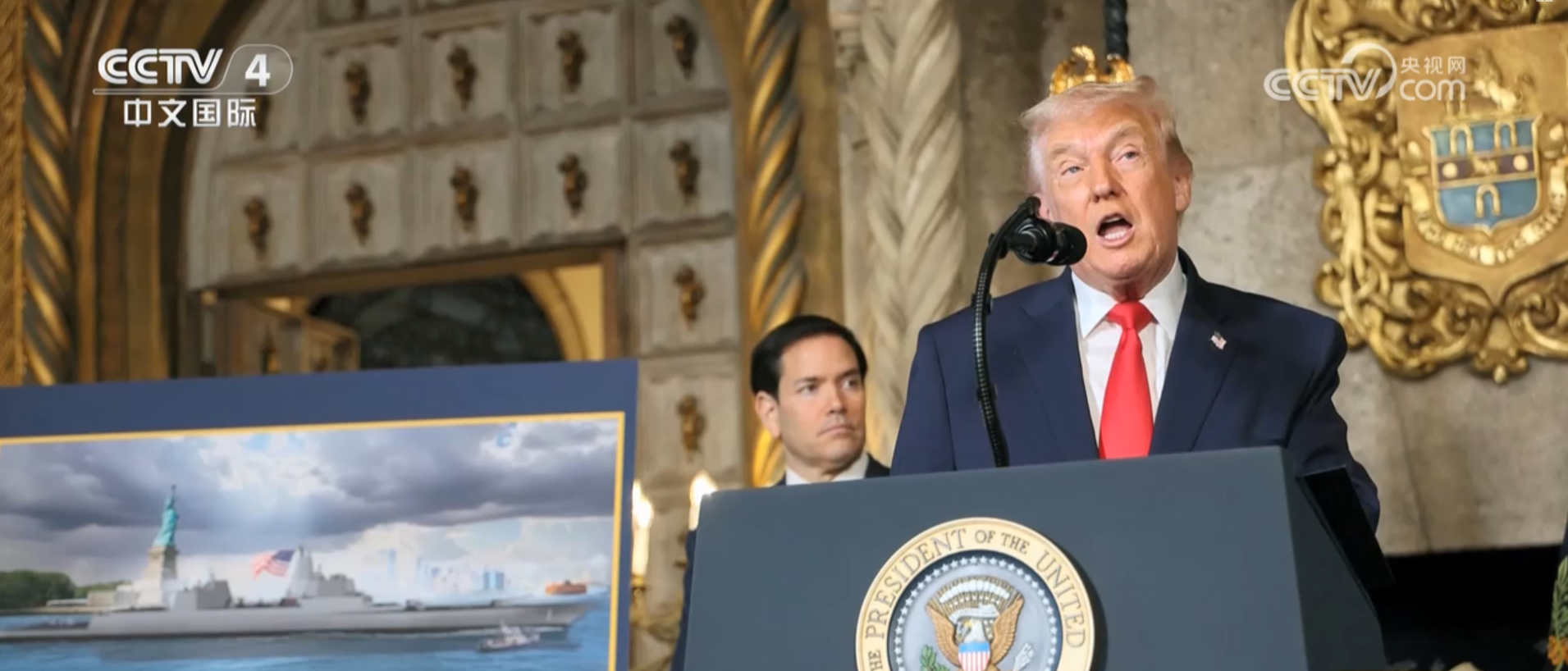
美国“特朗普”级新型战舰计划引媒体关注:更像是一场政治秀
Yang Shi Wang· 2025-12-24 07:12
Core Viewpoint - The announcement of the "Trump-class" warships by the U.S. President is perceived as a significant military development, but it is also viewed as a political maneuver ahead of the upcoming elections [1][9]. Group 1: Military Capability - The "Trump-class" warships are claimed to be the fastest and largest in the U.S. Navy, with combat capabilities purportedly "a hundred times stronger" than existing vessels [1]. - The planned construction of 20 to 25 ships, starting with two, raises concerns about the feasibility given the U.S. Navy's budget and production capacity [3][5]. Group 2: Technological Concerns - The design and technology specifications of the "Trump-class" warships are vague, and the inclusion of advanced technologies like railguns and laser weapons is questioned due to their current experimental status [5][7]. - The actual combat value of these technologies remains uncertain, as the U.S. military has not yet developed mature production models [5]. Group 3: Political Implications - The announcement is seen as a political spectacle rather than a serious military strategy, aimed at enhancing the President's image and appealing to conservative voters [7][9]. - The timing of the announcement, close to the election season, suggests it is intended to generate support and investment from conservative factions [9].

“帝国足迹”——从加勒比战争阴云起底美国海外基地演进脉络
Bei Jing Wan Bao· 2025-12-18 12:07
Group 1 - The core viewpoint of the articles highlights the escalation of U.S. military pressure on Venezuela, with President Trump ordering a comprehensive blockade of sanctioned oil tankers and the deployment of U.S. military forces to Ecuador [1][2] - The U.S. has amassed over 15,000 soldiers, numerous warships, and hundreds of aircraft in the Caribbean, marking the largest military deployment in the region since the 1962 Cuban Missile Crisis [2][5] - The U.S. military is reviving several military bases in the region, including the Roosevelt Roads Naval Base in Puerto Rico and the Christopher Columbus Military Base in Panama, indicating a strategic shift to enhance military readiness [5][6] Group 2 - The U.S. military's global base network is undergoing a "dynamic adjustment," with upgrades and new bases being sought in various regions, including the Middle East, Asia-Pacific, and Africa [6][8] - Historical context shows that U.S. overseas military bases have evolved from a focus on North America to a global presence, significantly expanding during World War II and the Cold War [11][12][13] - The presence of U.S. military bases is linked to the country's imperial expansion and military interventionism, providing a foundation for rapid military action and control over regions [10][17] Group 3 - The existence of U.S. military bases often leads to violations of local laws and human rights issues, with numerous incidents reported in host countries, including Japan and South Korea [18][20] - Environmental impacts from U.S. military bases, such as soil and water contamination, noise pollution, and ecological damage, have raised concerns among local populations [20] - The strategic positioning of U.S. bases makes host countries potential targets for attacks, increasing security risks and complicating local geopolitical dynamics [20][21]

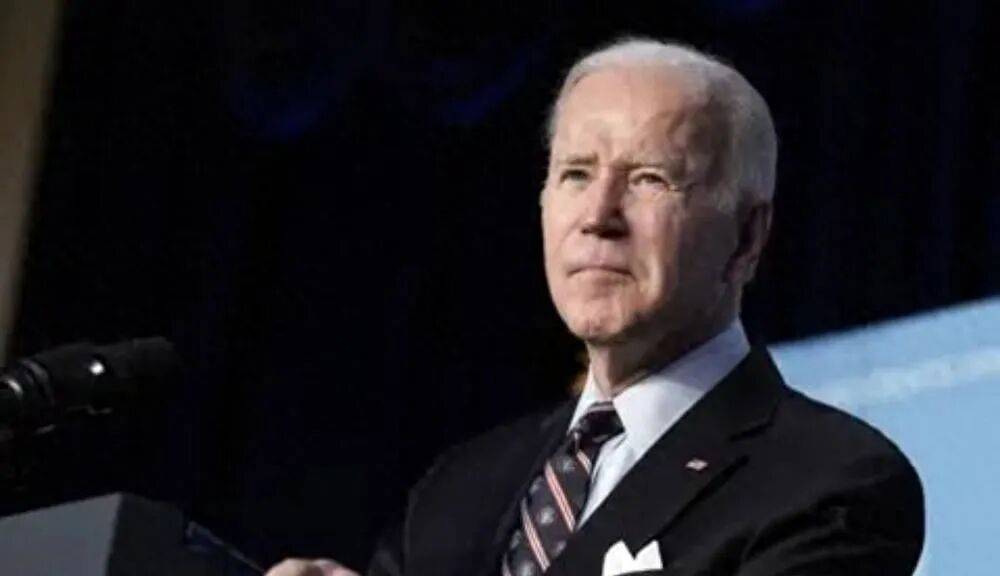
拜登发表卸任演讲,释放狂妄言论:如果美国不领导世界,谁还可以
Sou Hu Cai Jing· 2025-08-30 10:00
Core Viewpoint - President Biden's recent speech at the Brookings Institution highlighted his administration's economic achievements while criticizing Trump's tariff policies, asserting the need for the U.S. to maintain its global leadership role [1][3]. Economic Performance - Biden claimed that during his tenure, 16 million new jobs were created, the average unemployment rate dropped to its lowest in 50 years, and inflation was kept around 2% [6]. - The stock market reached new highs, although this growth is disconnected from the struggles faced by ordinary American families [6]. Criticism of Trump's Policies - Biden openly criticized Trump's high tariffs, stating that they ultimately harmed ordinary Americans [3][5]. - He expressed concern that Trump might reverse his economic strategies, which he believes would have severe consequences for the U.S. economy and its citizens [5]. Global Influence and Leadership - Biden emphasized the importance of U.S. global leadership, questioning which country could take on that role if the U.S. does not [3]. - The speech reflected a continued belief in American exceptionalism, despite the current global challenges and conflicts that have arisen during his presidency [8]. Domestic and International Context - The speech was characterized by a juxtaposition of domestic economic claims against a backdrop of international conflicts linked to U.S. actions [8]. - Biden's administration has been accused of fostering a divisive international stance while promoting a "woke culture" domestically [6].