核问题谈判

Search documents
美伊刚谈就崩了?特朗普宣布加税25%,伊朗派人连夜来北京
Sou Hu Cai Jing· 2026-02-12 09:22
Core Viewpoint - The negotiations between the US and Iran are showing signs of collapse due to the US's harsh conditions, including a 25% tax on Iranian goods announced by Trump, prompting Iran to urgently consult with China [1][7][9]. Group 1: Negotiation Dynamics - Oman has unexpectedly become a focal point in global affairs due to the US-Iran nuclear agreement negotiations, with the first round of talks held in Muscat on February 6, marking the first face-to-face communication since the US and Israel bombed Iranian nuclear facilities last June [3][4]. - The US has set three core demands for the negotiations: halting uranium enrichment, limiting ballistic missile programs, and ceasing support for regional proxies. These demands are critical for the potential success of the agreement [4][11]. - Iran has shown some willingness to negotiate on uranium enrichment but firmly refuses to abandon it, proposing to limit its enriched uranium stockpile to 400 kilograms. However, it has drawn a red line regarding ballistic missiles, emphasizing their importance for national defense [4][5]. Group 2: External Influences - On the same day as the negotiations, the US intensified pressure by signing an executive order imposing a 25% tariff on any country purchasing goods from Iran, which may serve as a symbolic threat rather than a practical enforcement [7]. - In response to the US's actions, Iran's Deputy Foreign Minister traveled to Beijing to communicate Iran's stance on the nuclear issue and seek China's support, indicating Iran's desire for external assistance in the negotiations [9]. Group 3: Outlook on Negotiations - The likelihood of reaching a substantive agreement in the US-Iran negotiations appears very low, as the US's stringent demands suggest it does not expect Iran to comply. Compliance would mean Iran relinquishing its strategic autonomy and becoming vulnerable to US and Israeli influence [11]. - Iran is likely to maintain a stance of negotiating while resisting significant concessions, aiming to protect its interests and principles throughout the discussions [11].

美伊谈判暂歇,下一步走向何方?丨夜观天下
Xin Lang Cai Jing· 2026-02-11 12:32
Group 1 - The core of the recent US-Iran negotiations is marked by fundamental opposing demands, with the US insisting on restrictions on Iran's nuclear and missile capabilities, while Iran maintains its right to uranium enrichment and refuses to negotiate its missile program [1][3] - The indirect negotiations, described as "back-to-back," indicate a willingness to engage but highlight significant divisions between the two parties [1][3] - Israel perceives Iran's missile program as an existential threat and has threatened unilateral action if Iran crosses its established "red lines" [3][5] Group 2 - The negotiations have evolved into a multi-party dynamic, with Iran seeking to solidify Oman’s role as a mediator while applying pressure on the US through its diplomatic channels [5][7] - The upcoming negotiations are viewed with skepticism, as Iran's core demands regarding nuclear rights and missile capabilities are unlikely to be compromised, potentially leading to a breakdown in talks [7][9] - Two possible outcomes are anticipated: either a temporary compromise where Iran freezes its uranium enrichment in exchange for sanctions relief, or unilateral military action by Israel that could escalate regional tensions [9]
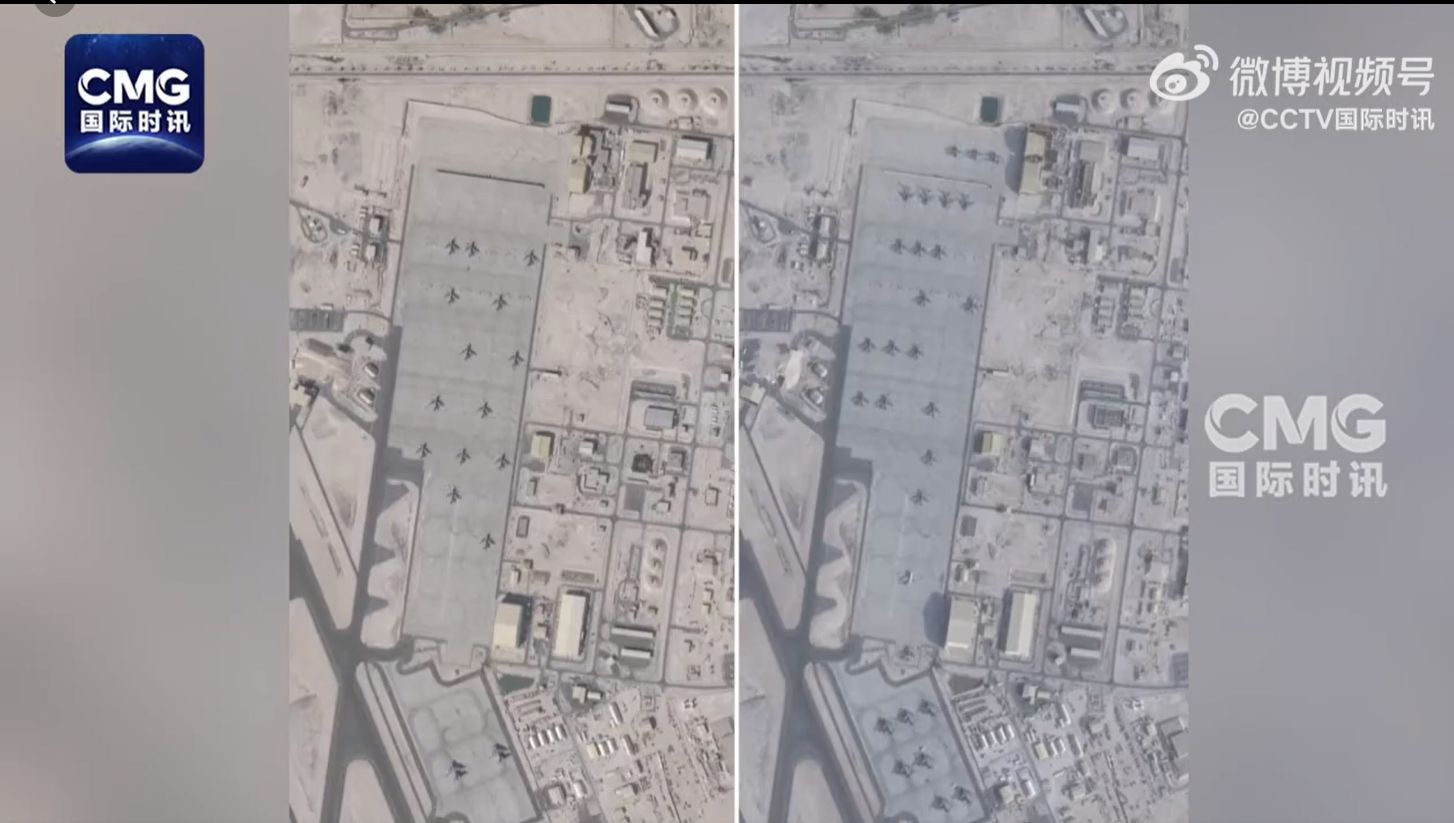
卫星图像显示驻卡塔尔美军将导弹装载移动平台!特朗普:若谈判失败,美国会有“更大的动作”
Mei Ri Jing Ji Xin Wen· 2026-02-11 03:17
Group 1 - The article highlights the escalating tensions between the United States and Iran, with the U.S. military increasing its readiness in the Middle East, including deploying missiles at the Al Udeid Air Base in Qatar [1] - U.S. President Trump has threatened military action against Iran due to its nuclear and missile programs, while negotiations to avoid war are ongoing [2] - The U.S. military has a significant presence in the region, with bases in Iraq, Jordan, Kuwait, Saudi Arabia, Bahrain, the UAE, Oman, Turkey, and Diego Garcia, indicating a strategic military posture [1] Group 2 - Trump expressed the possibility of sending a second aircraft carrier strike group to the Middle East, indicating preparations for potential military action if negotiations with Iran fail [2] - Iranian officials have indicated a willingness to continue negotiations, provided they are realistic and feasible, suggesting a potential for strategic de-escalation depending on the dialogue's outcome [5] - The Iranian leadership has acknowledged progress in initial negotiations, with hopes that successful discussions could lead to broader dialogue on other issues beyond the nuclear question [5]
原油成品油早报-20260211
Yong An Qi Huo· 2026-02-11 01:32
Report Summary 1. Report Industry Investment Rating No information provided. 2. Core Viewpoints - This week, crude oil prices fluctuated at high levels due to the Iran situation, with the monthly spread declining and the North Sea Brent basis falling to $1.005 per barrel. The US and Iran held nuclear negotiations on Friday, which lasted about 6 hours. Iran said it was a good start, but there is still a long way to rebuild trust, and the negotiations are limited to nuclear issues. A second round of US - Iran negotiations is expected to be held in the next few days. [4] - From a fundamental perspective, the global total oil inventory decreased this week. US commercial crude oil inventory reflected the impact of the cold wave, with a decrease of 3.455 million barrels, and refined oil inventory decreased by 5.553 million barrels. Saudi Arabia set the official selling price of Arab Light crude oil for March to Northwest Europe at a discount of $0.65 per barrel to the ICE Brent crude oil settlement price and lowered the official selling price of Arab Light crude oil for March to Asia by 30 cents per barrel. [4] - In Singapore, all refined oil products saw inventory accumulation, while in ARA, crude oil inventory decreased, refined oil inventory decreased, and diesel and gasoline inventory increased. In China, both gasoline and diesel inventory increased. The main - refinery profit fluctuated at a high level with stronger operation, while the independent - refinery profit rebounded from a low level with decreased operation. [4] - Short - term oil prices are still affected by the Iran situation, and attention should be paid to volatility risks. The global crude oil supply - demand fundamentals in the first and second quarters remain in a surplus state, and the fundamentals do not support high valuations. [4] 3. Summary by Directory 3.1 Oil Price Data - From February 4th to February 10th, WTI decreased by $0.40, BRENT decreased by $0.24, and DUBAI decreased by $0.41. The BRENT 2 - month spread increased by $0.07, the WTI - BRENT spread decreased by $0.16, and the DUBAI - BRT spread increased by $0.29. [3] - SC increased by 11.90, OMAN decreased by 0.36, the SC - BRT spread increased by 2.02, and the SC - WTI spread increased by 2.18. Domestic gasoline price increased by 30.00, and the domestic gasoline - BRT spread increased by 47.00. [3] - The Singapore 380CST fuel oil premium increased by 0.85, the上期所FU main contract increased by 51, and the上期所FU - BRT spread increased by 9.48. The上期所BU main contract increased by 9, and the上期所BU - BRT spread increased by 3.51. HH natural gas decreased by 1.120, and BFO increased by 0.84. [3] 3.2 Daily News - US media reported that the Trump administration has discussed seizing more oil tankers transporting Iranian oil but has not taken action due to concerns about Iranian retaliation and the impact on the global oil market. Seizing tankers could be seen as an act of war, and Iran may respond by seizing tankers of US allies or laying mines in the Strait of Hormuz, which could cause a sharp rise in oil prices. [3] - Iranian officials said that if the US - Iran nuclear negotiations are successful, the dialogue may be extended to other fields. The first - stage negotiations have made progress, and Iran is willing to continue if the negotiations are feasible. [3] - Trump said that if the negotiations fail, he may send a second aircraft carrier to strike Iran. [3] - The US government issued a general license allowing oilfield service companies to work in Venezuela, which is a new step in relaxing sanctions and promoting the reconstruction of the country's crude oil infrastructure. [3] 3.3 Inventory - US API crude oil inventory for the week ending February 6th was 13.4 million barrels, compared with a previous value of - 11.079 million barrels; API gasoline inventory was 3.3 million barrels, compared with a previous value of 4.736 million barrels; API refined oil inventory was - 2 million barrels, compared with a previous value of - 4.811 million barrels. [4] - According to the EIA report for the week ending January 30th, US crude oil exports decreased by 542,000 barrels per day to 4.047 million barrels per day; domestic crude oil production decreased by 481,000 barrels to 13.215 million barrels per day; commercial crude oil inventory excluding strategic reserves decreased by 3.455 million barrels to 420 million barrels, a decrease of 0.82%; the four - week average supply of US crude oil products was 20.802 million barrels per day, a year - on - year increase of 0.94%; the US Strategic Petroleum Reserve (SPR) inventory increased by 214,000 barrels to 415.2 million barrels, an increase of 0.05%; and the import of commercial crude oil excluding strategic reserves was 6.201 million barrels per day, an increase of 559,000 barrels per day compared with the previous week. [4]
全球前瞻|美国伊朗将继续谈判,第62届慕安会本周开幕
Xin Lang Cai Jing· 2026-02-09 03:55
Group 1 - The core viewpoint of the articles revolves around the ongoing negotiations between the United States and Iran regarding nuclear issues, with President Trump indicating that talks will resume soon and emphasizing that Iran desires an agreement [1][3]. - Israeli Prime Minister Netanyahu is scheduled to meet with President Trump to discuss the negotiations with Iran, highlighting the importance of including missile restrictions in any agreement [4][5]. - Iran's Foreign Minister Zarif has stated that the recent indirect talks with the U.S. in Oman were a "good start," and both parties have agreed to continue the negotiation process, although specific dates for future talks are yet to be determined [3][4]. Group 2 - The 62nd Munich Security Conference is set to take place from February 13 to 15, with over 1,000 attendees, including around 60 heads of state and government leaders, and will address key global security issues [5][6]. - The conference will focus on topics such as European security and defense, the future of transatlantic relations, and the revival of multilateralism, amidst increasing global instability and conflict [5][6]. - A significant U.S. delegation is expected to attend the conference, marking the largest representation in its history, which may bring attention to the ongoing tensions in transatlantic relations [6]. Group 3 - The U.S. military is convening a rare meeting of military officials from 34 countries in the Western Hemisphere to discuss security priorities and enhance regional cooperation, particularly in combating drug trafficking and organized crime [7]. - This meeting is unprecedented and reflects the U.S. military's increased presence in the Caribbean region, which has seen the largest deployment of forces in decades [7].
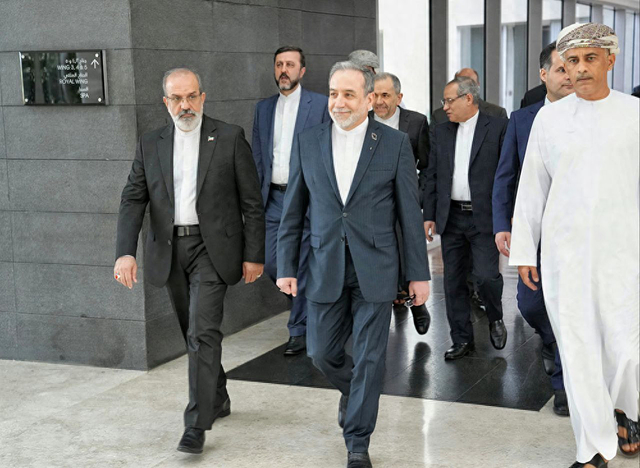
伊朗:绝不接受“零浓缩铀”!
证券时报· 2026-02-08 14:59
Core Viewpoint - Iran's stance on nuclear issues is based on the rights outlined in the Treaty on the Non-Proliferation of Nuclear Weapons, emphasizing respect and rejecting coercive language [1] Group 1: Diplomatic Engagement - Dialogue is considered a strategic approach for peacefully resolving issues, with recent talks between Iran and the U.S. in Muscat being a step forward [2] - The Iranian Foreign Minister stated that the negotiations with the U.S. focused solely on nuclear issues, with no direct talks occurring, and emphasized the importance of mutual respect and understanding [4] - The next round of negotiations will be determined in consultation with the Omani Foreign Minister, maintaining an indirect format [4] Group 2: Negotiation Stance - Iran firmly rejects the concept of "zero enrichment" of uranium, which is a core issue in the negotiations [4] - The Iranian side is skeptical about the seriousness of the U.S. in negotiations due to the ongoing sanctions and military actions [4] - Iran has made it clear that missile and regional issues will not be part of the current negotiation agenda, and military personnel will not be involved in the talks [4] Group 3: International Reactions - Multiple parties, including Qatar and Jordan, have welcomed the recent negotiations, expressing hope for a comprehensive agreement that addresses mutual interests and enhances regional security [12] - The UN Secretary-General also welcomed the resumption of talks, hoping it would help ease regional tensions and prevent a broader crisis [12]

央视:伊朗称绝不接受零浓缩铀
Xin Lang Cai Jing· 2026-02-08 10:18
Core Viewpoint - Iran firmly rejects the concept of "zero enrichment" of uranium, which is a central issue in ongoing nuclear negotiations with the United States [1] Group 1: Negotiation Context - The recent talks between Iran and the U.S. took place in Muscat, Oman, focusing on nuclear issues, with results currently under evaluation [1] - Both parties have agreed to continue negotiations, with future meeting times and locations to be determined in consultation with the Omani Foreign Minister [1] - The negotiations have been conducted indirectly, with no direct meetings between the parties, only brief encounters during delegation movements [1] Group 2: Key Statements from Iranian Officials - Iranian Foreign Minister Amir-Abdollahian emphasized that the key to reaching an agreement lies in mutual respect and understanding based on common interests [1] - He expressed skepticism about the seriousness and preparedness of the U.S. for genuine negotiations due to the ongoing sanctions and certain military actions [1] - The Iranian side is open to trust-building measures but insists on the recognition of its right to uranium enrichment [1]
九万里:美伊谈了,谈得咋样?
Xin Lang Cai Jing· 2026-02-07 23:55
Core Points - The recent US-Iran negotiations in Oman marked the first face-to-face talks since the US airstrike on Iranian nuclear facilities in June 2025, but no substantial agreements were reached [1][18] - Following the talks, President Trump signed an executive order imposing tariffs on countries trading with Iran and the US State Department announced sanctions on 15 entities, 2 individuals, and 14 vessels related to Iranian oil transactions [1][11] Pre-Negotiation Context - The negotiations faced significant challenges, including a last-minute change of location from Istanbul to Oman, which was initiated by Iran, limiting the discussions to bilateral talks focused solely on nuclear issues and sanctions [6][5] - The US initially rejected Iran's proposal but eventually agreed to the new terms after urgent lobbying from at least nine Middle Eastern countries [6][5] Negotiation Dynamics - The talks involved high-level representatives from both sides, with Iran's Foreign Minister Zarif leading the delegation and the US represented by special envoy Hook and Jared Kushner, among others [7][9] - The negotiations were conducted indirectly, with Oman acting as a mediator, relaying positions between the two parties [7][9] Key Issues and Stalemate - The US presented a "three abandon" demand: Iran must permanently cease all uranium enrichment activities, limit its ballistic missile program, and stop supporting regional armed groups [9][10] - Iran maintained its "red lines," asserting that its missile program is a core defense interest and only showing limited flexibility on nuclear issues, such as reducing uranium enrichment from 60% to 20% under the condition of full sanctions relief [9][10] Post-Negotiation Developments - After the talks, both sides demonstrated a willingness to assert their positions, with the US imposing new tariffs and sanctions while Iran's military leadership emphasized their commitment to national sovereignty [11][10] - The negotiations are viewed as a tactical engagement rather than a strategic breakthrough, with both parties seeking to manage the crisis rather than resolve fundamental issues [13][18] Strategic Considerations - The US aims to control Iran's influence in the Middle East while avoiding a costly military conflict, opting for a strategy of pressure to achieve non-proliferation goals [14][13] - Iran's participation in the talks is driven by the need to alleviate internal economic pressures exacerbated by US sanctions and to avoid military confrontation while focusing on nuclear issues [16][15]
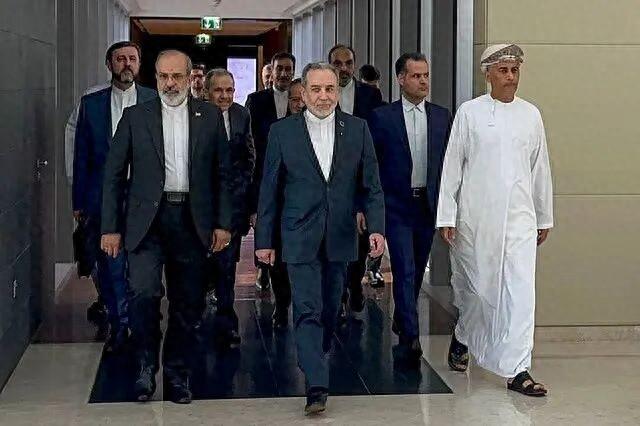
美媒:特朗普特使在阿曼与伊朗外长进行了直接会面
Xin Lang Cai Jing· 2026-02-06 23:02
Group 1 - The core viewpoint of the article is that the United States and Iran are engaging in nuclear negotiations, with expectations for further discussions in the coming days [1] - The talks took place in Oman, involving direct communication between U.S. officials and the Iranian Foreign Minister [1] - Historically, Iran has preferred to communicate through intermediaries, but recent meetings included direct exchanges between officials [1]
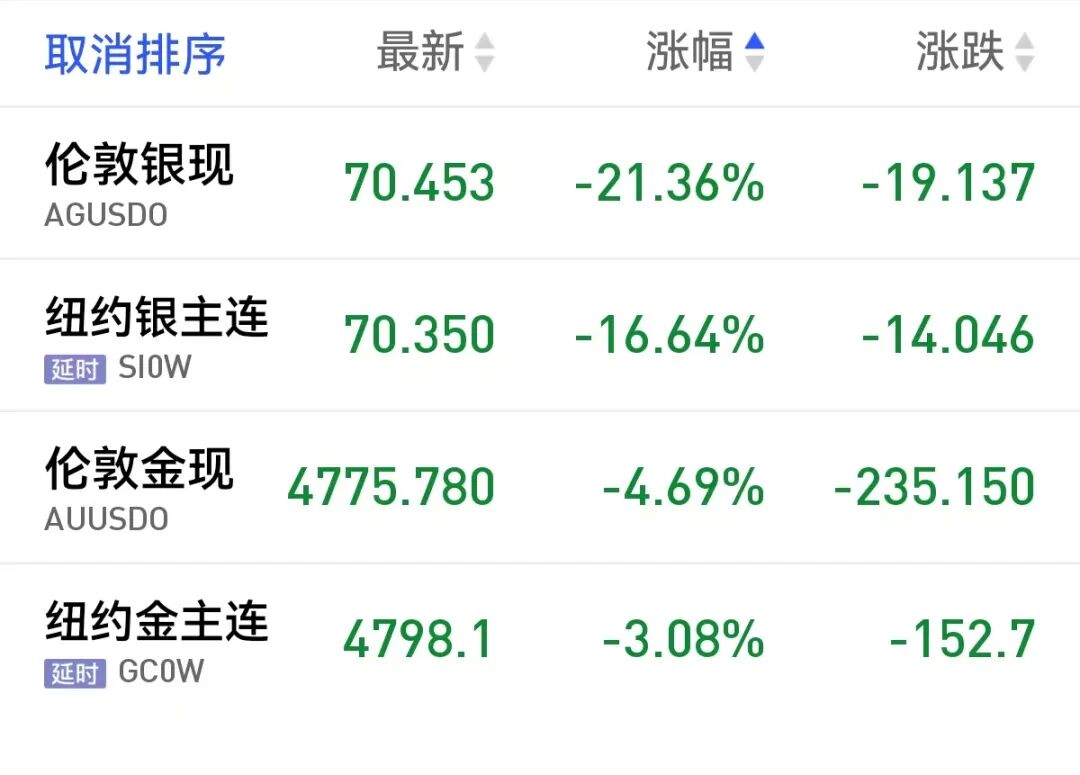
“断崖式”下跌!白银昨夜今晨重挫超20% 刚开盘又大跌!比特币跌超11%!伊美核谈判在即
Qi Huo Ri Bao· 2026-02-06 00:20
Group 1: Precious Metals Market - Gold and silver prices have experienced significant declines, with spot silver dropping to below $67 per ounce, a decrease of 5.26%, and New York silver futures falling by 12.98% [1] - Spot gold has also fallen below $4740 per ounce, down 0.87%, while New York gold futures are down 2.73% to below $4760 per ounce [1] - The price of silver has seen a "cliff-like" drop, with a decline exceeding 20% [3] Group 2: Market Reactions and Economic Indicators - The CME has raised the initial margin for COMEX silver futures from 15% to 18% and for COMEX gold futures from 8% to 9% [4] - The U.S. stock market has seen declines across major indices, with the Dow down 1.2%, Nasdaq down 1.57%, and S&P down 1.23% [4] - Bitcoin has experienced a sharp decline, dropping 11% to $64,944, erasing all gains since the Trump election victory and reaching its lowest point since October 2024 [5] Group 3: Geopolitical Developments - A recent three-party meeting in Abu Dhabi involving Russia, Ukraine, and the U.S. ended without substantial progress on core issues such as territory and ceasefire [7] - A large-scale prisoner exchange occurred, with each side transferring 157 captives, marking the first significant exchange in five months [7] - The U.S. and Russia have agreed to resume high-level military dialogue, which had been suspended since the escalation of the Ukraine crisis in 2021 [10] Group 4: Central Bank Policies - The European Central Bank has decided to maintain its three key interest rates unchanged, aligning with market expectations [14] - The current rates are set at 2.00% for the deposit facility, 2.15% for the main refinancing operations, and 2.40% for the marginal lending facility [14]