美国制造业空心化

Search documents
深度解析美国“斩杀线” 从中我们看见美国深层痼疾
Ren Min Ri Bao· 2026-01-14 03:06
Core Insights - The article highlights the growing financial strain on American workers, particularly teachers and single parents, who are unable to afford housing despite having jobs, illustrating a broader societal issue of economic insecurity [1][2][4]. Group 1: Housing Affordability Crisis - Rising rental prices have increased by over 30% nationwide in recent years, with some major cities seeing increases exceeding 50%, while wage growth has lagged behind [2]. - Many families are pushed to the brink of financial collapse, with housing costs consuming a significant portion of their income, leading to a precarious living situation [2][4]. Group 2: Medical and Educational Financial Burdens - Over 40% of American adults are expected to receive "unaffordable" medical bills in 2024, exacerbated by high deductibles and inflation, pushing families towards financial cliffs [2]. - Student loan debt has reached over $1.7 trillion, with two-thirds of borrowers having less than $500 in their bank accounts, indicating a generation burdened by debt before they can accumulate wealth [2]. Group 3: Middle-Class Struggles - Even high-income earners, such as a couple earning $240,000 annually, are facing credit card debt due to high living costs, highlighting the vulnerability of the middle class [3]. - Many middle-class families in cities like New York and San Francisco have disposable incomes lower than that of blue-collar workers in the Midwest, indicating a shift in economic stability [3]. Group 4: Structural Issues in Society - The hollowing out of American manufacturing and the financialization of the economy have led to rising costs in housing, healthcare, and education, outpacing wage growth [4]. - The lack of a robust social safety net and limited public services leave many families without financial buffers, making them susceptible to falling below the "kill line" in times of crisis [4]. Group 5: Political Polarization and Policy Stagnation - Political polarization has hindered structural reforms, leading to a "policy stagnation" where pressing issues like housing and healthcare reform remain unaddressed [5]. - The ongoing political struggles have resulted in a fragmented approach to policy, with significant disparities between states and a lack of cohesive federal solutions [5].
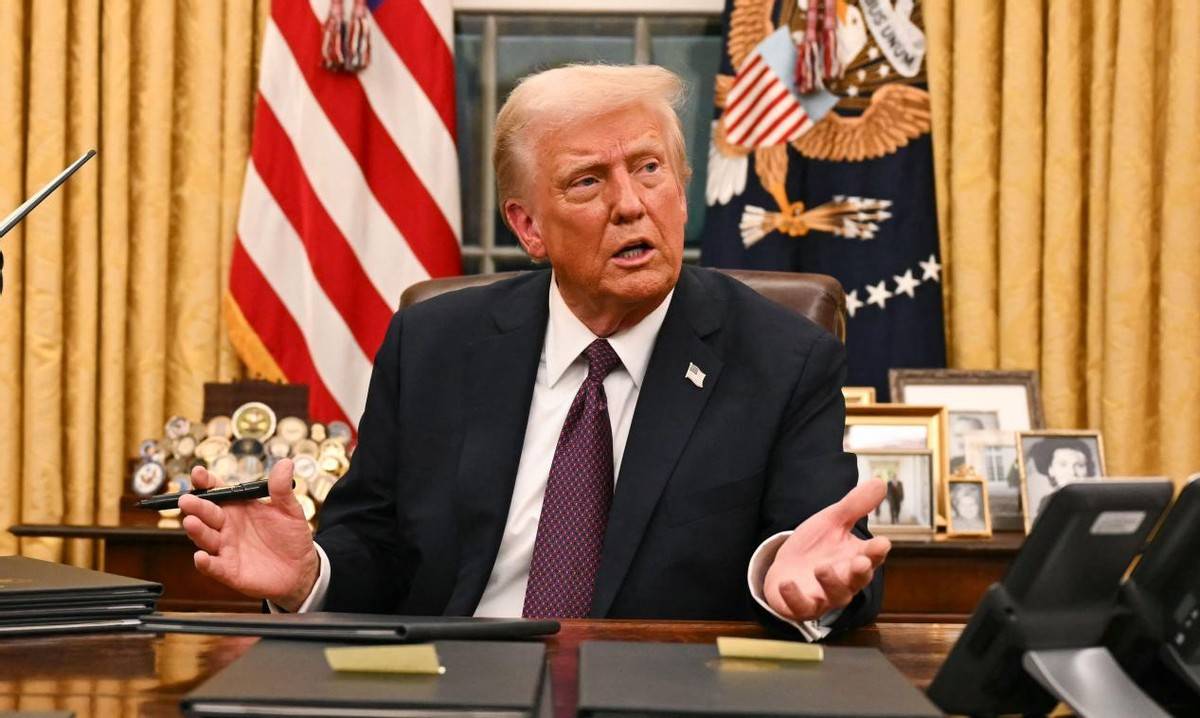
特朗普紧急发文表示输不起,他想不通,中国为何能威胁到美国
Sou Hu Cai Jing· 2025-11-06 08:39
Group 1 - The core argument is that Trump's recognition of China's strength marks a significant shift in the geopolitical landscape, acknowledging that China has rapidly risen to challenge the U.S. [1] - Trump expresses concern over the potential cancellation of tariffs, emphasizing their importance as leverage in negotiations with China and other countries [3] - The U.S. has implemented various measures, including chip export controls and trade investigations under Section 301, to counter China's economic and technological advancements [5] Group 2 - Despite external pressures, China continues to advance in innovation and has increased its global influence, with a net favorability rating of 8.8 compared to the U.S.'s -1.5 [7] - The U.S. faces challenges in forming anti-China coalitions, as countries like Saudi Arabia and South Africa resist aligning against China, indicating a shift in global dynamics [9] - The U.S. is grappling with a significant national debt of $38 trillion and internal political strife, which has led to a government shutdown affecting over 42 million people [9][10] Group 3 - Trump's focus on tariffs as a solution for revitalizing U.S. manufacturing overlooks deeper systemic issues within the American economy [10] - The global landscape is evolving towards multipolarity, with emerging economies gaining prominence and diverse governance models becoming more accepted [10][12] - China's rise is attributed to its institutional resilience and strategic stability, suggesting that the U.S. must adapt to these fundamental changes to maintain its global leadership [12]