美国社会问题

Search documents
《疯狂动物城》,其实是惊悚片
虎嗅APP· 2025-11-30 10:34
Core Viewpoint - The article discusses the underlying themes and social commentary present in the animated film "Zootopia," particularly focusing on class division, systemic control, and cultural differences in American society [5][51]. Group 1: Themes of Class and Control - The film presents a seemingly utopian society that is, in reality, marked by class divisions and family control, exemplified by the character of the main antagonist, the Lion family, who represent the deep-rooted power structures in society [17][18]. - The new mayor of Zootopia is portrayed as a puppet of the Lion family, indicating how easily power can be manipulated behind the scenes [19]. - The narrative highlights the displacement of the original inhabitants, the reptiles, who are forced into poverty while the wealthy Lion family thrives, showcasing the stark contrast between different social classes [22][24]. Group 2: Cultural Commentary - The film's portrayal of different animal species reflects real-world cultural differences, suggesting that inherent traits and behaviors can lead to misunderstandings and conflicts among diverse groups [41][49]. - The second film's theme evolves to suggest that while acceptance of differences is possible, it does not eliminate the underlying discomfort and challenges that arise from those differences [46][50]. - The article emphasizes that the film's humor masks a deeper, more unsettling reality about societal issues, paralleling the current state of American society [51].

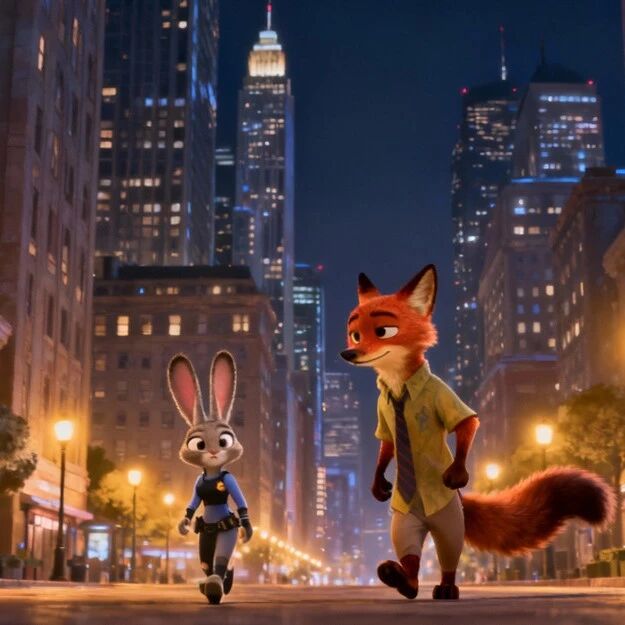
《疯狂动物城》,其实是惊悚片
3 6 Ke· 2025-11-30 09:52
Core Viewpoint - The article discusses the underlying themes and social commentary present in the animated film "Zootopia 2," highlighting its portrayal of societal issues such as class division, racism, and the complexities of coexistence among different species in a seemingly utopian society [5][6][30]. Group 1: Themes of Class and Power - The film presents a clear class structure within the animal city, dominated by the wealthy Lin family, which serves as a metaphor for real-world power dynamics and conspiracy theories [6][7]. - The Lin family is depicted as the ultimate power brokers, controlling essential infrastructure and manipulating political figures to maintain their dominance [6][7][24]. - The narrative suggests that even those who appear to be in power, like the new mayor, are merely puppets of the elite, reflecting a critique of political systems [6][7][24]. Group 2: Social Commentary on Identity and Nature - The film explores the idea that all animals have inherent traits that are difficult to change, which serves as a metaphor for cultural differences and societal expectations [25][30]. - Characters like Judy and Nick struggle with their identities and societal roles, emphasizing the challenges of acceptance and understanding among diverse groups [30][32]. - The conclusion of the film, while seemingly positive, hints at the persistent nature of these societal issues, suggesting that true coexistence may be more complex than it appears [24][30]. Group 3: Reflection of Real-World Issues - The film's portrayal of discrimination and social hierarchies mirrors real-life societal challenges, prompting viewers to reflect on contemporary issues in America [5][32]. - The narrative's dark undertones and the use of humor to address serious topics create a juxtaposition that resonates with audiences, highlighting the ongoing struggle for equality and acceptance [6][30][32]. - The film ultimately raises questions about the feasibility of a truly inclusive society, paralleling the current state of social dynamics in the United States [32].

《疯狂动物城》,其实是惊悚片
半佛仙人· 2025-11-30 03:12
Core Viewpoint - The article discusses the underlying themes and societal critiques presented in the animated film "Zootopia 2," highlighting its portrayal of class divisions, systemic issues, and cultural differences in America [7][9][15]. Group 1: Themes of Class and Power - The film presents a seemingly utopian society that is, in reality, marked by class distinctions and family control, with the main antagonist family representing deep-rooted power structures akin to conspiracy theories [9][10]. - The new mayor of Zootopia is depicted as a puppet of the powerful Lynx family, illustrating how wealth and influence dictate political outcomes [9][10]. - The narrative reveals that the true power dynamics in Zootopia are maintained by a few elite families, who manipulate the system to their advantage, pushing marginalized groups to the fringes of society [9][10]. Group 2: Societal Critique and Cultural Commentary - The film's portrayal of different animal species reflects real-world cultural differences and the challenges of coexistence, suggesting that inherent traits and instincts can lead to misunderstandings and conflicts [15]. - The conclusion of the film, while appearing positive, hints at a more complex reality where acceptance of differences is fraught with difficulties, mirroring current societal tensions in America [15]. - The article emphasizes that the film's humor masks a deeper, unsettling commentary on the state of American society, questioning whether true acceptance and coexistence are achievable [15].