美妆营销

Search documents
金瞳奖首设美妆营销赛道 , 流量之后 , 美妆品牌如何"长红"?
Xin Lang Cai Jing· 2026-02-04 12:37
Core Insights - The Chinese beauty industry is transitioning from a "traffic era" to a critical turning point, moving away from reliance on precise traffic investment and explosive product formulas due to the diminishing traffic dividends and rising customer acquisition costs [1][10] - Brands are now focusing on building sustainable brand moats and converting short-term hits into long-term brand assets as "growth anxiety" becomes the norm [1][10] - The Jin Tong Award, in collaboration with KEV Beauty Circle, has established a new "Beauty Marketing Group" to address industry pain points and recognize brands that excel in building long-term value and enhancing market competitiveness [1][11] Award Categories Best Brand Building - This award recognizes beauty brands that demonstrate comprehensive capabilities in building long-term brand value through strategic social and cultural practices, including but not limited to cultural heritage protection, cultural dissemination, public welfare actions, and ESG initiatives [11] - The award emphasizes the establishment of emotional connections and trust with consumers [11] Best Collaboration - This award aims to honor beauty co-branding cases that achieve brand value resonance and market explosion through precise cross-industry cooperation, going beyond simple logo overlays [4][14] - It focuses on innovation in concepts, user experience, and cultural resonance, achieving a "1+1>2" value creation [4][14] Super Product - This award is for beauty products that achieve explosive sales growth and occupy consumer mindshare while contributing to long-term brand asset building [5][16] - It highlights products that stand out in a competitive market through exceptional product strength and marketing strategies [5][16] Evaluation Criteria Best Brand Building - Creativity and execution of content (40%) - Uniqueness and strategic foresight of brand value proposition (30%) - Brand asset and commercial effectiveness (30%) [2][12][13] Best Collaboration - Creative narrative and integrated execution (40%) - Fit and innovation of collaboration (30%) - Market effectiveness and brand asset enhancement (30%) [3][4][14] Super Product - Market performance and commercial effectiveness (30%) - Product innovation (30%) - Marketing communication and mindshare construction (25%) - Long-term value and brand contribution (15%) [6][16][18] Principles of Evaluation - The Jin Tong Award adheres to three principles: de-bubbling the evaluation system, confirming the value of brand internal capabilities, and objective measurement focused on effectiveness [8][16] - The focus is on product innovation and market performance, as well as strategic foresight and sustainability [8][16]


孙颖莎3亿估值领跑,柯淳分走中小品牌预算,美妆营销正在 “去影视明星化”?
Xin Lang Cai Jing· 2025-04-13 01:32
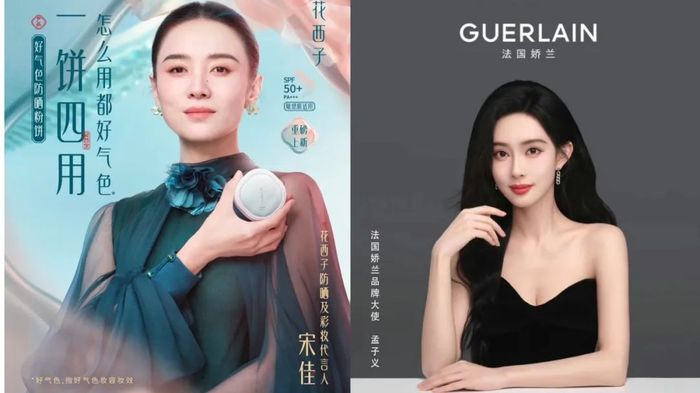
Core Insights - The beauty and personal care market is experiencing a surge in Q1 2025, driven by the spring shopping season and International Women's Day, with brands heavily investing in marketing and celebrity endorsements [1][11][13] - Celebrity endorsements remain a dominant strategy in the beauty sector, with significant participation from both entertainment and sports figures [4][39] - The sunscreen category is particularly competitive, with brands launching new products and leveraging high-profile endorsements to capture market share [11][13][15] Group 1: Market Trends - The beauty and personal care market has seen a 45% year-on-year increase in average viewership for live-streaming sessions, with celebrity appearances yielding conversion rates three times higher than regular sessions [4] - The endorsement of sports celebrities has surged by 68% year-on-year, outpacing entertainment celebrities' growth of 32%, indicating a shift towards "health and vitality" marketing [4][26] - The sunscreen market is evolving, with brands like Perlay and Huaxizi launching innovative products to extend sales beyond the traditional summer peak [11][13] Group 2: Celebrity Endorsements - In Q1 2025, Meng Ziyi led with 10 endorsements across brands like Guerlain and Mofashijia, while Zhu Xudan and Li Yunrui also secured multiple endorsements, showcasing a trend of high-frequency exposure [3][4] - Notable endorsements include Liu Yifei for Perlay and Yang Zi for Gu Yu, highlighting the strategy of using top-tier celebrities to enhance brand visibility [14][15] - The rise of sports figures like Sun Yingsha and Wang Chuqin as brand ambassadors reflects their growing commercial value, with endorsements translating into significant sales boosts [27][28][44] Group 3: Marketing Strategies - Brands are increasingly focusing on differentiated product offerings and leveraging celebrity endorsements to create a strong market presence [11][15] - The strategy of using celebrities with broad appeal, such as Liu Yifei, aims to build a wide consumer recognition base, while leveraging top-tier celebrities like Cheng Yi for short-term sales spikes [15][20] - The integration of short drama actors into marketing strategies is becoming more prevalent, as they offer high fan engagement at lower costs compared to traditional celebrities [39][45] Group 4: Consumer Behavior - The consumer landscape is shifting, with younger demographics exhibiting diverse purchasing behaviors, prompting brands to adopt targeted marketing strategies [13][21] - The emergence of organized fan activities, such as purchasing strategies among Sun Yingsha's fans, illustrates the potential for athlete endorsements to drive sales through community engagement [40][42] - The competitive landscape in the sunscreen market is characterized by a proliferation of choices, necessitating brands to refine their positioning and outreach strategies [13][21]