
股市长期走好

Search documents
贺强:证监会吸引中长期资金入市工作做得很好,新年放假期间还公布了政策
Xin Lang Cai Jing· 2026-01-15 04:29
Core Viewpoint - The key to the long-term success of China's capital market during the "15th Five-Year Plan" period is to continuously improve the quality and performance of listed companies, rather than solely relying on market liquidity [4][6][16]. Group 1: Market Conditions - In early 2024, the A-share market fell below 2600 points due to an oversupply of stocks without a corresponding increase in funds, leading to a significant supply-demand imbalance [3][11]. - The China Securities Regulatory Commission (CSRC) has effectively attracted medium- and long-term funds into the market, especially since September 24, 2024, resulting in a strong market rally [3][5][11]. - Recent daily trading volumes have approached historical highs, with a record of nearly 4 trillion yuan, indicating a surge in market activity [3][14]. Group 2: Future Focus - Starting in 2026, the focus should shift from merely addressing funding issues to enhancing the quality and performance of listed companies to ensure sustainable market growth [6][15]. - Historical data shows that the average duration of bull markets in China is only 17 months, while bear markets last about 27 months, highlighting the need for a more stable growth model [6][15]. - The example of the U.S. stock market, which has seen the Dow Jones Industrial Average rise from 12,000 to nearly 50,000 over 16 years, illustrates that sustained growth is supported by continuous earnings growth rather than just liquidity [6][15]. Group 3: Investment Risks - If company performance declines while stock prices rise, it creates a significant risk of a market correction, as the price-to-earnings ratio can become unsustainable [6][16]. - The market's current rapid ascent may not be sustainable if it continues without a solid foundation of improving corporate earnings [5][14].

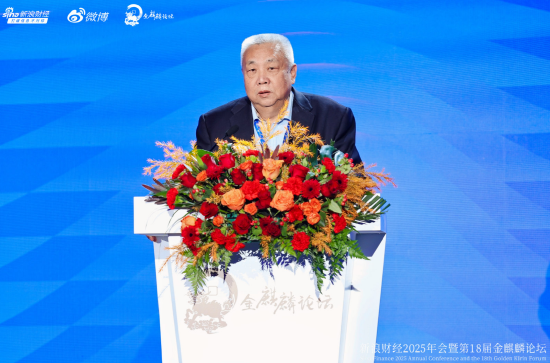
贺强金麒麟演讲全文:从2026年开始,股市资金已经不是主要问题了
Xin Lang Cai Jing· 2026-01-15 03:56
Core Viewpoint - The capital market in China is expected to achieve significant growth during the "14th Five-Year Plan" period, with hopes for a 100% securitization rate and a stock market value increase from 100 trillion to 200 trillion yuan, but it requires sustained and long-term improvement [3][11]. Group 1: Market Conditions - The stock market experienced a decline from over 3000 points to around 2600 points before recovering, indicating a severe imbalance between supply and demand due to excessive stock issuance without corresponding capital influx [4][12]. - The China Securities Regulatory Commission (CSRC) is actively working to attract long-term capital into the market, which has led to a significant increase in market activity, with daily trading volumes reaching nearly 4 trillion yuan [4][12]. - The rapid increase in market activity raises concerns about sustainability, as the market may be driven too aggressively without sufficient backing, prompting regulatory measures to control the pace of growth [4][13]. Group 2: Historical Context and Future Outlook - Historical data shows that the average duration of bull markets in China is 17 months, while bear markets last around 27 months, indicating a tendency for short-lived market rallies [5][13]. - The U.S. stock market has experienced a prolonged bull run since 2009, attributed to consistent performance improvements in listed companies, which is a model for China to consider for long-term market stability [5][13]. - To ensure the stock market's long-term health, it is essential to focus on improving the quality and performance of listed companies, as a disconnect between stock prices and company performance can lead to increased risks and market volatility [6][14].
