十五五规划

Search documents
中国银河证券:战略定位升级推动医药高质量发展 推荐关注创新药、医疗AI等方向
智通财经网· 2026-04-01 09:27
Group 1: Industry Outlook - The "14th Five-Year Plan" has successfully focused on the industrialization of innovative pharmaceutical products, technology breakthroughs, vaccine supply security, product quality upgrades, and green low-carbon initiatives in the pharmaceutical industry, leading to significant achievements [1] - The "15th Five-Year Plan" has elevated the strategic positioning of the biopharmaceutical industry by designating it as a new emerging pillar industry, which is expected to result in continuous favorable policies for the pharmaceutical sector [1] Group 2: Healthcare System Transformation - The "15th Five-Year Plan" marks a critical phase in the development of China's healthcare system, transitioning from a scale expansion model to a quality-focused model emphasizing foundational strengthening and collaborative governance [2] - This transformation is driven by a strategic upgrade in the "three medical linkages" from individual departmental reforms to systematic collaborative governance, exemplified by the Sanming model [2] Group 3: Medical Insurance Optimization - The acceleration of provincial-level coordination in medical insurance funds aims to enhance the efficiency of fund utilization and is expected to become a new starting point for pharmaceutical investment [3] - The provincial coordination system addresses structural issues in medical insurance, redistributing surplus funds from economically developed areas to support regions facing financial challenges, thereby achieving a balance of risks [3] Group 4: Pharmaceutical Innovation - The national policy framework supports the entire pharmaceutical value chain, leading to a record number of approvals for domestic Class 1 new drugs and increased transaction amounts in business development, indicating enhanced global competitiveness [4] - The industry is witnessing a shift from a combination of imitation and innovation to original innovation and high-quality development, with a focus on domestic substitution in life sciences and high-end medical devices to address critical supply chain issues [4]

顺着“十五五”的绿灯,混沌拼出了一张2026破局全景图
混沌学园· 2026-03-31 12:10
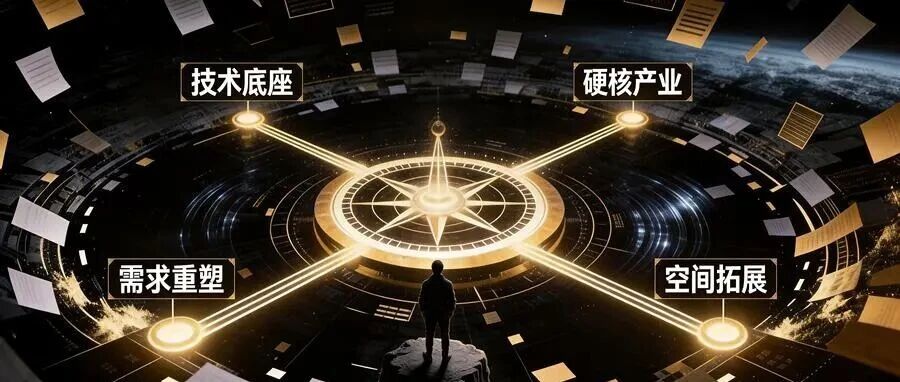
Core Viewpoint - The article emphasizes the overwhelming information overload and knowledge anxiety caused by the proliferation of computing power, urging companies to focus on macroeconomic strategies rather than getting lost in micro-level tactics [2][3]. Group 1: Technological Foundation - The article highlights the importance of grounding in technological foundations, stating that AI is no longer just a buzzword but is actively reconstructing the underlying infrastructure of various industries [8]. - It outlines six key strategies to transform technology into profit and organizational efficiency, focusing on practical applications rather than theoretical anxieties [11][12]. - The need for companies to adapt to AI-driven transformations is underscored, with practical guides provided for navigating the complexities of AI integration [13][16]. Group 2: Crossing Physical Boundaries - The article discusses the critical industrial revolution occurring at the intersection of advanced technology and physical industries, which is essential for overcoming the middle-income trap [22]. - It presents insights from industry experts on the investment landscape, emphasizing the importance of understanding the financial truths behind the current AI boom [24][25]. - The article also highlights the potential for new global brands to emerge from the combination of cutting-edge technology and strong industrial chains in China [25]. Group 3: Reshaping Real Demand - The article notes a significant shift in consumer demand driven by demographic changes, indicating that traditional marketing strategies are becoming obsolete [28]. - It provides actionable strategies for companies to navigate the new landscape of consumer behavior, focusing on sustainable growth and innovative business models [32][33]. - The need for brands to adapt to changing consumer expectations and to create genuine value is emphasized, with examples of successful case studies provided [34][38]. Group 4: Expanding Survival Space - The article stresses the necessity for companies to seek strategic expansion beyond domestic markets in response to intense competition [41]. - It outlines a structured approach for businesses to identify high-potential markets and develop robust systems for international growth [45][46]. - The importance of leveraging AI tools for strategic insights and brand positioning in global markets is highlighted, encouraging companies to build long-term brand equity [46].

2026年3月PMI点评:“反内卷”初现成效
CMS· 2026-03-31 08:33
Group 1: PMI Overview - In March, the manufacturing PMI recorded 50.4%, up 1.25 percentage points from the average of January-February[2] - The services PMI reached 50.2%, increasing by 0.6 percentage points compared to the January-February average[2] - The construction PMI rose to 49.3%, up 0.8 percentage points from the January-February average[2] Group 2: Demand and Supply Dynamics - Manufacturing PMI returned above the threshold, indicating improved supply and demand post-Spring Festival[5] - New orders and new export orders indices increased to 51.6% and 49.1%, respectively, both up by 2.7 percentage points from January-February[5] - Manufacturing production index rose to 51.4%, up 1.3 percentage points from January-February[5] Group 3: Price Trends - Raw material purchase prices index and factory prices index reached 63.9% and 55.4%, respectively, both hitting new highs for 2023[5] - Raw material prices saw a significant increase, with the monthly rise being the second highest since 2005[5] Group 4: Sector-Specific Insights - The construction sector showed signs of recovery, with the business activity index for March at 49.3%, indicating a rise in infrastructure investment activities[5] - The services sector's business activity index was 50.2%, with certain industries like telecommunications and finance showing strong growth, while retail and hospitality lagged[5] Group 5: Risks and Outlook - Risks include slower-than-expected domestic demand recovery, changes in domestic policies, and fluctuations in the international trade environment[3]
“十五五”规划深度解读:拥抱变局,迎接飞跃-中国银河
Sou Hu Cai Jing· 2026-03-30 19:17
Core Insights - The "14th Five-Year Plan" emphasizes high-quality development, domestic circulation, common prosperity, and the balance between development and security, with a focus on structural optimization and quality efficiency [1][2] Group 1: Economic Development - The GDP growth target is proposed based on situational assessments, highlighting a shift towards quality and structural improvements [1] - The plan prioritizes the establishment of a modern industrial system, reinforcing the manufacturing sector while promoting upgrades in traditional industries like steel and petrochemicals [1] - New emerging industries such as renewable energy, new materials, and smart connected vehicles are being cultivated, alongside future industries like quantum technology and 6G [1] Group 2: Demand Management - Consumption strategies are transitioning from short-term stimulation to long-term mechanisms, aiming to increase the resident consumption rate with a significant emphasis on service consumption [1] - Investment is shifting towards "effective investment," focusing on efficiency and precision, while encouraging private capital participation in major projects [1] Group 3: Institutional and Financial Reforms - The plan outlines a "dual reform" approach to ensure the coordinated development of state-owned and private enterprises, enhancing market-oriented resource allocation [2] - Financial reforms are aimed at building a strong financial system, improving central bank frameworks, and advancing the internationalization of the Renminbi [2] Group 4: Regional and Social Development - The strategy emphasizes the development of urban clusters and supports major economic provinces, enhancing urbanization quality and efficiency [2] - Rural revitalization focuses on food security, modern agriculture, and improving rural living conditions, promoting urban-rural integration [2] Group 5: Environmental and Safety Measures - The plan incorporates a national strategy for green transformation, aiming to increase the share of non-fossil energy to 25% and implement dual control on carbon emissions [2] - It also addresses safety by reinforcing food, energy, and cybersecurity, establishing mechanisms to mitigate financial and local debt risks [2]

农业银行行长王志恒:管理层对2026年的经营业绩将有更好的表现充满信心
Xin Lang Cai Jing· 2026-03-30 09:24
Core Viewpoint - The management of Agricultural Bank of China expresses confidence in better performance for 2026, driven by a stable economic environment and the foundation laid during the 14th Five-Year Plan [1][2]. Economic Environment - The economic operation is improving, creating a favorable macro environment for the bank's development. The "14th Five-Year" plan provides fundamental guidance for the next five years [1][2]. - China's economic fundamentals remain stable, with strong resilience and potential, supporting a long-term positive trend. Economic growth is expected to maintain a reasonable range, with a stronger momentum towards improvement [1][2]. Development Foundation - The high-quality development during the "14th Five-Year" period has laid a solid foundation for the bank to embark on a new journey and achieve breakthroughs [1][2]. - 2026 marks the beginning of the "15th Five-Year" plan, calling for new responsibilities and actions. The bank aims to strengthen party leadership, establish a correct view of performance, and refine its development positioning [1][2]. Strategic Implementation - Agricultural Bank of China plans to deepen strategic implementation and provide high-quality financial services to contribute to the successful start of the "15th Five-Year" plan [1][2]. - The bank emphasizes its commitment to resonate with national strategies, align with millions of customers, and share value with investors, celebrating its 75th anniversary this year [1][2].

2026年黑色商品二季度策略报告:外炽内寒,玉汝于成-20260330
Zhong Hui Qi Huo· 2026-03-30 05:31
Report Industry Investment Rating No relevant content provided. Core Viewpoints of the Report - The core contradiction in the coking coal and coke market in Q2 2026 lies in the game between the "certain contraction on the demand side" and the "structural support on the supply side", with an expected wide - range oscillatory pattern [3][97]. - The demand side is the main drag. Under the guidance of the "15th Five - Year Plan" for the steel industry's reduction and adjustment, the total demand for molten iron production and raw materials is unlikely to grow. The supply side shows obvious differentiation: coking coal has a stronger fundamental outlook than coke, while the coke industry generally has excess capacity and relatively loose supply [3][97]. - After the rise in Q1, the absolute valuation of coking coal and coke has recovered from extremely low levels to a neutral state. The coking coal/iron ore ratio has returned to a reasonable range, and the cost - performance of actively going long has decreased. The coke/coking coal ratio (coking profit) has also recovered to around the five - year average, and opportunities to short coking profit on rallies can be considered [3][98][99]. - The traditional "Golden March and Silver April" seasonal pattern has weakened. The price fluctuation in Q2 will depend more on the dynamic game of multiple factors such as the actual strength of demand, the implementation of policy expectations, supply disruptions, and overseas geopolitical conflicts, and the rhythm may follow an "N" - shaped oscillation [3][100]. - It is recommended to adopt an oscillatory - bullish approach. For unilateral operations, focus on the demand for finished steel products and cost support. For arbitrage, seize the phased opportunity to short coking profit (long coking coal and short coke) [3][102][103]. Summary by Directory Chapter 1: Coking Coal Fundamental Analysis 1.1 Market Review - In Q1 2026, the coking coal futures market continued its rebound from last year's low, showing a unilateral upward trend. The price was driven by improved domestic macro - expectations, winter restocking demand in the industry chain, and supply - side tightening expectations at the beginning of the year. After March, the international geopolitical conflict (US - Iran war) further strengthened the bullish sentiment [8]. - From the beginning of the year to March 25, the coking coal weighted index rose by 20.1%, significantly higher than the 12.0% increase in Mongolian 5 coking coal spot. Since the US - Iran war, the coking coal weighted index has risen by 16.7%, outperforming other black commodities [8]. 1.2 Coking Coal Supply and Demand Analysis - **Supply Overview**: In Q1 2026, domestic coal production showed the characteristics of "slight decline in total volume, regional differentiation, and rigid supply". The cumulative raw coal output of large - scale enterprises was 7.6 billion tons, a year - on - year decrease of 0.3%. The production in major producing areas was significantly different: Shanxi's output decreased by 2.0% year - on - year, Inner Mongolia remained stable with a 0.9% growth rate, and Shaanxi increased by 6.2% year - on - year [13]. - **Coking Coal Imports**: From January to February 2026, China's cumulative coking coal imports were 19.83 million tons, a year - on - year increase of 5.2%. In February, single - month imports decreased by 31.36% month - on - month due to the Spring Festival. Mongolian coal dominated, with a cumulative proportion of 55.82%. In Q2 2026, the core variable of Mongolian coal prices is transportation cost, which may suppress the marginal purchasing willingness of coking enterprises and the import rhythm [27][31]. - **Steam Coal Overview**: In Q1, the steam coal market showed a tight - balance pattern with internal - external differentiation. Domestically, demand showed unexpected resilience, and port inventories decreased. Externally, imports declined significantly in February. In Q2, the price center may move up, but the upside space and rhythm will be constrained. The core contradiction is shifting from domestic supply - demand balance to the game between global resource availability and import cost [33][35][37]. 1.3 Coking Coal Inventory and Profit - **Coking Coal Inventory**: In Q1, the coking coal market showed a "high - inventory balance" with obvious internal structural differentiation. The inventory pressure was concentrated in the upstream, while the downstream maintained a neutral inventory level. In Q2, the change in coking coal inventory depends on the recovery strength of terminal demand, and the industry may continue the "high - inventory, structurally differentiated" situation [45][46]. - **Coal Profit**: In Q1, the coal industry had a complex situation of "improved supply - demand structure but deep - seated pressure on industry profits". Although the supply - demand pattern improved, the industry's profitability was still under pressure. In Q2, the supply - demand tight - balance pattern is expected to continue, but the substantial recovery of profits still requires more significant improvements in supply and demand [53][55]. Chapter 2: Coke Fundamental Analysis 2.1 Market Review - In Q1, the coke futures price showed an oscillatory upward trend, highly correlated with coking coal but with a relatively moderate increase. The price was driven by improved macro - expectations, cost support, and the transmission of geopolitical conflicts. As of March 25, the coke weighted index rose by 9.6% year - to - date and 9.9% since the US - Iran war, ranking second among black commodities [58]. 2.2 Coke Supply and Demand Analysis - **Coke Supply**: In 2026, the coke industry's supply side showed a pattern of "net increase in production capacity and slight increase in output". The net new production capacity in 2026 is expected to reach 10.63 million tons. From January to February 2026, the national coke output was 82.546 million tons, a year - on - year increase of 0.79%. In Q2, the actual coke output will mainly depend on the demand intensity of downstream steel production and the profitability of coking enterprises [63]. - **Coke Demand**: In Q1 2026, the production activities in the middle and lower reaches were generally stable. The blast furnace operating rate of steel mills remained at a relatively high level. For Q2 2026, under the benchmark scenario, coke demand may increase seasonally by 0 - 2%; under the optimistic scenario, it may increase by 2 - 4%; under the pessimistic scenario, it may contract year - on - year [71][72][73]. 2.3 Coke Inventory and Profit - **Coke Inventory**: The coke inventory is characterized by "relatively high total inventory but moderate seasonal inventory accumulation". In Q2, the inventory trend depends on the recovery strength of terminal demand. Under the benchmark scenario, the industry may enter a seasonal de - stocking cycle, but if demand recovery is less than expected, the de - stocking speed may be slow [80]. - **Coking Profit**: In Q1, the average profit per ton of coke and the overall industry profit margin fluctuated around the break - even line. The profit structure was significantly differentiated. In Q2, the coking industry is expected to maintain a slight profit, but the gap in profitability among enterprises may widen [86]. - **Coking Industry Operating Strategy**: A nine - grid analysis framework is constructed based on inventory and profit to assist production enterprises in making production decisions. When the inventory is at a medium level and the enterprise is profitable, it is recommended to maintain a reasonable production rhythm and raw material inventory level and lock in future profits by selling an appropriate proportion of futures contracts [88][90]. Chapter 3: Outlook for the Coking Coal and Coke Market in 2026 - The core contradiction in the Q2 coking coal and coke market is the game between demand contraction and supply - side structural support. The demand side is the main drag, while the supply side shows structural differentiation, with coking coal having a stronger fundamental outlook than coke [97]. - After the Q1 rise, the absolute valuation of coking coal and coke has recovered to a neutral state. The coking coal/iron ore ratio has returned to a reasonable range, and the coke/coking coal ratio has recovered to around the five - year average [98][99]. - The traditional "Golden March and Silver April" pattern has weakened. The Q2 price trend may show an "N" - shaped or "inverted V" - shaped oscillation, and the market is expected to present a wide - range oscillatory pattern with an upper limit and a lower limit [100][101]. - Strategy suggestions include treating the market with an oscillatory approach for unilateral operations, focusing on shorting coking profit for inter - commodity arbitrage, and carefully considering inter - month arbitrage based on contract fundamentals and delivery rules [102][103].
投资前瞻:3月PMI数据公布在即,光伏出口退税政策正式取消
Wind万得· 2026-03-29 23:09
Market News - The National Bureau of Statistics will release the March PMI data on March 31, 2026, with the February manufacturing PMI at 49.0%, a decrease of 0.3 percentage points month-on-month, and the non-manufacturing business activity index at 49.5%, an increase of 0.1 percentage points from the previous month [3] - The export tax rebate for photovoltaic and some products will be officially canceled starting April 1, 2026, aimed at guiding industrial transformation and upgrading, and addressing changes in the international trade environment [4] - China will implement a preferential tariff rate on certain imported goods originating from the Republic of Congo starting April 1, 2026, to deepen economic and trade cooperation with Africa [5] - Geopolitical fluctuations are increasing volatility in global risk assets, with international oil prices showing an upward trend since late February, significantly impacting global liquidity and inflation expectations [6] - The central bank will continue to implement a moderately loose monetary policy in 2026, planning to lower the interest rates of various structural monetary policy tools by 0.25 percentage points to support the start of the "14th Five-Year Plan" [7] Sector Matters - The semiconductor storage sector is gaining attention as the domestic SSD leader, Dapu Micro, plans to open subscriptions this week, with expectations of explosive growth in the enterprise SSD market due to increasing demand from AI models [9] - The photovoltaic sector is experiencing price fluctuations due to the upcoming cancellation of export tax rebates, which is expected to increase export costs by approximately 13% [10] - Domestic airlines, including Spring Airlines, will raise fuel surcharges for domestic flights starting April 5, 2026, in response to rising international oil prices [11] - The application fields for metal composite materials are expanding, driven by demand from high-end equipment manufacturing [13] - The energy sector is showing strong resilience, with rising oil prices boosting the valuation of oil and gas extraction companies [14] Individual Company News - China Petroleum reported a 4.5% year-on-year decline in net profit for 2025, with a proposed cash dividend of 0.25 yuan per share [16] - Mingde Biology plans to acquire 100% of Wuhan Bikaier's equity in cash, which will become a wholly-owned subsidiary [17] - Tianshan Aluminum expects a 107.92% year-on-year increase in net profit for the first quarter of 2026 [18] - Sanor Bio plans to repurchase shares worth between 150 million and 300 million yuan [19] - Nanjing Panda reported a net profit of 11 million yuan for 2025, marking a turnaround from losses [20] Lock-up Expiration - A total of 29 companies will have lock-up shares released this week, amounting to 1.334 billion shares with a total market value of approximately 37.488 billion yuan [22] - The peak lock-up expiration date is March 30, with 16 companies releasing shares worth a total of 31.962 billion yuan, accounting for 85.26% of the week's total [22] New Stock Calendar - Three new stocks will be issued this week, including Youyan Composite on March 30, Saiying Electronics on March 30, and Dapu Micro on April 3 [26] Institutional Outlook - CITIC Securities suggests maintaining a focus on China's advantageous manufacturing sectors while awaiting April's decisive policies [29] - Guosen Securities remains optimistic about the market despite recent adjustments, viewing them as normal technical corrections in the early stages of a bull market [30] - Dongwu Securities highlights geopolitical risks as a core pricing factor, recommending a balanced investment approach [32]






股指二季度展望:结构为先,静待回暖
Nan Hua Qi Huo· 2026-03-29 11:51
1. Report Industry Investment Rating - Not provided in the content 2. Core Viewpoints of the Report - The trend direction of A-shares in the second quarter has high uncertainty. Whether the stock index can strengthen again depends on two key signals: a significant increase in the Fed's interest rate cut expectation and the continuous recovery of domestic consumption. If neither signal appears, the stock index is expected to maintain a sideways shock pattern. The structural market of the stock index in the second quarter is better than the trend market, and the CSI 300 index is expected to outperform small and medium-cap stock indexes and become the core allocation direction of the market [2][29]. 3. Summary by Relevant Catalogs 3.1 Peripheral Disturbance and the Accumulation Transition Period - The A-share market in the first quarter of 2026 can be divided into three stages. By March 24, 2026, the cumulative increases and decreases of the four major stock indexes in the first quarter were: CSI 300 index -3.35%, SSE 50 index -6.61%, CSI 500 index 1.77%, and CSI 1000 index 0.07%. Since March, the basis of stock index futures has continued to deepen, indicating a downturn in market sentiment [4]. - The market in the first quarter was dominated by the expectation of policy benefits from the Two Sessions and changes in liquidity expectations under peripheral shocks. The release of the 15th Five-Year Plan and the Two Sessions enhanced policy signals and provided support for the stock index. The nomination of the next Fed chairman and the escalation of the Middle East conflict affected liquidity expectations and led to market adjustments [6]. 3.2 Reversal of the Medium - to - Long - Term Logic? 3.2.1 Geopolitical Risks and the Slowdown of the Fed's Interest Rate Cut - The Fed's March interest rate meeting sent a hawkish signal, maintaining the federal funds rate target range at 3.5% - 3.75%, raising GDP and inflation expectations, and indicating a slower interest rate cut rhythm. The Fed is unlikely to switch to raising interest rates this year, and the impact on A-shares is mainly a phased tightening of liquidity expectations, without changing the long - term global liquidity easing trend [9][14]. 3.2.2 Domestic Liquidity and Policy Support - By comparing with the stagflation environments in 2011 and 2021, it is believed that the current situation is more comparable to 2021, and the possibility of tightening the domestic monetary policy this year is low. The 15th Five - Year Plan focuses on boosting consumption and expanding domestic demand, and the domestic policy and liquidity provide double support, making the medium - to - long - term positive logic of A - shares unchanged [15]. 3.3 Uncertain Trend, Promising Structure 3.3.1 Strong Drivers Needed for the Stock Index to Strengthen - The two previous upward trends of A - shares were driven by strong policy stimuli or loose liquidity expectations. In the second quarter, it is less likely for policies and liquidity to become strong drivers again. The substantial recovery of the domestic fundamentals, especially the recovery of the consumption end, will be the key for the stock index to strengthen again [18][22]. 3.3.2 Structure More Promising than Trend - In the second quarter, the structural opportunities of the stock index are more certain than the trend - restarting opportunities. The market style will tilt towards large - cap blue - chip stocks, especially the CSI 300 index. The CSI 300 index has advantages in valuation, policy benefits, and defense, and is expected to be the core allocation main line in the second quarter [24][26]. 3.4 Market Outlook and Strategy Recommendations - In the second quarter, the trend of A - shares is uncertain. Pay attention to the Fed's interest rate cut expectation and domestic consumption recovery. The structural market is better than the trend market, and the CSI 300 index is expected to outperform [29]. - Trend strategy: Wait and see, and act opportunistically. Track the Fed's interest rate cut expectation and domestic consumption data, and buy on dips if there are positive signals; otherwise, maintain a light position [29]. - Arbitrage strategy: Recommend a long - IF and short - IM cross - variety arbitrage combination [30]. - Option strategy: Sell wide - straddle options to earn time - value income [30].
中信证券业绩会释强信号,杠杆率较国际投行“有空间”,定力迎整合
Xin Lang Cai Jing· 2026-03-27 10:28
Core Viewpoint - CITIC Securities has achieved record performance and unprecedented dividend distribution, outlining a new blueprint for becoming a world-class investment bank during the "14th Five-Year Plan" period [1] Group 1: Performance and Dividend - CITIC Securities reported a total cash dividend of 10.374 billion yuan for 2025, accounting for 35.73% of the net profit attributable to ordinary shareholders, marking a nearly 35% increase compared to 2024, the highest in the company's history [7] - Since its listing in 2003, CITIC Securities has distributed over 93 billion yuan in cash dividends, maintaining a cash dividend ratio of around 35% in recent years [7] Group 2: Strategic Development - The company aims to balance heavy and light capital business development, leveraging policy opportunities and market conditions for sustainable growth in heavy capital while achieving significant progress in light capital business [3][4] - CITIC Securities will focus on three core initiatives: improving quality and efficiency, enhancing competitiveness, and expanding international presence to drive high-quality development [4][5] Group 3: Internationalization Strategy - CITIC Securities plans to solidify its advantages in Hong Kong while investing more resources in the Asia-Pacific and European-American regions to enhance its cross-border comprehensive financial service capabilities [2][12] - The company aims to create a diversified global business network and a comprehensive service ecosystem to support cross-border investment and financing [12] Group 4: Return on Equity (ROE) and Leverage - The company's ROE has reached 10.59%, an increase of 2.5 percentage points year-on-year, with plans to further enhance ROE through the growth of light capital business and high-quality capital business [2][9] - CITIC Securities' overall leverage ratio is below 5 times, indicating room for reasonable improvement compared to international peers, which typically exceed 10 times [11] Group 5: Commitment to Innovation and Service - CITIC Securities emphasizes its role in supporting national technological innovation and new productive forces, providing comprehensive financing support for innovative enterprises [6] - The company is committed to enhancing its service capabilities in various financial sectors, including technology finance, green finance, inclusive finance, pension finance, and digital finance [8]

好书推荐·赠书|《前瞻“十五五”》
清华金融评论· 2026-03-27 10:02
Core Viewpoint - The article emphasizes the importance of the "14th Five-Year Plan" period as a critical phase for achieving socialist modernization and addressing the challenges posed by global changes, focusing on innovation, consumption, and structural reforms to drive economic growth [3][4]. Summary by Sections Introduction: New Framework for Growth - The need for a new growth framework is highlighted, focusing on innovation and consumption as key drivers for economic expansion [6]. Chapter 1: Innovation and Consumption - Emphasizes the potential for greater growth through embracing innovation and enhancing consumption [6]. Chapter 2: Systemic Structural Transformation - Discusses the transition towards modernization through systemic structural changes, including supply-side and demand-side transformations [7][10]. Chapter 3: Key to Boosting Consumption Demand - Analyzes why demand remains insufficient despite stimulus efforts, referencing Keynesian theory and historical contexts [8][10]. Chapter 4: Achieving Consumption Prosperity - Outlines strategies for promoting consumption during the "14th Five-Year Plan" period, including international experiences and macro policy adjustments [9][10]. Chapter 5: Industrial Upgrading Beyond $10,000 Income - Examines the challenges and experiences of industrial transformation as income levels exceed $10,000 per capita [10][11]. Chapter 6: High-Level Opening for High-Income Status - Reviews the role of openness in driving rapid economic development and enhancing international competitiveness [11][13]. Chapter 7: Income Distribution Reform for Inclusive Growth - Discusses the importance of income distribution reforms in promoting inclusive economic growth [11][13]. Chapter 8: Coordinated Reforms for Consumption, Social Security, and Stock Market Stability - Proposes a coordinated approach to enhance consumption rates and stabilize the stock market [11][12]. Chapter 9: Financing Transformation and Industrial Upgrading - Explores the mechanisms through which financial markets can support economic and social development [12][13]. Chapter 10: Exchange Rate Mechanism Reform and RMB Internationalization - Discusses the current state and future recommendations for RMB internationalization during the "14th Five-Year Plan" [12][13]. Chapter 11: Capital Market Development Strategies - Highlights the strategic significance of developing capital markets and the challenges faced [12][13]. Chapter 12: AI and Deep Integration with the Real Economy - Reviews the significant advancements in AI and its implications for the real economy [12][19]. Chapter 13: Pathways to Green Growth - Identifies innovation as a fundamental driver for green transformation and outlines structural challenges [12][19]. Chapter 14: Building New Urban-Rural Integration - Discusses the characteristics and policy choices for achieving urban-rural integration in China [12][19].