肿瘤发生

Search documents
Cell Res:徐瑞华院士团队等揭示甲硫氨酸代谢促进肿瘤发生的新机制
生物世界· 2026-01-19 10:00
Core Viewpoint - The article discusses a novel mechanism by which methionine metabolism regulates tumorigenesis through the AHCY-adenosine complex, which rewires mRNA methylation to enhance fatty acid biosynthesis and tumor development [3][9]. Group 1: Mechanism of mRNA Methylation - m6A is the most common internal modification on mRNA in higher eukaryotes, influencing RNA stability, splicing, and translation, with dysregulation linked to various developmental diseases and cancer [2]. - The AHCY-adenosine complex increases mRNA's m6A modification levels in a non-global manner, promoting fatty acid synthesis and tumorigenesis [6][9]. - AHCY dimerization, facilitated by adenosine, is crucial for stabilizing the complex, which inhibits FTO activity and enhances m6A modification levels [7][9]. Group 2: Implications for Cancer Research - The study identifies a key "switch" in cancer metabolism, linking methionine metabolism to mRNA m6A modification, which could open new avenues for understanding and treating cancer [3][9]. - Disruption of AHCY dimerization in tumor cells inhibits tumor growth without significantly affecting methionine catabolism, indicating a potential therapeutic target [7][9]. - The findings suggest a novel connection between methionine cycle and lipid metabolism, providing new strategies for anti-cancer therapies [9].


Cell:高脂饮食对肝脏的慢性代谢压力,会促进肿瘤发生
生物世界· 2025-12-23 04:07
Core Viewpoint - The study published in Cell highlights that chronic metabolic stress from high-fat diets not only leads to fatty liver but also induces profound changes in liver stem cells, which can promote tumorigenesis [1][2]. Group 1: Research Findings - Chronic stress forces liver cells to choose between survival and maintaining organ function, leading to early adaptive changes that can "pre-program" future tumor development [3][4]. - The research utilized a high-fat diet mouse model to simulate human metabolic dysfunction related to fatty liver disease, tracking changes in liver cells through multi-omics analysis [5]. - Chronic metabolic stress activates two core programs in liver cells: an upregulation program that promotes cell survival and regeneration while downregulating liver-specific functions, leading to decreased liver function [6]. Group 2: Key Mechanisms - The decline of the ketogenesis rate-limiting enzyme HMGCS2 is crucial, as its knockout in liver cells under high-fat diet stress exacerbates stress responses and significantly increases tumor incidence [8]. - The transcription factors SOX4 and RELB play a central role in promoting liver cell dedifferentiation and proliferation under stress, with high expression levels in patients with metabolic dysfunction-associated fatty liver disease (MASLD) indicating poor prognosis [10]. Group 3: Clinical Implications - The study reveals a "memory effect" of chronic stress and suggests monitoring the expression of genes like HMGCS2 and SOX4 as early risk markers for liver cancer [14]. - Targeting metabolic pathways, such as ketogenesis, or transcription factors like SOX4 may block precancerous states, providing potential intervention strategies [15]. - Overall, the adaptation of the liver to chronic metabolic stress enhances short-term cell survival but sacrifices long-term liver function, emphasizing the importance of healthy diets and metabolic stress control in preventing liver cancer [17].

最新研究揭示哺乳动物胚胎早期器官发育“密码”
Xin Hua Wang· 2025-06-18 18:23
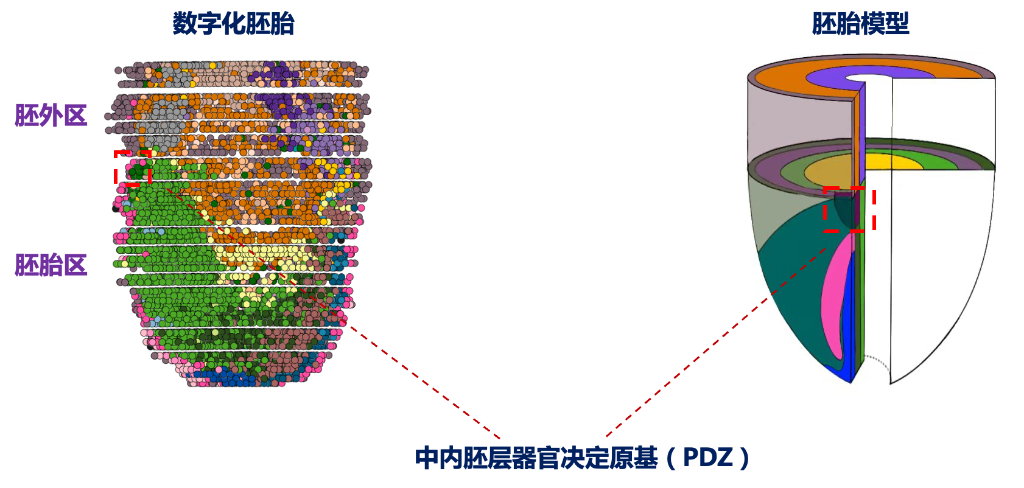
Core Insights - Congenital heart disease is the most common type of birth defect in newborns, and recent research by Chinese scientists has identified an organ primordium determination zone that provides a crucial theoretical basis for the prevention and treatment of congenital heart disease and other birth defects [1][3] - The study, published in the international academic journal "Cell," utilized single-cell spatial omics analysis to capture the dynamic process of organ formation in mouse embryos, focusing on the early stages of development [1][3] Research Findings - The research team discovered a unique signaling "depression" known as the organ primordium determination zone (PDZ) at 7.75 days of mouse embryonic development, characterized by low signal activity and the expression of various receptor signaling genes [3] - The PDZ area is surrounded by high concentrations of inhibitory and activating signaling molecules, creating a microenvironment conducive to the coordinated development of the heart and foregut [3] - This study provides a new methodology for understanding organ regeneration and tumorigenesis, offering precise scientific evidence for the prevention and treatment of congenital heart disease and related conditions [3]