
能源供给冲击

Search documents
中金:油价或推高出口份额
中金点睛· 2026-03-30 00:26
Core Viewpoint - The article discusses the impact of the Middle East conflict on oil prices and its implications for China's export dynamics, highlighting both negative supply-side shocks and potential positive demand-side effects [1]. Group 1: Total and Structural Impact on Exports - The Middle East conflict leads to a negative supply shock for China's exports due to rising oil prices, but there may be a positive demand effect that could increase China's export share [1]. - The demand transfer effect suggests that demand may shift from China's competitors to China, potentially increasing the export share of high-energy-consuming products like steel, aluminum, and chemicals [1]. - The demand creation effect indicates that economies heavily impacted by rising oil prices may accelerate their transition to renewable energy, benefiting China's exports of new energy and electrical equipment [1]. Group 2: Comparison of Energy Supply Shocks - The article compares the 2022 Russia-Ukraine conflict with the anticipated 2026 US-Iran conflict, noting that both have negative impacts on global energy supply but differ in their mechanisms and affected regions [3]. - The 2026 US-Iran conflict is expected to have a more severe impact on global oil and LNG supplies compared to the 2022 Russia-Ukraine conflict, particularly affecting Asian economies [3]. - The 2022 conflict primarily disrupted European gas supplies, while the 2026 conflict may block oil and gas supplies globally, especially through the Strait of Hormuz [3]. Group 3: Impact on China's Export Dynamics - The current oil price increase is expected to exert a "stagflation" effect on the global economy, with a 10% rise in energy prices potentially increasing global inflation by 40 basis points and slowing economic growth by 0.1%-0.2% [20]. - A 20% increase in oil prices could reduce China's export volume by 0.8 percentage points over the next 12 months [20]. - High-energy-consuming products may see an increase in export share, as evidenced by the 2022 Russia-Ukraine conflict, which allowed China to gain market share in Europe due to reduced competition from energy-intensive industries [22]. Group 4: Sector-Specific Export Opportunities - The article identifies specific high-energy-consuming products where China could increase its export share, including steel, aluminum, and chemicals, with significant export values recorded in 2022 [30]. - The analysis highlights that Japan and South Korea's industries may face competition from China in high-energy sectors, particularly in metals and chemicals [32]. - The potential for China's export share to increase in these sectors is supported by the observation that other Asian economies are more reliant on Middle Eastern energy supplies than China [12][14]. Group 5: Renewable Energy Export Growth - The article notes that the energy supply shock may accelerate the energy transition in overseas economies, leading to increased demand for China's renewable energy products [41]. - China's exports of renewable energy-related products to the EU rose significantly from $67.5 billion in 2021 to $107.7 billion in 2022, with further growth expected in 2023 [44]. - The demand for China's renewable energy products is projected to increase by 10.5% due to the current energy supply shock, contributing an estimated 1.3 percentage points to overall export growth [52].

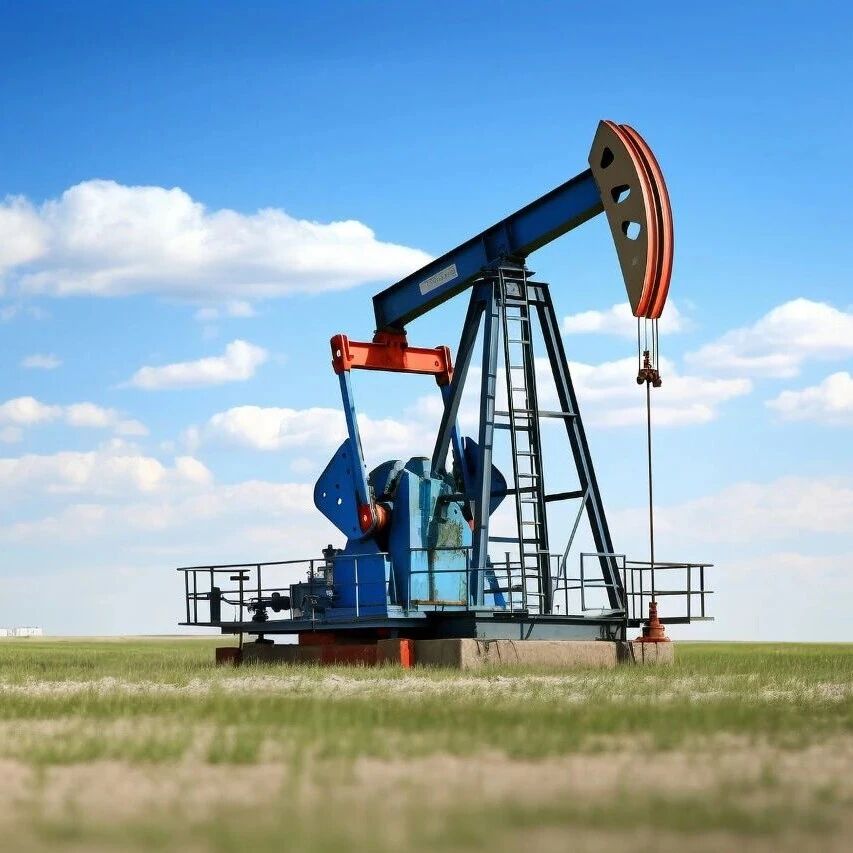
如果油价居高不下
HTSC· 2026-03-11 02:45
Group 1: Impact of Middle East Conflict on Oil Prices - The ongoing military conflict in the Middle East is expected to significantly impact global oil supply, with potential reductions of 14-16 million barrels per day, accounting for approximately 15% of global supply[2] - The conflict has already led to a 28% increase in Brent crude oil prices since its outbreak, indicating a strong market reaction to geopolitical tensions[32] - The physical blockade of the Strait of Hormuz, which transports about 20 million barrels of oil daily, represents a critical supply disruption, with implications for global oil prices being non-linear[19] Group 2: Economic Consequences of High Oil Prices - If the average oil price rises to $80 per barrel, global GDP growth could decline by 0.1-0.3 percentage points, while inflation could increase by 0.5-0.6 percentage points; at $100 per barrel, the impacts could worsen to a 0.5-0.8 percentage point decline in growth and a 1.5-2.0 percentage point increase in inflation[3] - High oil prices are likely to exacerbate inflationary pressures in major economies, with U.S. CPI potentially rising to 3.1% or 3.5% if oil prices reach $80 or $100 per barrel, respectively[43] - Countries with high energy dependence, such as those in South Asia and Europe, are expected to suffer income losses, while energy-exporting nations may benefit from increased revenues[3] Group 3: Financial Market Reactions - Historical data suggests that high-intensity energy supply shocks can lead to increased inflation expectations, pushing up bond yields and risk premiums[4] - The U.S. dollar is likely to strengthen in response to rising oil prices, with potential increases in the dollar index of 0.6-2.3% at $80 per barrel and 1.2-3.6% at $100 per barrel[4] - Emerging market currencies and those of net energy importers may weaken under the dual pressures of a stronger dollar and deteriorating trade conditions[4] Group 4: Broader Commodity and Asset Price Effects - Rising oil prices are expected to increase the prices of alternative energy sources and precious metals, while negatively impacting the demand and prices of other industrial commodities[5] - The tightening liquidity resulting from higher oil prices and a stronger dollar is likely to elevate risk premiums, compressing valuations of risk assets[5] - The conflict's impact on energy supply is anticipated to disrupt the production and transportation of other commodities, leading to increased costs and extended delivery times across global supply chains[21]