
能源新质生产力

Search documents
内蒙古能源局党组书记、局长曹思阳: 结合开展光伏治沙工程 谋划实施一批区内自用新能源项目
Zhong Guo Dian Li Bao· 2026-03-31 03:12
Core Viewpoint - The 20th Central Committee's Fourth Plenary Session emphasizes the construction of a new energy system and the development of an energy powerhouse, with specific targets set for 2030 and 2035, guiding the energy sector's development for the "14th Five-Year Plan" and beyond [1] Group 1: Energy Security and Development - Inner Mongolia has made significant progress in high-quality energy development since the "14th Five-Year Plan," focusing on traditional energy transformation and green energy development, ensuring energy supply tasks are met with over 12 billion tons of coal production [2] - The region's electricity generation capacity has doubled, with power delivery increasing by 72% compared to the end of the "13th Five-Year Plan," maintaining a leading position in national energy security [2] Group 2: New Energy Development - New energy capacity has reached 170 million kilowatts, achieving a 2.4 times increase in installed capacity and a 2.1 times increase in power generation compared to the end of the "13th Five-Year Plan," with over 70% of new electricity consumption coming from new energy sources [3] - The region has established 230 intelligent coal mines, accounting for 80% of coal mines in operation, with a production capacity of 1.14 billion tons, leading the nation [3] Group 3: Energy Reform and Cooperation - The approval process for new energy and grid projects has been streamlined, reducing processing time from six months to approximately three months, facilitating market entry for new energy [4] - Cooperation with central enterprises has expanded, with agreements totaling over 1.1 trillion yuan, and energy collaboration with Mongolia has strengthened, including the establishment of nine power transmission channels [4] Group 4: Future Energy Strategy - The "15th Five-Year Plan" aims to enhance traditional energy supply capabilities and promote the development of modern energy economies, transitioning Inner Mongolia from an energy region to an energy powerhouse [5][6] - The focus will be on improving the efficiency of new energy development, expanding renewable energy applications, and enhancing the construction of a new power system [6][7] - The region plans to develop green hydrogen and establish a comprehensive hydrogen transport network, positioning itself as a leader in the green hydrogen industry [7]
杨昆:全国统一电力市场建设迈入全面深化新阶段
Zhong Guo Dian Li Bao· 2026-02-11 10:35
Core Viewpoint - The construction of a unified national electricity market is a significant strategic decision by the central government to promote high-quality development and optimize resource allocation across the country [2][3]. Group 1: Importance of a Unified Electricity Market - The improvement of the unified national electricity market system is a crucial institutional guarantee for the construction of a new type of power system, with expectations of an annual increase in electricity demand of around 600 billion kilowatt-hours during the 14th Five-Year Plan period [3]. - The unified electricity market can effectively enhance the quality and efficiency of the energy industry and related sectors, providing a stable internal driving force for economic development [4]. Group 2: Implementation Opinions and Strategic Goals - The recently issued "Implementation Opinions" set clear strategic goals for the construction of the unified electricity market, aiming for a "basic completion" by 2030 and "full completion" by 2035 [6]. - Key reform measures include breaking down market barriers, promoting diverse participation, and improving capacity assurance mechanisms [6][7]. Group 3: Market Mechanism and Infrastructure Development - The construction of a unified electricity market requires the establishment of effective capacity pricing mechanisms and the continuous operation of the electricity spot market [7]. - Upgrading electricity system infrastructure is essential, with a focus on building new grid platforms and enhancing cross-regional transmission capabilities [9]. Group 4: Technological Innovation and Standards - Strengthening investment in technological innovation within the energy and electricity sector is vital, with an emphasis on developing new energy production capabilities and promoting advanced technology [9]. - The establishment of technical standards in the electricity industry is crucial for supporting the effective implementation of policies and ensuring the smooth operation of the unified electricity market [9].
光伏行业周报(20260126-20260130):本周光伏设备(申万)指数表现
Guoxin Securities Co., Ltd· 2026-02-04 13:25
Investment Rating - The report suggests focusing on companies benefiting from supply-side reforms, technological iterations, and marginal changes in demand expectations, with a long-term view on efficient technologies and leading companies in the industry [4] Core Insights - The photovoltaic equipment industry index decreased by 6.19% during the week of January 26 to January 30, 2026, underperforming the broader market index by 5.18 percentage points [12][14] - Key companies in the photovoltaic equipment sector showed varied performance, with notable gains from Yamaton, Jincheng Co., and others, while significant losses were observed in Mingguan New Materials and others [17] - The report highlights the stability in prices of key materials such as silicon, wafers, and batteries, with slight increases in component prices [19] Summary by Sections Market Performance - The Shanghai Composite Index increased by 0.08%, while the photovoltaic equipment industry index fell by 6.19%, indicating a challenging week for the sector [12][14] Industry Chain Price Trends - As of January 21, 2026, the prices for key materials were as follows: silicon at 59 CNY/kg, wafers at 1.50 CNY/piece, batteries at 0.42 CNY/W, and components at 0.81 CNY/W, with a slight increase in component prices [19] Industry News - Guangdong province is advancing offshore photovoltaic construction as part of its action plan for high-quality marine economic development, promoting the integration of offshore wind and photovoltaic projects [26] - The National Energy Administration announced that by 2025, the country expects to add over 430 million kW of wind and solar capacity, with significant investments in renewable energy projects [27][28]




青岛市人大代表徐冰:为城市品质升级提供“能源样板”
Qi Lu Wan Bao· 2026-01-20 12:21
Core Viewpoint - Qingdao Energy Group is focusing on sustainable development through a three-pronged approach: urban security, industrial development, and safe operations, aiming to create a replicable "energy model" for urban quality enhancement [1][2] Group 1: Urban Security and Infrastructure - Qingdao Energy Group has successfully operated the largest LNG receiving station in China and completed a 155-kilometer upgrade of the old gas heating pipeline network, enhancing urban gas and heating security [1] - The company has interconnected 26 heating source stations to form a unified heating network, leading to a domestic-leading capability in urban gas and heating security [1] Group 2: Industrial Development and Green Energy - The green energy business of Qingdao Energy Group has seen quality improvements and growth, with the launch of multiple innovative waste heat utilization projects, resulting in a cluster of 156 green energy projects [1] - The company is committed to expanding its green energy sector by advancing clean heat and power generation projects, biomass "green electricity" production bases, and participating in offshore wind power and large gas turbine projects [2] Group 3: Urban Renewal and Quality Enhancement - Qingdao Energy Group is transforming industrial heritage sites into landmark parks and social spaces, such as the Energy Zhonglian Sports Plaza and the "Heart of the City" cultural park, contributing to urban quality upgrades [1] - The company aims to establish a new heating system that efficiently allocates various waste heat resources across regions and industries, setting a green low-carbon heating model for northern China [2] Group 4: Smart Services and Community Engagement - The company has implemented a "three excellence" model focusing on quality products, projects, and services, and has established a "five-in-one" smart service system, making Qingdao the first major city in China to scale up smart gas meter installations [2] - The introduction of smart gas meters has led to a 53% reduction in government hotline inquiries and has positioned user satisfaction at the top of the industry [2]
我国用电量将首超10万亿千瓦时,意味着什么?
Zhong Guo Dian Li Bao· 2025-12-17 01:01
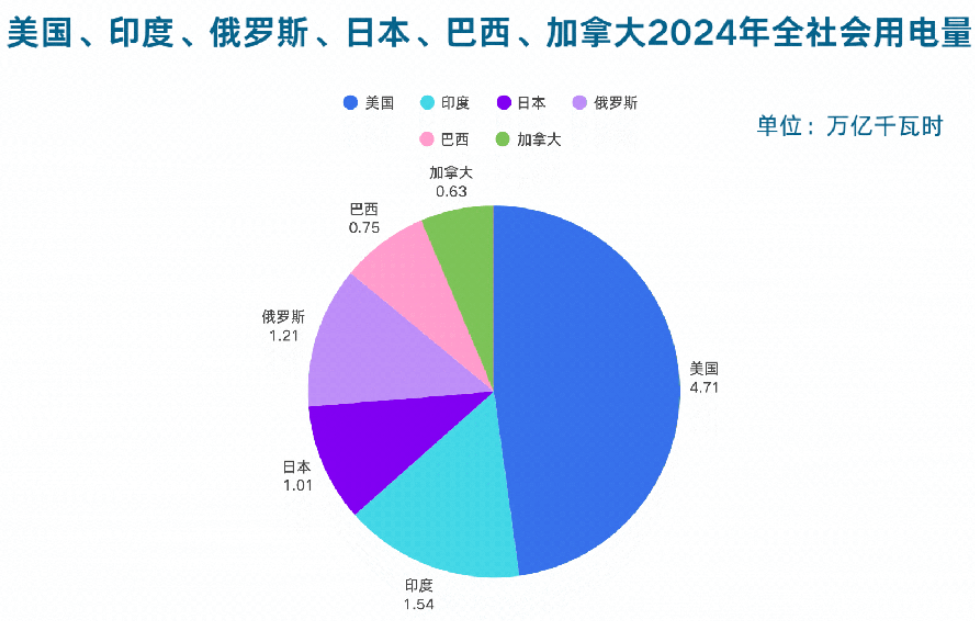
Core Viewpoint - The announcement of China's electricity consumption exceeding 10 trillion kilowatt-hours by 2025 marks a significant milestone, reflecting the robust growth and resilience of the Chinese economy, as well as the transition towards a greener energy structure [1][4][8]. Group 1: Electricity Consumption Milestones - In 2025, China's total electricity consumption is projected to surpass 10 trillion kilowatt-hours, equivalent to the combined annual electricity consumption of the USA, India, Russia, Japan, Brazil, and Canada [1]. - China experienced its first monthly electricity consumption exceeding 1 trillion kilowatt-hours in July and August of this year, showcasing the country's strong economic pulse and transition towards a greener economy [4]. - Historical milestones in electricity consumption include surpassing 1 trillion kilowatt-hours in 1996, 5 trillion in 2011, and 8 trillion in 2021 [4]. Group 2: Economic Growth Indicators - Multiple international institutions have raised their economic growth forecasts for China in 2025, with the World Bank, IMF, and ADB adjusting their predictions upward by 0.4, 0.2, and 0.1 percentage points respectively [8]. - In the first three quarters of this year, China's GDP growth rates were 5.4%, 5.2%, and 4.8%, indicating a sustained economic recovery that has driven an increase in electricity consumption [11]. Group 3: Sectoral Electricity Consumption Trends - The primary industry saw a 10.2% year-on-year increase in electricity consumption in the first three quarters, reflecting trends in agricultural modernization [15]. - The secondary industry contributed 51% to the overall electricity consumption growth, with a 5.1% increase in the third quarter, driven by high-tech and equipment manufacturing sectors [15]. - The internet and related services sector experienced a remarkable 29.8% year-on-year growth in electricity consumption, with specific regions like Guizhou showing a 72.92% increase [17]. Group 4: Power Supply Capacity - This summer, China's power load broke historical highs multiple times, demonstrating the resilience of the electricity supply system [18]. - China's power generation capacity accounts for one-third of the global total, with a projected increase to 3.8 billion kilowatts by 2025, reflecting a 14% year-on-year growth [21]. - The construction of large clean energy bases in western regions and the "West-to-East Power Transmission" initiative have significantly enhanced electricity supply capabilities [26]. Group 5: Energy Transition and Modernization - The electrification ratio of terminal energy use in China has reached approximately 30%, surpassing that of major developed economies [29]. - By the end of October this year, renewable energy capacity exceeded 2.2 billion kilowatts, accounting for nearly 60% of the total installed capacity, with wind and solar power installations surpassing thermal power [33]. - The development of new energy technologies, including advancements in solar and wind power, is accelerating, with significant reductions in costs and improvements in efficiency [39].

一图读懂丨国家能源局2026年监管工作会议
国家能源局· 2025-12-16 13:15
Core Viewpoint - The article emphasizes the achievements and future tasks of energy regulation in China, highlighting the importance of high-quality development and the implementation of policies to ensure energy supply and safety. Group 1: Achievements in Energy Regulation - The energy regulatory framework has been strengthened, with a focus on implementing the decisions of the central government and enhancing grassroots governance [2][3][4] - Significant progress has been made in establishing a unified national electricity market, with the number of market participants increasing nearly fourfold since the end of the 13th Five-Year Plan [22][23] - The scale of green electricity and green certificate trading has seen exponential growth, with an annual growth rate of nearly 180% [24] Group 2: Key Regulatory Measures - A comprehensive regulatory system has been established, including a "1+6" foundational rule system and a mechanism for cross-grid trading [9][20] - The average resolution time for public complaints has been reduced from 60 days to 6.8 working days, with 92% of issues resolved at the grassroots level [16][25] - The implementation of new policies is expected to benefit approximately 1.5 million households and save around 20 billion yuan in electricity investment over five years [14] Group 3: Future Focus Areas - The focus for 2026 includes fully implementing the spirit of the 20th National Congress and ensuring the construction of a unified electricity market [26][28] - Emphasis will be placed on enhancing energy supply security, improving the quality of electricity services, and strengthening the regulatory framework [32][33] - The regulatory approach will prioritize innovation and reform, aiming to create a new regulatory landscape that aligns with the development of a strong energy nation [34][35]

深入学习贯彻党的二十届四中全会精神 为能源强国建设提供坚强监管保障——国家能源局2026年监管工作会议在京举行
国家能源局· 2025-12-16 13:15
Core Viewpoint - The National Energy Administration's 2026 regulatory work meeting emphasized the importance of energy regulation in supporting high-quality energy development and aligning with national strategic goals, guided by Xi Jinping's thoughts and directives [3][4][5]. Group 1: Regulatory Framework and Achievements - The meeting highlighted the significant progress made during the "14th Five-Year Plan" period in strengthening energy regulation, ensuring the implementation of major strategic policies, and establishing a unified and competitive electricity market [4][5]. - The energy regulatory authority has enhanced its enforcement capabilities, effectively addressing major risks and conflicts, and demonstrating the effectiveness of energy regulation [4][5]. Group 2: Future Directions and Goals - For 2026, the energy regulatory work will focus on implementing the spirit of the 20th National Congress and subsequent plenary sessions, with an emphasis on building a unified national electricity market and ensuring the regulation of natural monopoly sectors [5][6]. - The meeting called for a systematic approach to accelerate the construction of a new energy system, promote the efficient use of fossil energy, and support the growth of the clean energy industry [6]. - There will be a strong focus on enhancing the safety of the energy and electricity systems, improving monitoring and early warning mechanisms, and ensuring the reliability of electricity supply [6]. Group 3: Organizational and Leadership Aspects - The meeting underscored the importance of strengthening the Party's leadership in energy regulation, enhancing organizational and personnel development, and fostering a culture of accountability and discipline within the regulatory framework [6].
署名文章︱国家能源局发展规划司:加快建设新型能源体系
国家能源局· 2025-12-09 11:35
Core Viewpoint - The article emphasizes the importance of accelerating the construction of a new energy system and building an energy powerhouse as central tasks for high-quality energy development in China, guided by the principles set forth by the Communist Party and recent strategic directives [3][4][5]. Group 1: Principles for New Energy System Construction - The construction of a new energy system must adhere to the principle of comprehensive leadership by the Party, ensuring that energy development aligns with national strategies and maintains a correct direction [4]. - The concept of prioritizing people's needs is crucial, focusing on improving energy supply quality and ensuring equitable access to energy resources for all citizens [5]. - The strategy emphasizes self-reliance in energy security, advocating for a robust domestic energy supply system to mitigate external uncertainties [6]. - A green and low-carbon development approach is essential, with a focus on transitioning to non-fossil energy sources and achieving carbon neutrality goals [7]. - Innovation is highlighted as the primary driving force for energy development, with a call for technological advancements to lead the energy sector [8]. - Deepening energy system reforms is necessary to enhance market efficiency and governance structures [9]. Group 2: Achievements During the 14th Five-Year Plan - Significant improvements in energy security and supply resilience were achieved, with total energy production reaching approximately 5 billion tons of standard coal, a nearly 40% increase over the past decade [10]. - The transition to a greener energy structure was marked by a doubling of non-fossil energy consumption, which now accounts for about 20% of total energy consumption [11]. - Technological advancements in energy production and equipment have led to a notable increase in the modernization of the energy industry, with significant breakthroughs in nuclear power and renewable energy technologies [12]. - The establishment of a comprehensive energy market system has been initiated, enhancing market dynamics and participation from various stakeholders [13]. - International cooperation in energy has been strengthened, with significant projects and partnerships established globally, contributing to a more stable energy supply chain [14]. Group 3: Strategic Planning for the 15th Five-Year Plan - The 15th Five-Year Plan aims to establish a clean, low-carbon, safe, and efficient new energy system, focusing on energy security, economic feasibility, and technological innovation [15]. - Optimizing the spatial layout of energy resources and infrastructure is a priority, with plans for distributed energy development and enhanced energy base construction [16]. - The transition to a green and low-carbon energy system will be accelerated, with specific targets for non-fossil energy consumption by 2030 [16]. - Building a resilient energy supply chain is essential, with a focus on enhancing domestic oil and gas production and establishing a robust energy reserve system [17]. - Advancements in energy technology are prioritized, with a focus on both hard and soft innovations to support the new energy system [18]. - Legal and regulatory frameworks will be strengthened to support high-quality energy development and market reforms [19]. - International cooperation will be expanded to ensure the stability of global energy supply chains and promote sustainable energy development [20].

2025能源转型大会开幕,展出“能源谷”能源新质生产力成果
Xin Jing Bao· 2025-11-23 11:36
Core Insights - The 2025 Energy Transition Conference opened in Changping District, focusing on energy digitalization technology innovation and showcasing hard technology achievements from 15 companies [1][2] - The conference highlighted the integration of energy sectors with digital and artificial intelligence technologies, emphasizing advancements in renewable energy and automation [2] Group 1: Event Overview - The conference took place in the "Energy Valley" of the Future Science City, featuring both indoor and outdoor exhibitions [1] - Key exhibits included hydrogen-powered products such as a hydrogen energy dog, two-wheeled vehicles, and charging equipment, as well as a power inspection drone developed by State Grid Electric Power Space Technology Co., Ltd [1] Group 2: Technological Innovations - A notable exhibit was a vehicle-mounted model of an automated nitrogen foam cementing equipment, which enhances well integrity and reduces material costs, saving an average of 14 days per well in leakage-prone areas [2] - The geothermal energy showcased in the indoor area is highlighted for its ability to provide stable base load power, a significant advantage over other renewable energy sources [1] Group 3: Industry Collaboration - The conference also featured significant achievements in the integration of energy and digital technologies, showcasing innovations from state-owned enterprises [2] - Notable displays included offshore wind turbine units and large-scale simulation models, representing recent technological advancements and innovative industry cases [2]
能源转型大会上,“能源谷”亮出能源新质生产力硬核成果
Bei Jing Ri Bao Ke Hu Duan· 2025-11-23 08:43
Core Insights - The 2025 Energy Transition Conference opened in Changping District, focusing on energy digitalization and showcasing hard technology achievements from 15 companies [1] - The conference highlighted the innovative products in the outdoor exhibition area, including hydrogen-powered vehicles and drones for power line inspection [1][5] Group 1: Energy Innovations - Hydrogen-powered two-wheelers were showcased, featuring a 48V350W motor and solid-state hydrogen storage system for efficient power output and extended range [3] - A fully hydrogen-powered vehicle was presented, emphasizing zero carbon emissions and alignment with green transportation trends [3] - The power line inspection drone developed by State Grid Electric Power Space Technology Co., Ltd. integrates advanced avionics and positioning systems for efficient operation [5] Group 2: Renewable Energy Focus - Geothermal energy was a key focus in the indoor exhibition, noted for its ability to provide stable base-load power, which is a significant advantage over other renewable sources [7][8] - An automated liquid nitrogen cementing equipment model was displayed, designed to enhance cementing quality and safety in high-temperature geothermal wells [10] Group 3: Digitalization and AI Integration - The integration of digital and AI technologies in the energy sector was highlighted, with the introduction of unmanned driving robots for mining and power plant applications [12] - These robots are capable of autonomous operations and have been successfully implemented in various coal mines and power plants for over a year [12] Group 4: Research and Development Ecosystem - The Future Science City "Energy Valley" hosts 1,889 enterprises and has established 60 high-level research platforms, including national and provincial key laboratories [16] - Over the past three years, 78 research outcomes from 20 central enterprise research institutes and technology companies have been transformed on-site in the "Energy Valley" [16]
