能源自主创新

Search documents
媒体报道丨锻造“中国芯”!我国能源自主之路再添硬核底气
国家能源局· 2025-11-30 03:11
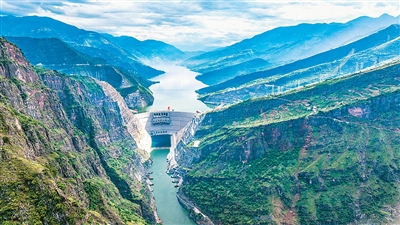
Core Viewpoint - Recent breakthroughs in China's energy sector include the world's first 660 MW ultra-supercritical circulating fluidized bed boiler, the first domestically produced 1500℃ single-shaft heavy-duty gas turbine, and the full production of the Meizhou pumped storage power station phase II, marking significant advancements in clean energy technology and enhancing energy security for green transition [2][4][12][17] Group 1: Ultra-Supercritical Circulating Fluidized Bed Boiler - The world's first 660 MW ultra-supercritical circulating fluidized bed boiler has passed authoritative evaluation, achieving or exceeding all performance indicators, thus filling a global industry gap [4] - This boiler operates at pressures above 29 MPa and temperatures over 600℃, significantly improving the efficiency of converting heat into electricity [4] - The boiler can utilize low-calorific fuels such as coal slurry and gangue, converting approximately 2 million tons of waste into usable energy annually, while also stabilizing the power grid against fluctuations from renewable energy sources [6] Group 2: 1500℃ Single-Shaft Heavy-Duty Gas Turbine - The first domestically produced 1500℃ single-shaft heavy-duty gas turbine has achieved full capacity generation, filling a domestic gap in the "F" class improved single-shaft heavy-duty gas turbine [8] - The project has a total installed capacity of 1,093,600 kW, with over 90% of the equipment being domestically produced, and it boasts a combined cycle efficiency of 61.74% [11] - It is estimated that the gas turbine will reduce carbon dioxide emissions by approximately 520,000 tons annually compared to equivalent coal-fired units, while also reducing standard coal consumption by about 200,000 tons [10] Group 3: Meizhou Pumped Storage Power Station - The Meizhou pumped storage power station phase II, with a total investment of approximately 12 billion yuan, has been fully commissioned, supporting power supply and green transition in the Guangdong-Hong Kong-Macao Greater Bay Area [13] - The power station has a total reservoir capacity of 92 million cubic meters, equivalent to the size of 6.5 West Lakes, and adds a regulation capacity of 2.4 million kW [13] - It is the highest domestically produced pumped storage power station, achieving full domestic production of main equipment and control systems, thus promoting the upgrade of domestic pumped storage equipment to a higher end [15]


从核电到深水油气,中国能源领域项目建设跑出“加速度”
Huan Qiu Wang· 2025-10-24 06:30
Core Insights - The Chinese energy sector has achieved multiple significant breakthroughs on October 16, including the successful cold test of the world's first land-based commercial modular small reactor "Linglong No. 1," the inauguration of the first national deep-water oil and gas emergency rescue base, and the full production of the first million-kilowatt peak-shaving thermal power project in the northwest region [1][2][3]. Group 1: Major Breakthroughs - "Linglong No. 1" is the world's first land-based commercial modular small reactor that has passed the International Atomic Energy Agency's safety review, marking a significant advancement in China's nuclear power innovation [2]. - The successful cold test of "Linglong No. 1" demonstrates China's comprehensive capabilities in new nuclear energy system design, high-end equipment manufacturing, and complex engineering management, solidifying its competitive advantage in the international small reactor market [2]. - The establishment of the national deep-water oil and gas emergency rescue base in Hainan significantly shortens emergency response times in southern maritime areas, enhancing the safety production capabilities in critical sectors [2]. Group 2: Technological Innovations - Recent years have seen the completion of several major projects, including the Baihetan Hydropower Station and the third-generation nuclear power projects "Hualong No. 1" and "Guohe No. 1," showcasing China's hard-core technological innovation [4]. - The National Energy Administration has indicated that the 14th Five-Year Plan period is crucial for achieving greater breakthroughs in energy technology innovation [4]. - China has made significant advancements in key areas such as nuclear power, new energy, and smart grids, establishing itself as a global leader in these sectors [4]. Group 3: Industry Development - By the end of 2027, China plans to establish 28 million charging facilities with over 300 million kilowatts of public charging capacity, as part of a three-year action plan to enhance electric vehicle charging infrastructure [6]. - The energy sector is increasingly integrating with industries such as transportation, leading to the emergence of new fields and production capabilities [7]. - China leads the world in new energy technologies, holding over 40% of global new energy patents and achieving record-breaking efficiencies in solar and offshore wind energy [7]. Group 4: Future Prospects - The new energy storage capacity in China has reached approximately 95 million kilowatts, growing nearly 30 times in five years, which is essential for the new power system [7]. - The hydrogen production and consumption scale in China is expected to exceed 36 million tons in 2024, making it the world's largest, with renewable energy-based hydrogen production capacity surpassing half of the global total [7]. - Artificial intelligence is increasingly being applied in the energy sector, enhancing various operations such as new energy generation and oil and gas resource discovery, thus revitalizing the industry [7].
锐财经|连连突破彰显能源科创硬实力
Ren Min Ri Bao Hai Wai Ban· 2025-10-22 07:01
Core Insights - The Chinese energy sector has achieved multiple significant breakthroughs on October 16, including the successful cold test of the world's first land-based commercial modular small reactor "Linglong No. 1," the inauguration of the first national deep-water oil and gas emergency rescue base, and the full production of the first million-kilowatt peak thermal power project in the northwest region [1][2][3]. Group 1: Major Breakthroughs - "Linglong No. 1" is the world's first land-based commercial modular small reactor that has passed the International Atomic Energy Agency's safety review, marking a significant advancement in China's nuclear power innovation [2]. - The successful cold test of "Linglong No. 1" demonstrates China's comprehensive capabilities in new nuclear energy system design, high-end equipment manufacturing, and complex engineering management, solidifying its competitive advantage in the international small reactor market [2]. - The establishment of the national deep-water oil and gas emergency rescue base in Hainan significantly reduces emergency response times in southern China's offshore oil and gas sector, enhancing safety production capabilities [3]. Group 2: Technological Innovations - Recent years have seen the completion of several major projects, including the Baihetan Hydropower Station and the third-generation nuclear power projects "Hualong One" and "Guohe One," showcasing China's hard-core technological innovation [4]. - The National Energy Administration has emphasized that the 14th Five-Year Plan period is crucial for achieving greater breakthroughs in energy technology innovation, with a focus on independent core technology development [5]. Group 3: Industry Development - By the end of 2027, China plans to establish 28 million charging facilities, providing over 300 million kilowatts of public charging capacity, as part of a three-year action plan to enhance electric vehicle charging infrastructure [6]. - The energy sector is increasingly integrating with industries such as transportation, leading to the emergence of new fields and production capabilities [7]. - China leads globally in renewable energy technologies, holding over 40% of global renewable energy patents and achieving significant reductions in the cost of wind and solar power generation [7].
连连突破彰显能源科创硬实力(锐财经)
Ren Min Ri Bao Hai Wai Ban· 2025-10-21 23:02
Core Achievements in China's Energy Sector - On October 16, multiple significant breakthroughs were achieved in China's energy sector, including the successful cold test of the world's first commercial modular small reactor "Linglong No. 1," the inauguration of the first national deep-water oil and gas emergency rescue base, and the full commissioning of the first million-kilowatt peak-shaving thermal power project in Northwest China [2][3][4]. Breakthroughs in Nuclear Energy - "Linglong No. 1" is the first land-based commercial modular reactor to pass the International Atomic Energy Agency's safety review, marking a major advancement in China's nuclear power innovation. The successful cold test demonstrates China's comprehensive capabilities in new nuclear energy system design and high-end equipment manufacturing [3]. Emergency Response Enhancements - The establishment of the national deep-water oil and gas emergency rescue base in Hainan significantly reduces emergency response times in southern China's offshore oil and gas sector. This base, developed over seven years, complements the Tianjin base, enhancing the overall emergency response framework [4]. Accelerated Project Development - Recent months have seen rapid advancements in energy projects, including the world's first "dual-tower one-machine" solar thermal storage power station entering trial operation, and the completion of the first coal-to-natural gas demonstration project in Northeast China [4]. Technological Innovations - China's energy sector has seen the completion of several major projects, such as the Baihetan Hydropower Station and the third-generation nuclear power plants "Hualong One" and "Guohe One." These projects highlight China's technological prowess in energy innovation [5][6]. Strengthening Energy Independence - The country is enhancing its energy independence through major technological projects and energy engineering, achieving breakthroughs in various fields, including renewable energy generation and advanced nuclear power [7]. New Energy Infrastructure Development - By the end of 2027, China plans to establish 28 million charging facilities with over 300 million kilowatts of public charging capacity, as part of a three-year action plan to enhance electric vehicle charging infrastructure [8]. Integration of AI in Energy Sector - Artificial intelligence is increasingly being applied in the energy sector, enhancing capabilities in areas such as renewable energy generation and oil and gas resource discovery, thus driving new vitality in the industry [9].