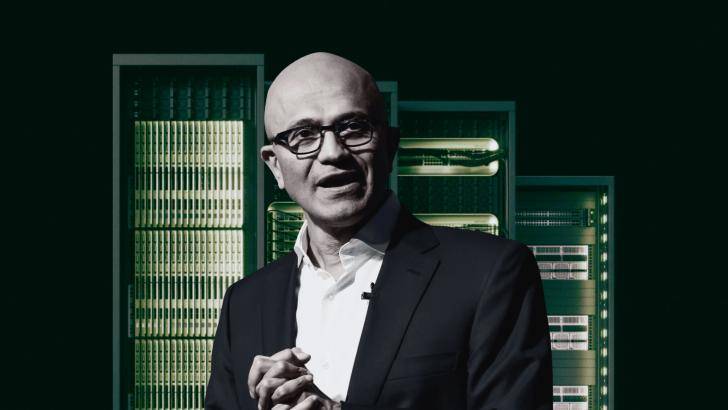
能耗-算力约束

Search documents
微软CEO纳德拉:电力短缺成AI算力扩张新瓶颈,大量芯片闲置在仓库里
Sou Hu Cai Jing· 2025-11-03 04:56
Core Insights - Microsoft CEO Satya Nadella highlighted that despite the high demand for AI chips, the company is facing limitations in power supply and physical space in data centers, leading to a backlog of AI chips that cannot be powered on [1][3][6] - The current bottleneck in the industry is not the supply of chips but rather the availability of sufficient power and cooling infrastructure to support new hardware [3][6] Group 1: Industry Challenges - The race for computational infrastructure has entered a new phase, with companies like Microsoft reaching physical and energy limits in their data centers [6] - Nvidia's systems are significantly increasing power density, with the next generation expected to see a 100-fold increase in thermal design power (TDP) per rack [6] - The exponential growth of AI models is leading to a potential infrastructure bottleneck, as energy networks may not support further expansion of data centers [6] Group 2: Market Implications - Nadella indicated that the energy shortage could impact the sales of Nvidia chips, as the ability to deploy orders may be hindered by the ongoing energy constraints [6] - The short-term demand for AI chips is difficult to predict and will heavily depend on the overall progress of the supply chain [6]



微软CEO纳德拉:电力短缺成AI算力扩张新瓶颈
Sou Hu Cai Jing· 2025-11-02 09:13
Core Insights - Microsoft CEO Satya Nadella highlighted that despite the high demand for AI chips, the company is facing limitations in power supply and physical space in data centers, leading to a backlog of AI chips that cannot be powered on [1][3][5] - The industry is experiencing a new phase where companies like Microsoft have reached the physical and energy limits of their data centers, hindering the deployment of new hardware [5] Industry Challenges - Nadella emphasized that the real bottleneck is not the supply of chips but rather the shortage of power supply, indicating that without sufficient electricity, even abundant chips will remain idle [3][5] - The competition for computational infrastructure has intensified, with companies needing to address the energy network's capacity to support further expansion of data centers [5] Future Implications - The increasing power density of systems, such as NVIDIA's, is expected to rise significantly, which could exacerbate the existing infrastructure bottlenecks [5] - Nadella noted that the short-term demand for NVIDIA chips is difficult to predict and will heavily depend on the overall progress of the supply chain, suggesting that ongoing energy constraints could impact actual purchasing decisions [5]