
自主导航技术

Search documents
沈荣骏院士:非打不可,出了问题我扛着
Xin Lang Cai Jing· 2026-02-21 17:22
Core Viewpoint - The article highlights the significant contributions of Shen Rongjun to China's aerospace industry, particularly in the development of the Beidou satellite navigation system and the successful launch of the Shenzhou spacecraft, showcasing his dedication and innovative spirit in advancing China's space capabilities [1][4]. Group 1: Beidou Satellite Navigation System - The Beidou satellite navigation system has become widely used in daily life, with its development initiated in the 1980s when Shen Rongjun recognized the importance of satellite navigation systems in aerospace [1]. - In 1994, the project for China's independent satellite navigation system was officially launched, leading to the successful launch of sixty Beidou satellites, achieving global coverage [2]. Group 2: Manned Spaceflight Program - Shen Rongjun played a crucial role as the deputy commander of the manned spaceflight program, proposing the launch of a test spacecraft when production delays threatened the timeline for sending China's first spacecraft into orbit [2]. - Despite facing opposition and personal doubts, Shen took full responsibility for the decision to proceed with the launch, emphasizing the importance of the mission for the future of China's manned space program [2][3]. Group 3: Key Achievements and Legacy - The successful launch of Shenzhou 1 on November 20, 1999, marked a critical milestone for China's manned space program, with Shen overseeing the resolution of significant technical issues during the final preparations [3]. - Shen Rongjun's life and work are characterized by a commitment to beneficial endeavors for the people, reflecting a philosophy of integrity and dedication to the advancement of China's aerospace capabilities [4][6].
2026北京亦庄人形机器人半马明年4月开跑 首设自主导航组和遥控组
Xin Lang Cai Jing· 2025-12-25 17:24
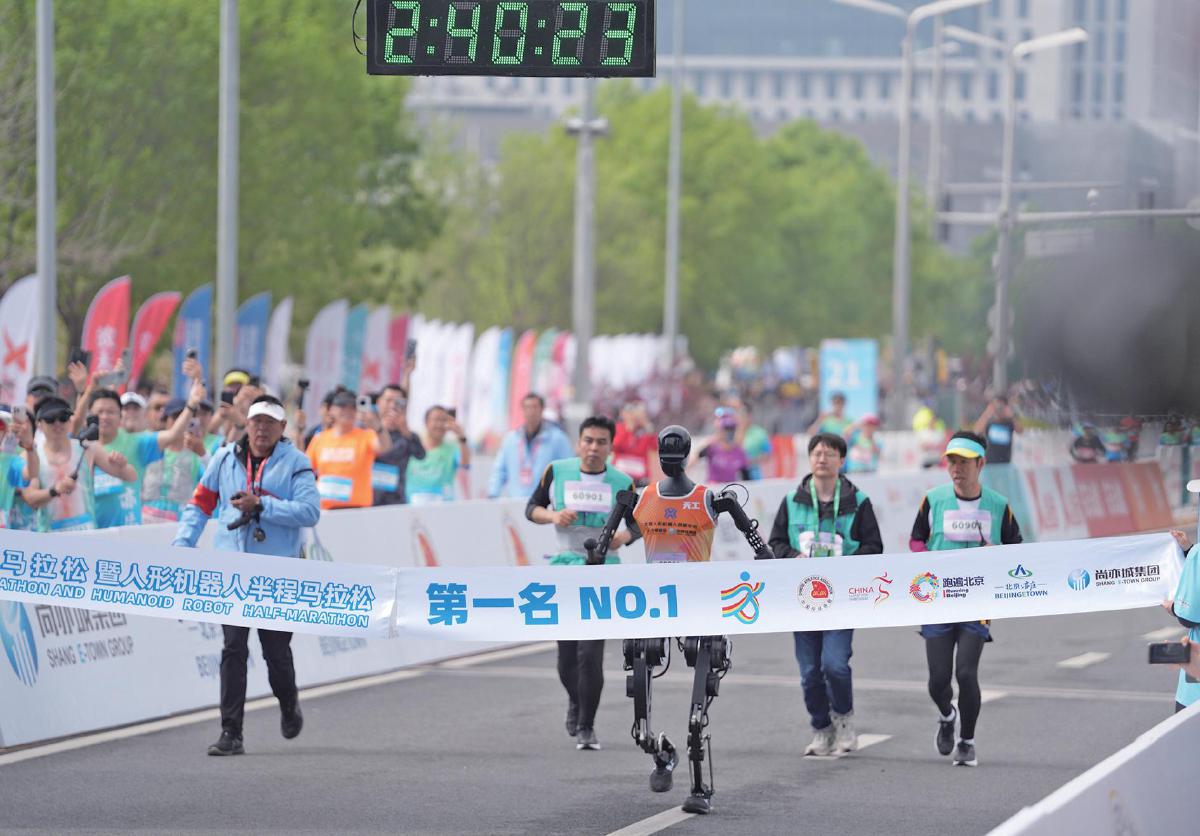
Core Insights - The 2026 Beijing Yizhuang Humanoid Robot Half Marathon will take place on April 19, 2026, featuring an upgraded format that includes both human and robot participants running together on the same track, separated by barriers [1][3] Group 1: Competition Format and Rules - The event will introduce two categories: autonomous navigation group and remote control group, utilizing a mixed timing method for competition [1][3] - The competition will encourage more robots to achieve autonomous completion by applying a weighting coefficient to the scores of non-autonomous robots and enforcing strict remote control regulations [2][3] - The scoring system will change, with autonomous teams' scores calculated as net timing plus penalties, while remote control teams will have their scores multiplied by a factor of 1.2 plus penalties [3][10] Group 2: Technical Innovations and Challenges - The competition aims to push for advancements in energy efficiency, encouraging teams to minimize battery swap frequency and enhance long-distance operational capabilities [2][7] - Robots will be required to demonstrate improved adaptability, real-time perception, rapid decision-making, and precise obstacle avoidance in dynamic environments [2][7] - New awards such as "Best Endurance Award," "Most Beautiful Gait Award," "Best Design Award," and "Best Perception Award" will be introduced to promote technological innovation [8] Group 3: Course and Environment - The racecourse will feature a more challenging route that integrates urban and park pathways, providing a complex environment for testing robots' adaptability and decision-making skills [6] - The event will also include a new competition, the Robot Baturu Challenge, focused on emergency rescue scenarios, testing robots in real-world conditions [8] Group 4: Support and Services for Participants - The organizing committee will provide comprehensive support for participating teams, including a dedicated robot development community and tailored communication services [8] - Each team will have a one-on-one event manager to assist with specific needs and provide a detailed racecourse map for technical testing [8]


运动难度升级,明年北京人形机器人半马自主跑和遥控跑将分开
Xin Jing Bao· 2025-12-25 11:40
Core Insights - The 2026 Beijing Yizhuang Humanoid Robot Half Marathon is set to take place on April 19, 2026, featuring significant upgrades in both the racecourse and technical requirements [1][2] - The event will introduce two categories: autonomous navigation and remote control, utilizing a mixed timing method for competition [2][3] Group 1: Competition Structure - The race will maintain a "human-robot co-running" format, where human participants and humanoid robots will share the same track but be separated by barriers [2] - The introduction of the autonomous navigation group aims to highlight the performance of robots capable of independent operation, with a new scoring system that rewards autonomous technology [2][3] Group 2: Technical Challenges and Innovations - The 2026 event will eliminate the option for remote control operators to follow their robots, requiring them to operate from a support vehicle, thus increasing the technical challenge [3] - New rules will impose penalties for battery swaps on the track, encouraging teams to improve energy management and endurance capabilities [3] Group 3: Course and Environment - The racecourse will feature a more challenging route that includes urban roads and ecological paths, designed to test robots' adaptability and decision-making in real-world scenarios [3] Group 4: Awards and Recognition - New awards such as "Best Endurance Award," "Most Beautiful Gait Award," "Best Design Award," and "Best Perception Award" will be introduced to encourage technological advancements [4] Group 5: Concurrent Events - The event will also host the Robot Baturu Challenge, focusing on emergency rescue scenarios, providing a platform for testing robots in complex environments [6] - The organizing committee will offer comprehensive support for participating teams, including access to development resources and personalized event management services [6]