
自回归

Search documents
市场正在惩罚只懂理论的端到端算法工程师......
自动驾驶之心· 2025-12-29 01:07
Core Insights - The article discusses the current challenges in the automotive industry regarding the recruitment of algorithm talent for end-to-end production roles, highlighting a gap between the skills of candidates and the high salary expectations for these positions [1] - A new course titled "End-to-End Practical Class for Mass Production" has been designed to address this gap, focusing on essential algorithms and practical applications in autonomous driving [1] Course Overview - The course is structured into eight chapters, covering various aspects of end-to-end algorithms, including the integration of perception tasks and learning-based control algorithms [6] - It emphasizes the importance of understanding both one-stage and two-stage end-to-end frameworks, with practical examples and real-world applications [7][8] - Key algorithms discussed include reinforcement learning, trajectory optimization, and spatial-temporal planning, which are crucial for the mass production of autonomous driving systems [10][12] Target Audience - The course is aimed at advanced learners with a foundational understanding of autonomous driving technologies, including familiarity with algorithms such as reinforcement learning and diffusion models [14][16] - It is designed to be accessible even to those with weaker foundations, as the instructor will provide guidance to help participants quickly get up to speed [14] Course Logistics - The course will commence on November 30 and is expected to last for three months, featuring offline video lectures and online Q&A sessions [14][17] - Participants are required to have a GPU with a recommended capability of 4090 or higher, along with a basic understanding of Python and PyTorch [16]

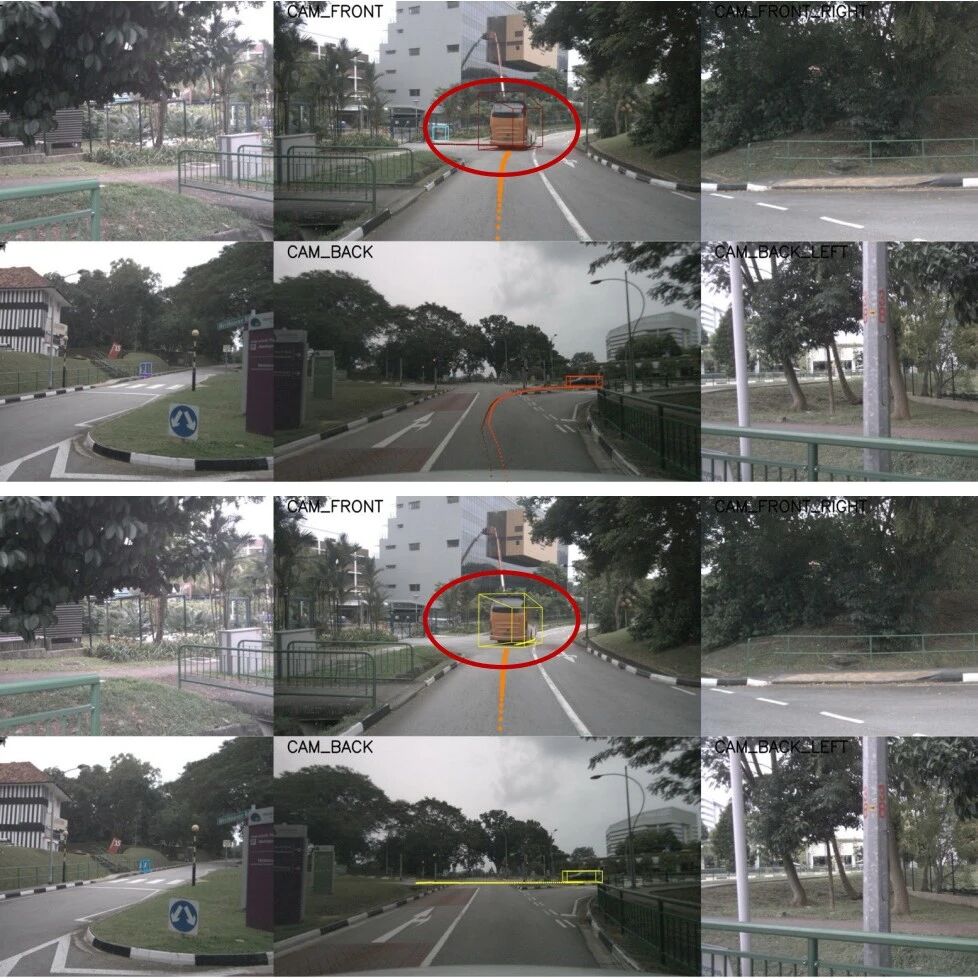
端到端落地中可以参考的七个Project
自动驾驶之心· 2025-12-19 00:05
Core Viewpoint - The article emphasizes the importance of end-to-end production in autonomous driving technology, highlighting the need for practical experience in various algorithms and applications to address real-world challenges in the industry [2][7]. Course Overview - The course is designed to provide in-depth knowledge on end-to-end production techniques, focusing on key algorithms such as one-stage and two-stage frameworks, reinforcement learning, and trajectory optimization [2][4]. - It includes practical projects that cover the entire process from theory to application, ensuring participants gain hands-on experience [2][12]. Instructor Background - The instructor, Wang Lu, is a top-tier algorithm expert with a strong academic background and extensive experience in developing and implementing advanced algorithms for autonomous driving [3]. Course Structure - The course consists of eight chapters, each focusing on different aspects of end-to-end algorithms, including: 1. Overview of end-to-end tasks and integration of perception and control systems [7]. 2. Two-stage end-to-end algorithm frameworks and their advantages [8]. 3. One-stage end-to-end algorithms with a focus on performance [9]. 4. Application of navigation information in autonomous driving [10]. 5. Introduction to reinforcement learning algorithms and training strategies [11]. 6. Optimization of trajectory outputs using various algorithms [12]. 7. Post-processing strategies for ensuring reliable outputs [13]. 8. Sharing of production experiences and strategies for real-world applications [14]. Target Audience - The course is aimed at advanced learners with a foundational understanding of autonomous driving algorithms, including familiarity with reinforcement learning and diffusion models [15][17].
直观理解Flow Matching生成式算法
自动驾驶之心· 2025-12-17 00:03
Core Viewpoint - The article discusses the Flow Matching algorithm, a generative model that simplifies the process of generating samples similar to a target dataset without complex mathematical concepts or derivations [3][4][12]. Algorithm Principle - Flow Matching is a generative model that aims to generate samples close to a given target set without requiring input [3][4]. - The algorithm learns a direction of movement from a source point to a target point, effectively guiding the generation process [14][16]. Training and Inference - During training, the model samples points along the line from source to target and averages the slopes from multiple connections to determine the direction of movement [17]. - In inference, the model starts from a noise point and iteratively moves towards the target, collapsing into a specific state as it approaches the target [17][18]. Code Implementation - The code provided demonstrates a simple implementation of the Flow Matching algorithm, including the generation of random input points and the prediction of slopes using a neural network [18][19]. - The model uses a vector field to predict the direction and speed of movement towards the target distribution [19][20]. Advanced Applications - The article mentions the adaptation of Flow Matching for conditional generation tasks, allowing for the generation of samples based on specific prompts or conditions [24][30]. - An example is given of generating handwritten digits from the MNIST dataset using Flow Matching, showcasing its versatility in different generative tasks [30][32]. Conclusion - Flow Matching presents a more efficient alternative to diffusion models in generative tasks, with applications in various fields including image generation and automated driving [12][43].
直观理解Flow Matching生成式算法
自动驾驶之心· 2025-11-28 00:49
Algorithm Overview - Flow Matching is a generative model that aims to generate samples similar to a given target set without any input [3][4] - The model learns a direction of movement from a source point to a target point, effectively generating new samples by iteratively adjusting the position towards the target [14][17] Training and Inference - During training, the model samples points along the line connecting source and target, learning the average slope from multiple connections [16][17] - In inference, the model starts from a noise point and moves towards the target, gradually collapsing to a specific state as it approaches the target [17][18] Code Implementation - The implementation involves generating random inputs, predicting the slope using a neural network, and applying an optimization process to minimize the loss between predicted and target slopes [18][19] - The code includes hyperparameters for dimensions, sample sizes, and training epochs, demonstrating a straightforward approach to implementing the Flow Matching algorithm [19][25] Advanced Applications - The model can be adapted to generate samples based on prompts, allowing for more controlled generation by segmenting the target distribution [24][29] - A more complex example includes generating handwritten digits from the MNIST dataset, showcasing the model's versatility in handling different types of data [30][32] Model Architecture - The architecture includes a UNet backbone for predicting the velocity field, which enhances performance through multi-scale feature fusion [32][34] - The model incorporates conditional inputs to refine the generation process, ensuring that the output aligns with specified conditions [34][35] Training Process - The training loop involves generating dynamic noise, calculating the loss based on the difference between predicted and actual images, and updating the model parameters accordingly [40][41] - The model is designed to visualize generated samples periodically, providing insights into its performance and output quality [40][41]
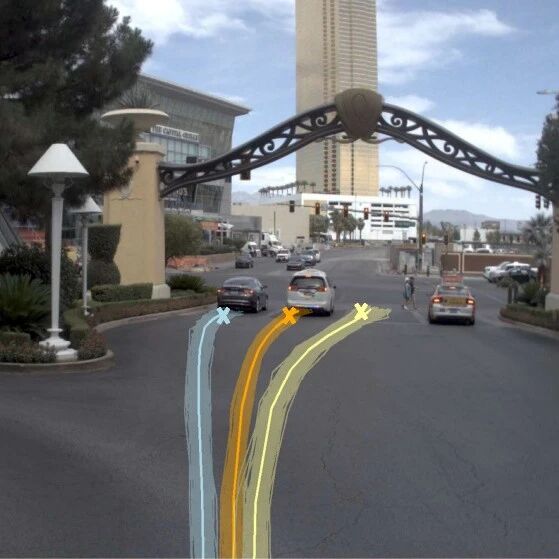
从目前的信息来看,端到端的落地上限应该很高......
自动驾驶之心· 2025-11-12 00:04
Core Insights - The article highlights significant developments in the autonomous driving industry, particularly the performance of Horizon HSD and the advancements in Xiaopeng's VLA2.0, indicating a shift towards end-to-end production models [1][3]. Group 1: Industry Developments - Horizon HSD's performance has exceeded expectations, marking a return to the industry's focus on one-stage end-to-end production, which has a high potential ceiling [1]. - Xiaopeng's VLA2.0, which integrates visual and language inputs, reinforces the notion that value-added (VA) capabilities are central to autonomous driving technology [1]. Group 2: Educational Initiatives - The article discusses a new course titled "Practical Class for End-to-End Production," aimed at sharing production experiences in autonomous driving, focusing on various methodologies including one-stage and two-stage frameworks, reinforcement learning, and trajectory optimization [3][8]. - The course is limited to 40 participants, emphasizing a targeted approach to skill development in the industry [3][5]. Group 3: Course Structure - The course consists of eight chapters covering topics such as end-to-end task overview, two-stage and one-stage algorithm frameworks, navigation information applications, reinforcement learning algorithms, trajectory output optimization, fallback solutions, and production experience sharing [8][9][10][11][12][13][14][15]. - Each chapter is designed to build upon the previous one, providing a comprehensive understanding of the end-to-end production process in autonomous driving [16]. Group 4: Target Audience and Requirements - The course is aimed at advanced learners with a background in autonomous driving algorithms, reinforcement learning, and programming skills, although it is also accessible to those with less experience [16][17]. - Participants are required to have a GPU with recommended specifications and a foundational understanding of relevant mathematical concepts [17].
