自我验证

Search documents
DeepSeek V3到V3.2的进化之路,一文看全
机器之心· 2025-12-08 04:27
Core Insights - DeepSeek has released two new models, DeepSeek-V3.2 and DeepSeek-V3.2-Speciale, which have generated significant interest and discussion in the AI community [2][5][11] - The evolution from DeepSeek V3 to V3.2 includes various architectural improvements and the introduction of new mechanisms aimed at enhancing performance and efficiency [10][131] Release Timeline - The initial release of DeepSeek V3 in December 2024 did not create immediate buzz, but the subsequent release of the DeepSeek R1 model changed the landscape, making DeepSeek a popular alternative to proprietary models from companies like OpenAI and Google [11][14] - The release of DeepSeek V3.2-Exp in September 2025 was seen as a preparatory step for the V3.2 model, focusing on establishing the necessary infrastructure for deployment [17][49] Model Types - DeepSeek V3 was initially launched as a base model, while DeepSeek R1 was developed as a specialized reasoning model through additional training [19][20] - The trend in the industry has seen a shift from hybrid reasoning models to specialized models, with DeepSeek seemingly reversing this trend by moving from specialized (R1) to hybrid models (V3.1 and V3.2) [25] Evolution from V3 to V3.1 - DeepSeek V3 utilized a mixed expert model and multi-head latent attention (MLA) to optimize memory usage during inference [29][30] - DeepSeek R1 focused on Reinforcement Learning with Verifiable Rewards (RLVR) to enhance reasoning capabilities, particularly in tasks requiring symbolic verification [37][38] Sparse Attention Mechanism - DeepSeek V3.2-Exp introduced a non-standard sparse attention mechanism, which significantly improved efficiency in training and inference, especially in long-context scenarios [49][68] - The DeepSeek Sparse Attention (DSA) mechanism allows the model to selectively focus on relevant past tokens, reducing computational complexity from quadratic to linear [68] Self-Verification and Self-Correction - DeepSeekMath V2, released shortly before V3.2, introduced self-verification and self-correction techniques to improve the accuracy of mathematical reasoning tasks [71][72] - The self-verification process involves a verifier model that assesses the quality of generated proofs, while self-correction allows the model to iteratively improve its outputs based on feedback [78][92] DeepSeek V3.2 Architecture - DeepSeek V3.2 maintains the architecture of its predecessor, V3.2-Exp, while incorporating improvements aimed at enhancing overall model performance across various tasks, including mathematics and coding [107][110] - The model's training process has been refined to include updates to the RLVR framework, integrating new reward mechanisms for different task types [115][116] Performance Benchmarks - DeepSeek V3.2 has shown competitive performance in various benchmarks, achieving notable results in mathematical tasks and outperforming several proprietary models [127]

中国航司“排斥”OTA和代理人:这对吗?
3 6 Ke· 2025-05-15 04:39
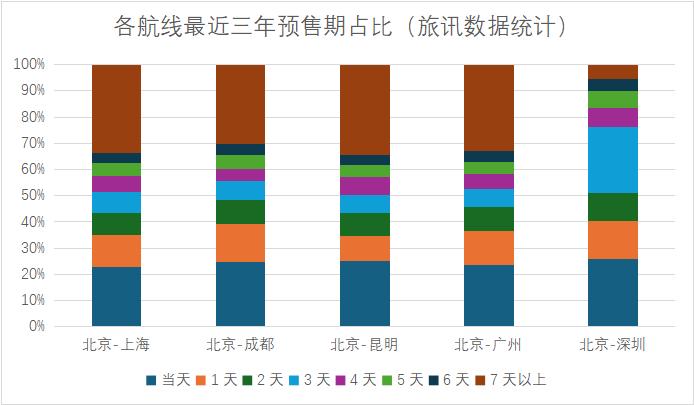
Core Viewpoint - The article discusses the misconception that Online Travel Agencies (OTAs) are suppressing demand in the civil aviation ticket market, arguing that this claim lacks validity and that the relationship between airlines and agents is more complex than it appears [2][3][11]. Group 1: Demand Dynamics - The notion that agents are hoarding demand and delaying ticket issuance is challenged, as travelers prefer immediate ticketing, especially with 50% of domestic tickets being purchased within two days of departure [3][2]. - The primary competition between travelers and airlines revolves around the fear of price fluctuations and the costs associated with cancellations or changes, which influences the timing of ticket purchases [7][9]. - A self-reinforcing cycle exists where travelers believe prices will rise, leading them to buy tickets early, which in turn encourages airlines to increase prices, creating a "buy early, benefit" mentality [9][10]. Group 2: Role of Agents - Agents serve essential functions in the market, such as facilitating price comparisons and simplifying customer outreach, which helps airlines manage their customer base more effectively [12][13]. - The attempt by airlines to eliminate agents may lead to increased marketing costs and a chaotic market environment, as agents provide a structured way to reach diverse customer segments [15][16]. - The shift in commission structures from percentage-based to fixed fees has altered the dynamics, pushing agents to recommend cheaper options, which can complicate airlines' pricing strategies [17][18]. Group 3: Market Implications - The rejection of agents by airlines could result in a concentration of less compliant agents in the market, potentially destabilizing pricing and demand management [16][17]. - The analogy is drawn between the airline industry's treatment of agents and stock market dynamics, where excluding brokers would be counterproductive for market health [18][19].