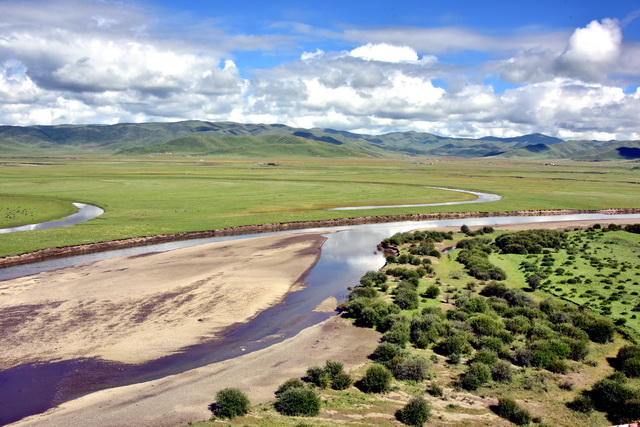
自然保护地整合优化

Search documents
坚定信心 真抓实干 为实现“十五五”良好开局团结奋斗——中央经济工作会议精神在各地引发热烈反响
Yang Guang Wang· 2025-12-15 04:44
Group 1 - The core message of Xi Jinping's speech at the Central Economic Work Conference emphasizes the importance of unifying thoughts and actions with the Party's scientific judgment on the current situation, and the commitment to high-quality development as a foundation for the "14th Five-Year Plan" [1] - The speech reflects on the achievements of the past year and sets a positive tone for the upcoming "15th Five-Year Plan," highlighting the significance of the Party's leadership in overcoming challenges [1] - The meeting outlines the necessity of fully tapping into economic potential, balancing policy support with reform innovation, and integrating investments in both physical and human capital [2] Group 2 - The conference identified eight key tasks for the upcoming year, focusing on the integration of technological innovation and industrial development, particularly in fields like artificial intelligence and biotechnology [3] - There is a strong emphasis on enhancing consumer spending through policies and activities, aiming to upgrade consumption patterns and meet diverse consumer needs [4] - Local governments are encouraged to align their strategies with the central government's directives, fostering a modern industrial system that reflects regional characteristics and advantages [3][4]
自然资源部:要发展壮大海洋新兴产业,推动海洋经济高质量发展
Zheng Quan Shi Bao Wang· 2025-12-13 08:09
Core Viewpoint - The meeting led by the Minister of Natural Resources emphasizes the integration of the Central Economic Work Conference's spirit with the 20th National Congress of the Communist Party, focusing on the planning and implementation of the 14th Five-Year Plan for natural resources and key tasks for 2026 [1] Group 1: Planning and Development - The meeting highlights the need for high-quality preparation of the "14th Five-Year" plan in the natural resources sector, aiming for scientific planning and advancement of major reform and development tasks [1] - There is a focus on evaluating and optimizing land spatial planning to ensure the allocation of resources for major projects [1] Group 2: Resource Security and Management - The meeting stresses the importance of maintaining a resource security baseline, adhering to farmland protection regulations, and enhancing exploration and development of strategic mineral resources [1] - Policies to revitalize existing resources will be improved, with active support for urban renewal and redevelopment of inefficient land [1] Group 3: Economic Development and Environmental Protection - The development of emerging marine industries is prioritized to promote high-quality growth in the marine economy [1] - The meeting calls for accelerated integration and optimization of natural protection areas, promoting a holistic approach to the protection and management of ecosystems [1] - There is an emphasis on enhancing monitoring and early warning systems for geological and marine disasters to improve responses to extreme weather events [1]
【经济日报】世界生物圈保护区大会将首次在中国举办
Jing Ji Ri Bao· 2025-09-23 03:18
Group 1 - The fifth World Biosphere Reserve Congress will be held in Hangzhou from September 22 to 25, marking the first time this event is hosted in Asia and featuring the widest participation from UNESCO member states in a decade [1] - China currently has 34 World Biosphere Reserves, the highest number in Asia, and aims to leverage the upcoming congress to enhance international cooperation in ecological governance and technology [1] - The Chinese government is focusing on integrating and optimizing natural protected areas to address issues such as ecosystem fragmentation and wildlife habitat loss [1] Group 2 - The Chinese Ministry of Agriculture and Rural Affairs emphasizes a balanced approach to fisheries development, focusing on both protection and development, which has helped to curb the decline of marine fishery resources [2] - The biodiversity of indigenous fish species in the Yangtze River has shown signs of recovery, with 344 species monitored from 2021 to 2024, an increase of 36 species compared to the pre-fishing ban period [2]
世界生物圈保护区大会将首次在中国举办
Jing Ji Ri Bao· 2025-09-17 06:30
Group 1 - The fifth World Biosphere Reserve Congress will be held in Hangzhou from September 22 to 25, marking the first time this event is hosted in Asia and featuring the widest participation from UNESCO member states in a decade [1] - China currently has 34 World Biosphere Reserves, the highest number in Asia, and aims to leverage the upcoming congress to enhance international cooperation in ecological governance and technology [1] - The concept of "Two Mountains" will be emphasized as China seeks to contribute more to the global community in building a shared future for life on Earth [1] Group 2 - The Ministry of Agriculture and Rural Affairs reports that China has balanced protection and development in fisheries, successfully curbing the decline of marine resources [2] - From 2021 to 2024, the Yangtze River basin has recorded 344 native fish species, an increase of 36 species compared to the period before the fishing ban [2]
自然保护地整合优化有新要求,相关规则进一步明确
Di Yi Cai Jing· 2025-06-20 08:17
Core Viewpoint - The ongoing optimization and integration of natural protected areas in China is being refined, with provincial-level results being developed and approved in batches, following the release of the "National Natural Protected Area Integration and Optimization Plan" by the National Forestry and Grassland Administration and the Ministry of Natural Resources [1][2]. Group 1: National Policy and Implementation - The National Forestry and Grassland Administration and the Ministry of Natural Resources have issued a directive to enhance the integration and optimization of existing natural protected areas, ensuring that the process is rigorous, data-driven, and responsive to public concerns [2]. - The integration plan is still pending approval and cannot be considered effective until then, although provincial departments are encouraged to begin preliminary work on key projects [1][2]. Group 2: Provincial Actions and Results - Various provincial authorities, including those in Shandong and Zhejiang, have publicly announced their local integration and optimization plans, resulting in a reduction of protected areas and an increase in total area [2]. - In Zhejiang, the number of natural protected areas decreased by 78 to a total of 166, while the total area increased by approximately 120 square kilometers to 14,693 square kilometers [2]. Group 3: Guidelines for Optimization - The "Natural Protected Area Integration and Optimization Rules" stipulate that smaller, fragmented, or less ecologically valuable protected areas may be revoked or reclassified, while areas with significant ecological or cultural value must be preserved [5][6]. - The integration process will consider factors such as ecological systems, resource ownership, and management structures, with a preference for merging lower-tier protected areas into higher-tier ones [5][6].