
自然资源管理

Search documents
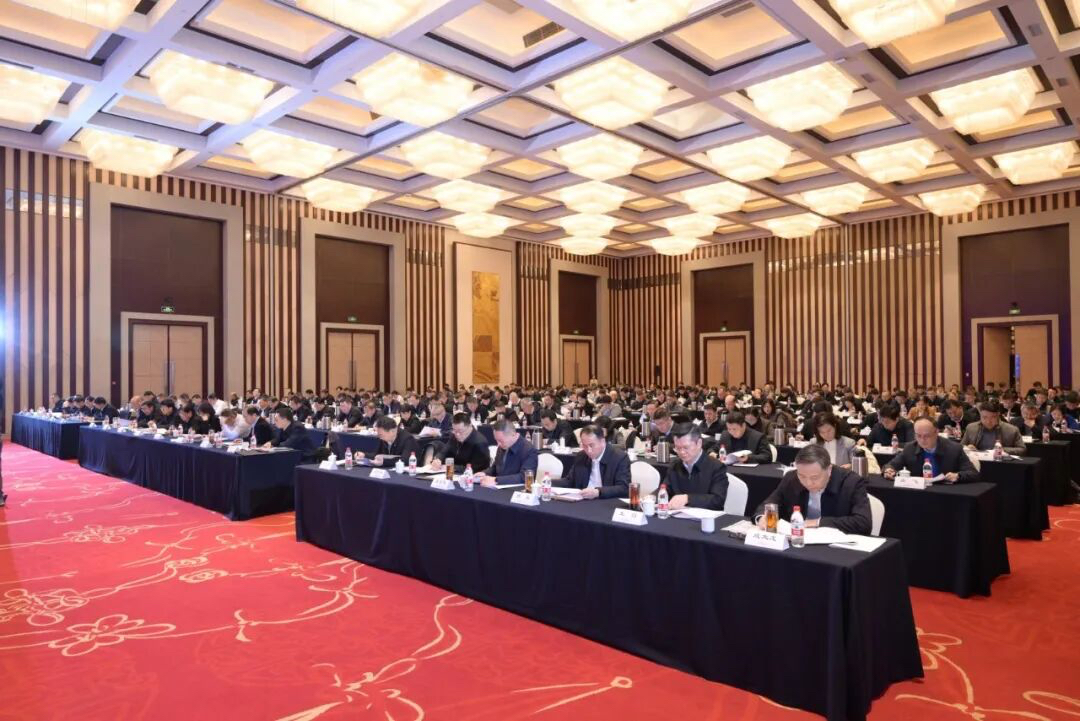
江苏省自然资源工作会议在南京召开
Zhong Guo Fa Zhan Wang· 2026-01-22 12:08
Core Points - The Jiangsu Provincial Natural Resources Department held a work conference to implement the spirit of the 20th National Congress of the Communist Party of China and to summarize the work of 2025 while deploying key tasks for 2026 [2] - The conference emphasized the importance of achieving high-quality development and contributing to the province's economic responsibilities through effective natural resource management [2] Group 1: Key Focus Areas for 2026 - Focus on ensuring rapid and effective resource allocation to support economic development, including the implementation of a smart land selection service system and accelerating approval processes [4] - Emphasize the protection of arable land by establishing a new mechanism for dynamic balance and optimizing land use [4] - Innovate in planning management to enhance land protection and development coordination, including comprehensive evaluations of land use plans [4] Group 2: Resource Utilization and Economic Development - Enhance the efficient use of natural resources by reforming land policies and promoting the revitalization of existing land [4] - Support the development of the marine economy through strategic planning and comprehensive marine spatial management [4] - Improve mineral resource exploration and development through targeted actions and better management practices [4] Group 3: Environmental Protection and Public Service - Promote collaborative protection and restoration efforts to enhance ecological integrity and implement green initiatives [4] - Focus on improving public services in the natural resources sector, including property registration and disaster prevention measures [4] - Strengthen governance capabilities in natural resource management through technological advancements and legal frameworks [4] Group 4: Conference Outcomes - The conference highlighted the need for collective efforts across the provincial system to foster innovation and support local development [5] - Participants engaged in discussions regarding the key tasks for 2026, sharing insights and experiences from various city bureaus [5]

中共自然资源部党组关于二十届中央第三轮巡视整改进展情况的通报
Zhong Yang Ji Wei Guo Jia Jian Wei Wang Zhan· 2025-09-22 10:37
Group 1 - The core viewpoint of the article is the progress of the Central 15th Inspection Team's feedback and the subsequent rectification measures taken by the Ministry of Natural Resources from April 17 to July 20, 2024 [1][2][19] - The Ministry of Natural Resources has established a leadership group for rectification, emphasizing the importance of political responsibility and the need for a systematic approach to address issues identified during the inspection [2][3][4] - The Ministry is focusing on enhancing the protection of arable land, optimizing spatial layout, and improving the quality of arable land through comprehensive measures [4][5][16] Group 2 - The Ministry is committed to building a collaborative work structure among its departments, ensuring clear responsibilities and efficient coordination to enhance overall effectiveness [6][7][8] - A unified management system referred to as "one map" is being developed to improve the management of natural resources and land use planning [8][9][10] - The Ministry is actively promoting high-quality development of the marine economy, aiming to strengthen capabilities in marine protection and utilization [11][21] Group 3 - The Ministry is implementing a new round of strategic mineral exploration actions to enhance the security of strategic mineral resources, with significant breakthroughs reported in various mineral discoveries [10][21] - There is a strong emphasis on the importance of strict confidentiality and information security measures to prevent sensitive information leaks [12][13] - The Ministry is dedicated to fostering a clean political environment by strictly enforcing party discipline and promoting a culture of integrity within its ranks [14][21]
权威发布·高质量完成“十四五”规划|新发现大中型油气田和矿产地534处
Ren Min Ri Bao· 2025-09-11 02:47
Core Points - The article highlights the significant progress made in China's natural resource management during the "14th Five-Year Plan" period, emphasizing the importance of resource protection and sustainable development [1][2][3] Group 1: Agricultural and Land Resources - The total cultivated land area in China has reached 1.94 billion acres, with a notable increase of 28 million acres by the end of 2024 compared to 2020 [2] - The country has implemented a comprehensive protection strategy for cultivated land, focusing on quantity, quality, and ecological balance [2][4] Group 2: Mineral Resources - Major breakthroughs in mineral exploration have been achieved, including the discovery of 10 large oil fields and 19 large gas fields during the "14th Five-Year Plan" [2] - The exploration of strategic minerals such as oil, gas, copper, and lithium has significantly advanced, supporting a stable production of 200 million tons of oil and over 240 billion cubic meters of natural gas [2][3] Group 3: Marine Resources - The marine economy has shown strong growth, with the marine production value reaching 10.5 trillion yuan, an increase of 2.7 trillion yuan since 2020 [1][3] - China has maintained its position as the world's largest producer of marine products for 36 consecutive years, with marine oil and gas contributing significantly to domestic production [3] Group 4: Ecological and Environmental Protection - The forest coverage rate has reached 25.09%, making China one of the fastest-growing countries in terms of green coverage [1][3] - Significant ecological restoration projects have been implemented, including the completion of over 10 million acres of land rehabilitation and the establishment of five national parks [4][5][6] Group 5: Digital and Technological Advancements - The integration of digital governance in natural resource management has improved efficiency, with a unified management platform established to resolve previous inconsistencies [8] - China has made strides in international cooperation and technological innovation, contributing to global sustainable development initiatives [8]