海洋产业

Search documents
国内海洋经济启新程,美日央行按兵不动
Southwest Securities· 2026-03-22 05:45
Domestic Developments - The "14th Five-Year Plan" focuses on modern marine industries, with significant fiscal measures boosting domestic demand, as highlighted in a key article published on March 16[8] - The State Council identified six key areas for economic recovery, with early economic data confirming the effectiveness of these decisions, including a 4.5% year-on-year increase in interprovincial trade sales in 2025[11] - Financial regulatory authorities emphasized risk prevention and high-quality development, with four main tasks outlined for the year, including a focus on real estate financing reforms[12] International Developments - Ongoing geopolitical tensions in the Middle East have escalated, with U.S. and Israeli military actions against Iran leading to significant disruptions in the Strait of Hormuz, affecting global oil supply[16] - The U.S. Federal Reserve maintained interest rates in the 3.5%-3.75% range, with inflation concerns delaying any potential rate cuts, as February PPI rose 3.4% year-on-year, exceeding expectations[20] - The European Central Bank also kept rates unchanged but indicated readiness to act if inflation risks from the Middle East conflict escalate further[18] Market Data - Brent crude oil prices increased by 13.73% week-on-week, reaching an average of $111.01 per barrel, while iron ore prices rose by 2.25%[24] - Real estate sales saw a significant week-on-week increase of 17.01%, indicating a rebound in the sector[4] - The DXI index for storage DRAM prices rose by 3.33% week-on-week, reflecting upward trends in the midstream sector[33]
午后爆发!603986涨停
证券时报· 2026-03-16 09:29
Core Viewpoint - The article highlights the performance of the A-share and Hong Kong stock markets, with a particular focus on the semiconductor and marine economy sectors, which are experiencing significant growth and investment opportunities [2][3][7][11]. A-share Market Performance - The Shanghai Composite Index closed down 0.26% at 4084.79 points, while the Shenzhen Component Index rose 0.19% and the ChiNext Index increased by 1.41% [2]. - A total of approximately 2.34 trillion yuan was traded across the Shanghai, Shenzhen, and North markets, a decrease of over 770 billion yuan from the previous day [2]. - Over 2800 stocks in the A-share market were in the green, with declines in sectors such as steel, coal, electricity, and non-ferrous metals [2]. Semiconductor Sector Surge - The semiconductor sector saw a strong afternoon rally, with notable increases in storage and MCU chips [5]. - Stocks like Baiwei Storage (688525) surged over 13%, reaching a historical high, while Huahong Semiconductor and Guokai Microelectronics rose over 10% [5][6]. - Reports indicate a potential new wave of price increases in the semiconductor industry, with companies like Texas Instruments and NXP announcing price hikes of up to 85% for certain products starting April 1 [7]. Marine Economy Sector Growth - The marine economy sector showed significant upward movement, with stocks like Deepwater Haina rising over 15% and hitting the daily limit [9][10]. - The Ministry of Natural Resources emphasized the importance of planning for marine economic development, encouraging social capital participation and the development of emerging marine industries [11]. - Analysts suggest that the marine economy, including offshore wind power and marine biomedicine, is becoming a crucial area for high-quality economic growth, with substantial market potential [11].




如东创新发展锚定“AI+制造”
Xin Hua Ri Bao· 2026-02-24 00:25
Group 1 - The core focus of the policies is on strategic sectors such as marine industry, artificial intelligence, and biomedicine, aiming to create a comprehensive support system from talent cultivation to market expansion [1] - The measures include increasing funding for R&D, providing rewards for technology transfer, and supporting the establishment of key laboratories and innovation centers to stimulate corporate innovation [1] - The policies aim to promote the manufacturing sector's advancement through subsidies and rewards for major project investments, technological upgrades, and digital transformation [1] Group 2 - The goal for the industrial sector is to achieve a year-on-year increase of over 8% in industrial added value, focusing on a modern industrial system characterized by "1+3+N" [2] - The strategy includes strengthening the "Shanghai R&D - Rudong Manufacturing" collaborative model and implementing the "AI+" initiative alongside a new three-year action plan for intelligent transformation [2] - A development model integrating "green electricity, computing power, and industry" is being constructed to enhance industrial growth [2]
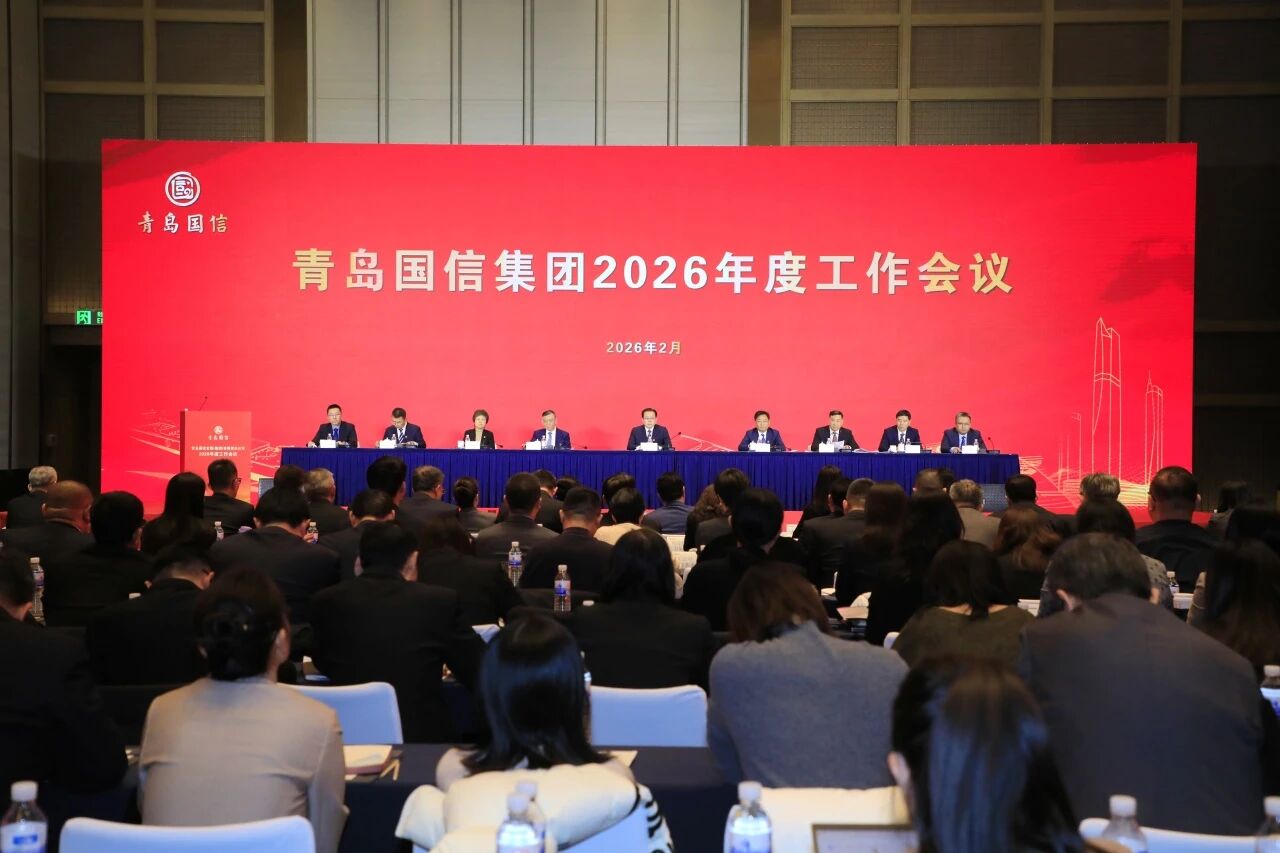
财界观察 | 从“城市运营商”到“海洋引领者”,青岛国信如何驶向世界一流?
Xin Lang Cai Jing· 2026-02-08 03:29
Core Insights - The article highlights the significant transformation and performance of Qingdao Guoxin Group amidst the global economic recovery, serving as a key indicator of local economic vitality and the implementation of the marine power strategy [1][3]. Financial Performance - In 2025, Qingdao Guoxin Group achieved an operating income of 22.7 billion yuan and a total profit of 3.03 billion yuan, both reflecting a year-on-year increase of 15%, demonstrating robust asset appreciation in a complex economic environment [3][4]. Strategic Focus - The group emphasizes a dual approach of "wisdom breaking the deadlock" and "practical action," focusing on macroeconomic analysis and strategic determination to navigate uncertainties while deepening core business and transformation [6][9]. - The meeting recognized outstanding individuals and teams, reinforcing the culture of practical action and the value of human resources within the organization [7][9]. Development Goals - Qingdao Guoxin Group aims to establish itself as a world-class enterprise with a clear focus on marine industries, aligning with national strategies and local development goals [11][12]. - The group plans to enhance its operational framework by integrating three main industries: marine industry as the leader, supported by financial investment and urban operations [12][13]. Future Strategies - The group intends to implement "three major leaps" to overcome development bottlenecks, focusing on reform capabilities, innovation in development, and international openness [14][15]. - To support these strategies, the group emphasizes the importance of three foundational pillars: party leadership, talent cultivation, and comprehensive safety measures [17].
从湾区“棋眼”到国家战略平台,南沙呼唤国家级规划“破局”
Nan Fang Du Shi Bao· 2026-02-06 05:55
Core Insights - The Guangdong provincial government has emphasized the need for a new round of the Nansha overall development plan, indicating a strategic commitment to Nansha's development as a core of "future Guangzhou" [1][2] - Nansha is positioned as a critical node in the Guangdong-Hong Kong-Macao Greater Bay Area, with its development seen as essential for activating broader regional growth [2][3] - The national-level planning for Nansha is expected to enhance its strategic positioning, resource allocation, and institutional innovation, benefiting both Nansha and the national agenda for reform and opening up [3][4] Group 1: Strategic Importance - Nansha is viewed as a "chess eye" in the Greater Bay Area, with a mission that extends beyond local development to include national strategic significance [2][3] - The area is expected to transition from foundational development to a higher level of growth, aligning with the goals of the 14th Five-Year Plan [2][4] - Experts suggest that Nansha's development will require a comprehensive approach to integrate with Hong Kong and Macau, as well as to facilitate cross-border data flow and financial innovation [4][5] Group 2: Planning and Implementation - The difference between provincial and national planning is significant, with national planning expected to elevate Nansha's strategic role and clarify its functions [4][5] - Successful implementation of the national plan will depend on a systematic approach that includes comprehensive planning, lifecycle management, and proactive policy engagement [8][9] - Institutional innovation is highlighted as a core competitive advantage for Nansha, with unique policies allowing for pilot reforms in land management and mixed-use development [8][9] Group 3: Development Focus Areas - The marine economy and transportation infrastructure are identified as key areas for Nansha's development, with a focus on enhancing its role as a maritime innovation hub and international shipping center [6][7] - Experts emphasize the need for strategic transportation links to ensure Nansha's connectivity within the Greater Bay Area and its role as a regional hub [7][8] - The planning process should account for future uncertainties, allowing for flexibility in development strategies and resource allocation [8][9]

山东威海:海洋产业向“高端精细”跨越
Zhong Guo Zi Ran Zi Yuan Bao· 2026-02-04 03:36
Core Insights - The city of Weihai has reported significant growth in its marine economy, with an average annual growth rate of 7.4% during the 14th Five-Year Plan period, aiming to exceed 150 billion yuan by 2025, which will account for 38.5% of its GDP, an increase of 4.5 percentage points from the end of the 13th Five-Year Plan [1] Group 1: Marine Economic Development - Weihai's marine production value is projected to surpass 150 billion yuan by 2025, contributing to 38.5% of the city's GDP [1] - The city has implemented a market-oriented allocation system for marine areas and islands, supporting key projects such as the Longhuikou Reservoir marine project, which is the first large-scale bay-type reservoir marine case in the country [3] - The "Blue Bay" comprehensive remediation action has restored 46 kilometers of damaged coastline and 1,500 hectares of coastal wetlands during the 14th Five-Year Plan [3] Group 2: Technological Innovation in Marine Industry - Weihai has established the first national marine comprehensive experimental field co-built by provincial and ministerial levels, attracting 18 high-level innovation platforms and over 30 high-end talents [5] - The city promotes cooperation between enterprises and over 60 marine-related universities and research institutions, leading to an annual increase of over 15% in R&D investment from marine enterprises [5] - Key technological breakthroughs have been achieved in marine pharmaceuticals, underwater vehicles, and new marine materials, with the added value of strategic emerging marine industries growing at an annual rate of 1.2 percentage points higher than the overall marine production value [5] Group 3: Modern Marine Industry System - Weihai is transitioning its marine industry from traditional methods to high-end and refined practices, establishing a modern marine industry system with distinct characteristics [7] - The city has cultivated seven new nationally approved superior varieties during the 14th Five-Year Plan, with an annual seedling output expected to exceed 70 billion units by 2025 [7] - The high-end shipbuilding sector has seen significant advancements, with the city holding the world's largest orders for high-end roll-on/roll-off ships and successfully delivering the first oil-electric hybrid roll-on/roll-off ship globally [7][8]
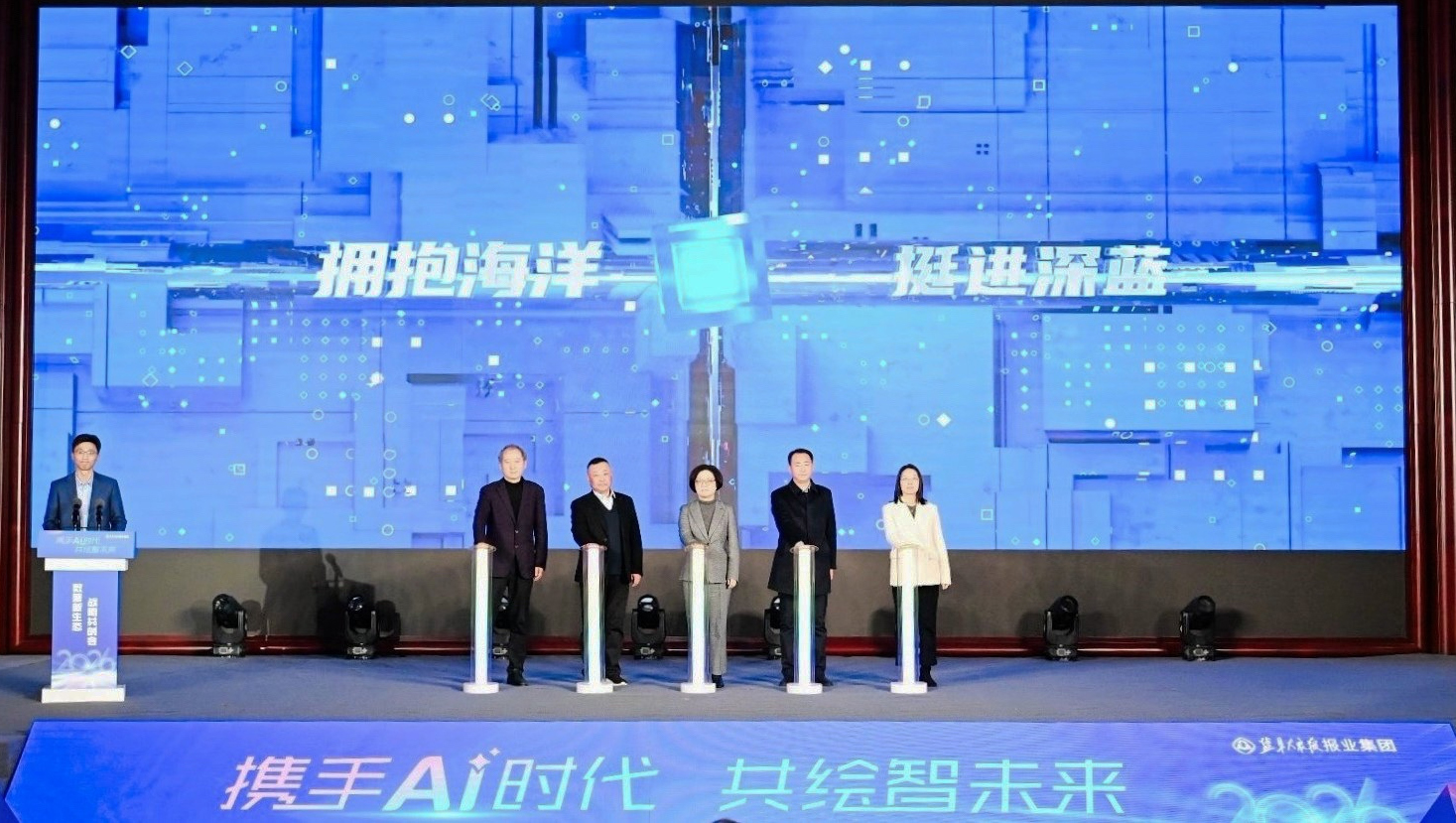
江苏盐城“沧溟海洋产业通”平台研发启动
Zhong Guo Zi Ran Zi Yuan Bao· 2026-02-03 03:42
Core Insights - The "Cangming Marine Industry Connect" platform has officially launched, aiming to create a digital shared platform for the marine industry, focusing on management decision-making and integration of research and application [2] - The platform is designed to break down data barriers and governance challenges in the marine industry by integrating a vast amount of marine industry data with advanced intelligent algorithms [2] Group 1 - The platform aims to construct a unified digital foundation for the marine industry, featuring a smart decision support system that combines data, algorithms, and models [2] - It emphasizes four core principles: strengthening the industry, promoting technology, fostering openness, and protecting the ecosystem [2] - The platform's main functionalities include creating a panoramic marine industry map, developing precise regional industry profiles, and producing high-quality industry research reports [2] Group 2 - The platform is designed to enhance the efficiency and quality of marine industry governance, targeted investment, and decision-making processes [2] - It supports various application scenarios, including industry data retrieval, intelligent report generation, and targeted investment recommendations [2] - As of December 2025, Yancheng has 1,796 marine-related enterprises, ranking sixth in Jiangsu Province, indicating significant progress in the digital transformation of the marine economy [3]
徐州领冲后,长三角“腰部五虎”下一个万亿是谁?
Xin Hua Ri Bao· 2026-02-02 14:32
Group 1 - The core viewpoint of the articles highlights the ambition of several cities in the Yangtze River Delta to achieve a GDP of over 1 trillion yuan during the 14th Five-Year Plan period, with specific targets set for 2025 and 2027 [1][2][3][4][5][7]. - Xu Zhou is projected to reach a GDP of 995.72 billion yuan by 2025, making it the first city in the Yangtze River Delta to break the trillion yuan mark during the 14th Five-Year Plan [1]. - Shao Xing aims for a GDP of approximately 900 billion yuan by 2025 and plans to exceed 1 trillion yuan by 2027, focusing on industrial transformation and new economic drivers [2]. - Yang Zhou's GDP is expected to surpass 800 billion yuan by 2025, with a strong emphasis on high-quality development through its "three famous cities" initiative [3]. - Yan Cheng anticipates a GDP of over 800 billion yuan by 2025, leveraging its coastal resources to enhance its marine economy [4]. - Jia Xing's GDP is projected at 785.11 billion yuan for 2025, with a goal of becoming a significant center city in the Yangtze River Delta [5]. - Tai Zhou aims to exceed 1 trillion yuan by the end of the 14th Five-Year Plan, focusing on high-quality development and champion industries [7]. Group 2 - The articles emphasize the importance of regional collaboration and differentiation in industrial development among these cities, suggesting that they should leverage their unique strengths to achieve economic growth [8]. - Recommendations include focusing on specialized industrial clusters, enhancing resource allocation efficiency through regional cooperation, and improving the business environment to attract high-end resources [9].
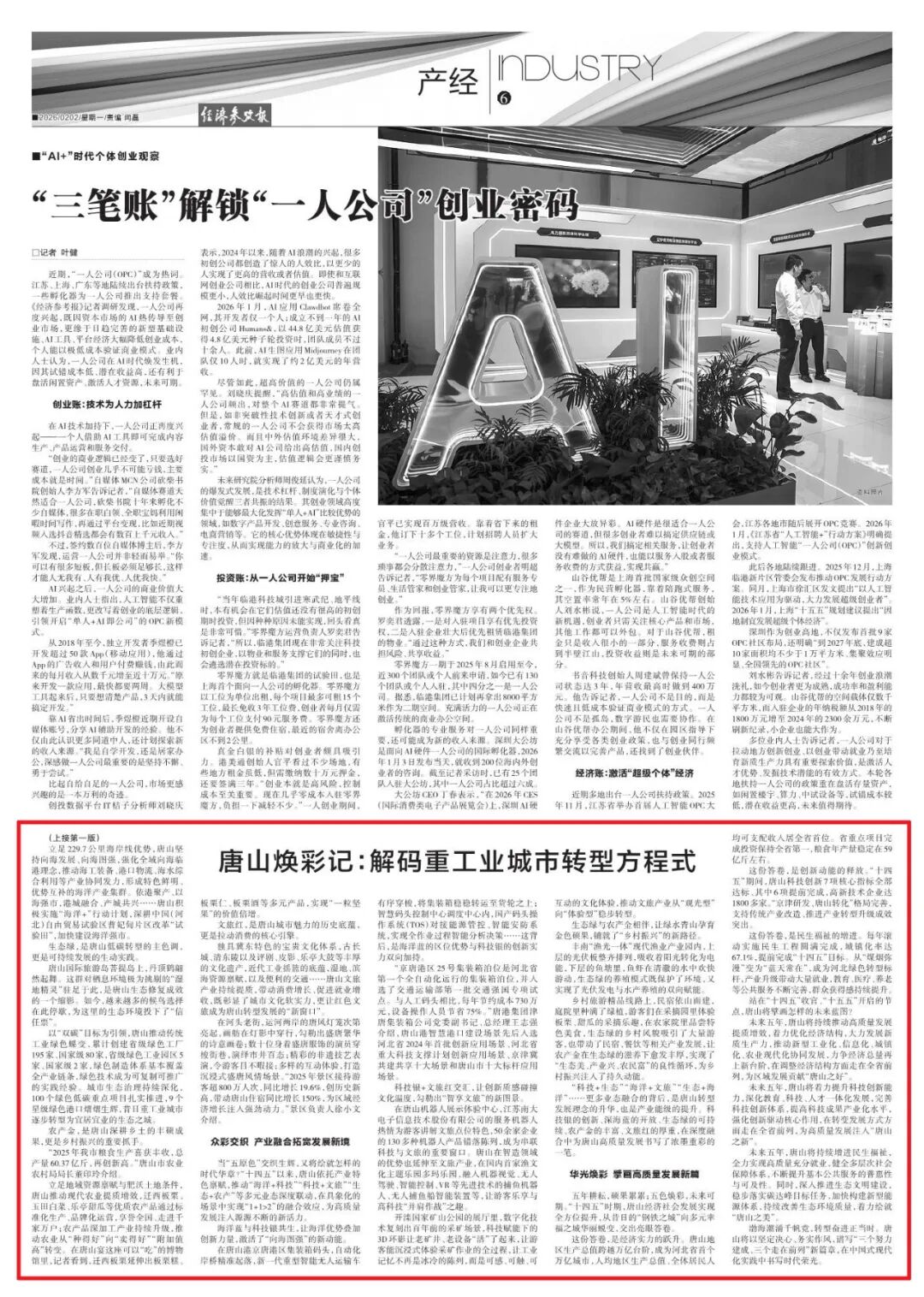
《经济参考报》头版报道丨唐山焕彩记:解码重工业城市转型方程式
Xin Lang Cai Jing· 2026-02-02 11:51
Core Viewpoint - Tangshan is transforming from a heavy industrial city into a high-quality development hub by integrating various industries and leveraging its unique resources, resulting in a vibrant economic landscape characterized by innovation, sustainability, and cultural richness [1][15]. Group 1: Industrial Transformation - The transformation of Tangshan is rooted in its industrial foundation and unique characteristics, leading to the development of a new quality production force represented by the "Five Colors" [2]. - The robotics industry has become a new hallmark for Tangshan, with over 200 innovative entities benefiting from the first customized shared factory for non-standard robotic products, significantly enhancing the regional robotics sector [3]. - The steel production process has been revolutionized through AI integration, reducing raw material inventory turnover from 10 days to 5 days and improving on-time delivery rates to 100% [5]. Group 2: Marine Economy - Tangshan's port has become a key hub for national strategies, with a projected cargo throughput of over 880 million tons by 2025, solidifying its position as the second-largest coastal port globally [6]. - The city is actively promoting marine industries, including marine equipment and logistics, to enhance its economic landscape and foster a "marine+" development strategy [6]. Group 3: Ecological Sustainability - Tangshan is focusing on low-carbon transformation, with 195 provincial-level green factories and 80 national-level green factories established, aiming for a comprehensive green manufacturing system [7]. - The city has initiated 100 key green low-carbon projects, contributing to its evolution from a heavy industrial city to a livable ecological city [7]. Group 4: Agricultural Development - In 2025, Tangshan's grain production is expected to reach 6.037 billion pounds, showcasing the success of modern agricultural practices and brand development [9]. - The city is enhancing agricultural value through deep processing and brand operations, transforming local products into recognized national brands [9]. Group 5: Cultural and Tourism Development - Tangshan's cultural heritage and tourism sector are thriving, with a projected increase in tourist visits to over 8 million by 2025, reflecting a 19.6% year-on-year growth [10]. - The integration of technology in cultural tourism is creating immersive experiences, transitioning the industry from a sightseeing model to an experiential one [13][28]. Group 6: Integrated Development - The synergy between the "Five Colors" is fostering deep integration across various sectors, enhancing the overall economic vitality and driving high-quality development [11]. - The collaboration between marine and technological sectors is generating new growth momentum, exemplified by the automation and smart technologies implemented at the port [12][27]. - The combination of ecological and agricultural initiatives is promoting sustainable rural development, creating a positive cycle of ecological beauty and economic prosperity [14][28]. Group 7: Future Outlook - Tangshan aims to continue its high-quality development trajectory by optimizing its economic structure and enhancing new quality production capabilities over the next five years [16]. - The city is committed to improving public welfare and ecological sustainability, striving to achieve a balanced and prosperous future [16][17].
越过一座“山”,山东迈向下一“峰”
Feng Huang Wang Cai Jing· 2026-01-26 07:16
Core Viewpoint - Shandong Province has achieved a significant economic milestone by surpassing a GDP of 10 trillion yuan, becoming the third province in China and the first in Northern China to reach this level, reflecting its growing importance in the national economy [1][4]. Economic Growth and Structure - Over the past five years, Shandong's share of the national economy has increased from 7.19% to 7.36%, indicating a steady growth trajectory [1][2]. - The province's economic structure is evolving, with a target for the three major industries' composition to be 6.6:39.3:54.1 by 2025, emphasizing the importance of the service sector [13][18]. Industrial Development - Shandong's agricultural sector has maintained its leadership in national exports for 26 consecutive years, with a projected total output value of 1.28 trillion yuan by 2025 [5]. - The industrial sector has seen a significant increase in value added, rising from 2.3 trillion yuan to 3.3 trillion yuan during the "14th Five-Year Plan," with manufacturing accounting for about 28% of GDP [5][12]. - The province's service industry is expected to contribute 54.1% to the GDP by 2025, with a contribution rate of 59.1% [6]. Investment and Consumption - Shandong has implemented an average of 15,000 key projects annually over the past five years, contributing an average of 1.8 percentage points to economic growth [7]. - The province has seen a fivefold increase in the number of electric vehicles, exceeding 3.2 million, and tourism revenue has surpassed 1 trillion yuan [7][9]. Regional Economic Integration - The economic total of Shandong's major cities has increased, with three cities now exceeding a GDP of 1 trillion yuan, highlighting the importance of regional economic collaboration [9]. - The province's coastal advantages have been emphasized, with the marine economy projected to reach a production value of 1.8 trillion yuan by 2024, contributing 23.9% to the regional economy [11]. Future Development Strategies - Shandong aims to enhance its core cities' development, supporting Qingdao to reach a GDP of 2 trillion yuan and promoting other cities to achieve similar milestones [11]. - The province is focusing on building a modern industrial system and promoting green and low-carbon transitions as part of its long-term economic strategy [18][22]. - Strategic emerging industries and future industries are being prioritized, with a goal to develop key technologies and enhance the resilience of industrial chains [21][22].