自然遗产保护

Search documents
【光明论坛】自然遗产保护成就彰显中国治理智慧
Xin Lang Cai Jing· 2026-02-25 19:59
Core Insights - China's natural heritage protection has reached a new height, with 15 world natural heritage sites and 4 dual heritage sites maintaining good protection status, and 90% of heritage sites assessed as excellent [1] Group 1: Natural Heritage Protection Achievements - The report highlights the establishment of a systematic protection framework for natural heritage in China, guided by Xi Jinping's ecological civilization thought, with a focus on national parks [1][5] - The number of flagship species such as the Tibetan antelope and wild yak in the Sanjiangyuan National Park has been increasing, showcasing successful conservation efforts [2] - China's wetland area ranks first in Asia and fourth in the world, with over 3,800 projects implemented to protect and restore wetlands, adding over 1 million hectares [2] Group 2: Governance and Management Strategies - The practice of natural heritage protection in China demonstrates a governance model that avoids both "one-size-fits-all" management and destructive development, employing tailored strategies for each heritage site [3] - The "minimum intervention" principle was applied in the scientific restoration of the Jiuzhaigou area after an earthquake, enhancing ecological resilience [3] Group 3: Socioeconomic Impact - Over 90% of heritage sites prioritize hiring local residents for conservation work, with tourism revenue from sites like Jiuzhaigou and Huangshan exceeding 50% of local GDP [4] - In 2024, national heritage sites are expected to receive over 180 million visitors, generating approximately 184.3 billion yuan in consumption, thus integrating ecological, social, and economic benefits [4] Group 4: Long-term Vision and Commitment - China's commitment to ecological civilization is reflected in strict ecological protection measures and ongoing biodiversity conservation projects, ensuring the integrity of natural ecosystems [5] - The country has developed a unique path for natural heritage protection since joining the World Heritage Convention in 1985, emphasizing respect for nature and sustainable development [5]
我国自然遗产总数居世界首位
Xin Lang Cai Jing· 2026-02-06 21:01
Core Insights - The report titled "China's World Natural Heritage Protection and Development Report (1985-2025)" was released by the National Forestry and Grassland Administration, marking the first comprehensive assessment of natural heritage in China [1] - All of China's world natural heritage and dual natural and cultural heritage sites are reported to be in good protective status, with no significant human damage or threats to their outstanding values [1] - China holds the highest number of world natural heritage sites at 15 and dual natural and cultural heritage sites at 4, covering diverse ecosystems from the southeastern coast to the Tibetan Plateau and the northwestern deserts [1] Group 1 - The report indicates that China's natural heritage is characterized by large scale and wide span, providing a model for cross-regional collaborative protection of world heritage [1] - The effective governance model for cross-regional collaborative protection has been developed through practical exploration, reflecting the integration of natural and cultural elements in China's heritage [1] - The report highlights the contribution of China's unique approach to natural heritage management since joining the "Convention Concerning the Protection of the World Cultural and Natural Heritage" 40 years ago [2]
数量居首 我国自然遗产保护状态良好
Xin Lang Cai Jing· 2026-02-06 11:38
Core Viewpoint - China's natural heritage protection status is good, with all world natural heritage and mixed heritage sites maintaining a good state of protection without serious human damage or threats to their outstanding values [1] Group 1: Overview of Natural Heritage - China has 15 world natural heritage sites and 4 mixed heritage sites, ranking first globally [1] - These heritage sites cover diverse ecosystems, including mountains, forests, grasslands, lakes, wetlands, deserts, and coastal areas, filling multiple gaps in global heritage [1] Group 2: Unique Features of China's Natural Heritage - China's natural heritage is characterized by high value and diverse types, enhancing the diversity and balance of world heritage [2] - Notable examples include the "Three Parallel Rivers" in Yunnan, which meets all four natural heritage criteria, and Mount Tai, which meets all six cultural heritage criteria [2] - The Yellow (Bo) Sea migratory bird habitat is the largest migratory route type natural heritage globally, while Hoh Xil fills a gap in biodiversity in extreme environments [2] Group 3: Protection and Management Efforts - Since joining the World Heritage Convention 40 years ago, China has increased systematic and complete protection of natural heritage, contributing Chinese wisdom and strength to global heritage management [3] - Future measures include establishing a robust management system for natural heritage, enhancing monitoring, and preventing unscientific development [4] - The focus will be on ecological priority and green development, supporting reasonable use of heritage resources while raising public awareness and recognition [4]
刘嘉麒院士:我国90%自然遗产地综合评估为优,10%为良
Xin Jing Bao· 2026-02-06 06:49
Core Insights - The National Forestry and Grassland Administration of China released the "China World Natural Heritage Protection Development Report (1985-2025)", marking the first comprehensive assessment of natural heritage since China joined the World Heritage Convention 40 years ago [1] Group 1: Assessment Results - The assessment indicates significant achievements in natural heritage protection management in China, with 90% of heritage sites rated as excellent and 10% as good, effectively maintaining the outstanding universal value and integrity of these sites [1] - China has 15 natural heritage sites and 4 mixed heritage sites among the 176 global natural heritage sites [1] Group 2: Evaluation Methodology - The evaluation process involved a systematic approach including expert training, self-assessment by heritage sites, on-site evaluations by experts, and summarization of results, with over 100 experts participating [1][2] - The assessment criteria were developed based on the World Heritage Convention guidelines and included two main parts: the protection status of heritage elements and management status, encompassing 26 evaluation indicators across six management areas [2] Group 3: Findings and Trends - The evaluation found no severe human damage or impacts on the outstanding universal value of the heritage sites, highlighting the effectiveness of China's natural heritage protection management [2] - The protection status of China's natural heritage has been consistently rated as "good" or "fairly good" in the World Heritage Outlook reports, with the percentage improving from 85.7% in 2014 to 89.5% in 2025, significantly surpassing global (61%) and Asian (68%) averages [3]
我国自然遗产、自然与文化双遗产保护状况明显好于全球平均水平
Xin Jing Bao· 2026-02-06 06:25
Core Insights - The report titled "China World Natural Heritage Protection and Development Report (1985-2025)" indicates that China's natural and cultural heritage protection status is significantly better than the global average [1][2] Group 1: Heritage Status and Management - China has 15 world natural heritage sites and 4 world natural and cultural heritage sites, the highest number globally, covering approximately 80,000 square kilometers across 20 provinces [1] - All natural and cultural heritage sites in China are in good protection status, with no severe human damage or threats to their outstanding values reported [2] - The governance system for heritage protection is based on national guidance, local responsibility, and specific management at heritage sites, drawing from international rules and foreign experiences [2] Group 2: Economic Impact and Community Involvement - Over 90% of heritage sites prioritize hiring local residents for protection work, with tourism revenue from sites like Jiuzhaigou and Huangshan accounting for over 50% of local GDP [3] - In 2024, heritage sites are expected to receive over 180 million visitors, generating approximately 184.3 billion yuan in consumption, establishing tourism as a pillar industry for local economies [3]
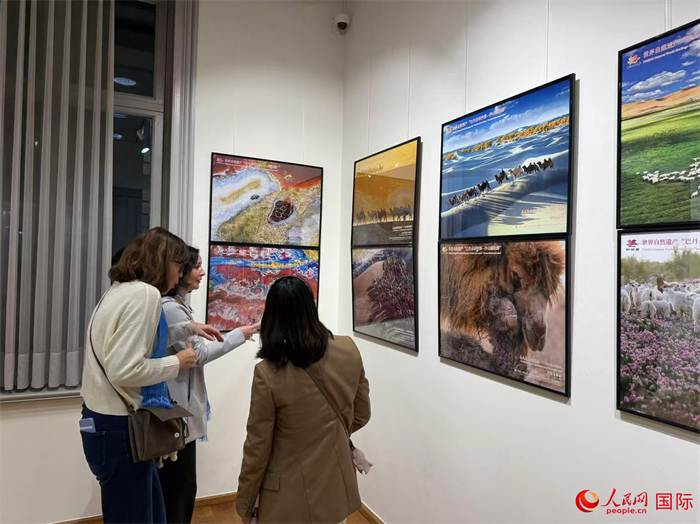
世界自然遗产“巴丹吉林沙漠——沙山湖泊群”推介活动走进布鲁塞尔
人民网-国际频道 原创稿· 2025-11-02 06:10
Core Viewpoint - The cultural tourism promotion event for the "Badan Jilin Desert - Sand Mountain Lake Group," a UNESCO World Natural Heritage site, was held in Brussels, highlighting the ecological and cultural significance of Alxa League in Inner Mongolia [1][2]. Group 1: Event Overview - The event was co-hosted by the Inner Mongolia Autonomous Region Government, Alxa League Administrative Office, and the Brussels Chinese Cultural Center, attracting around 100 attendees including diplomats, business representatives, and cultural enthusiasts [1]. - The event featured traditional music performances and showcased the natural beauty of the Badan Jilin Desert through visual displays, creating an immersive experience for the guests [1][3]. Group 2: Key Messages from Officials - Ren Lihua, a member of the Alxa League Committee, emphasized the region's commitment to "ecological priority and cultural tourism integration," inviting European audiences to experience the unique beauty and cultural richness of Alxa [2]. - Bernard Dewit, Chairman of the Belgium-China Economic and Trade Committee, described the landscape of Alxa as a "symphony of wind, sand, and water," highlighting the importance of preserving natural heritage for future generations [2]. Group 3: Cultural and Tourism Promotion - The event included a presentation on premium tourism routes, intangible cultural heritage projects, and unique industries in Alxa, showcasing the region's achievements in heritage protection and sustainable development [3]. - A cultural performance featured traditional songs and dances, reflecting the vibrant culture of the grasslands, while a photography exhibition displayed the stunning landscapes of Alxa, further engaging the audience [3]. Group 4: Future Activities - The promotion of the "Badan Jilin Desert - Sand Mountain Lake Group" will continue in Brussels at various landmark locations through exhibitions, flash events, and discussions, aiming to enhance cultural exchange and ecological cooperation between China and Europe [4].