自由开放的印太构想

Search documents
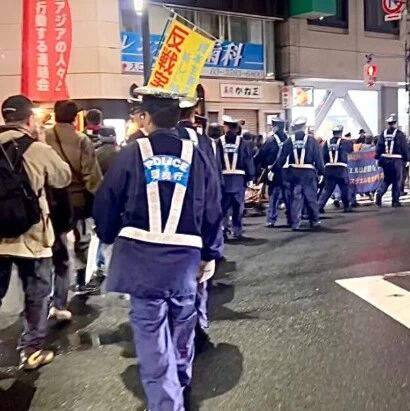
日本民众连日抗议日美首脑会谈
第一财经· 2025-10-29 00:35
Core Viewpoint - The article discusses the protests in Japan against U.S. President Trump's visit, highlighting public discontent regarding military expansion and the strengthening of the U.S.-Japan alliance, which is perceived as a threat to regional stability [3][4]. Group 1: Protests and Public Sentiment - Japanese citizens have organized protests against Trump's visit, expressing strong opposition to the U.S.-Japan security alliance and military expansion [3]. - Protesters argue that the U.S. is using tariffs as a weapon, undermining economic globalization for its own benefit, and that Japan should pursue an independent foreign policy [3]. - The protests included slogans against the U.S.-Japan summit and calls for peace, reflecting deep-seated concerns about the implications of military cooperation [3][4]. Group 2: Government Actions and Military Spending - During the summit, both leaders emphasized the need to strengthen their alliance and advance the "Free and Open Indo-Pacific" strategy, with Trump encouraging Japan to increase its defense procurement from the U.S. [4]. - Japan's Prime Minister has accelerated the goal of defense spending to 2% of GDP, originally set for 2027, to be achieved by the current fiscal year [4]. - The revision of Japan's "security three documents" is planned to be completed by the end of 2026, indicating a significant shift in Japan's defense policy [4].

日本民众连日抗议日美首脑会谈
Xin Hua She· 2025-10-28 15:05
Core Points - The meeting between Japanese Prime Minister Sanna Marin and U.S. President Trump in Tokyo has sparked significant public protests in Japan against the strengthening of the Japan-U.S. military alliance and military expansion [1][2] - Protesters argue that the U.S. is weaponizing tariffs, which undermines economic globalization and serves to maximize U.S. interests at the expense of Japan's independent foreign policy [1] - The Japanese government plans to accelerate its defense spending goals, aiming for defense expenditures to reach 2% of GDP earlier than previously scheduled, and to revise key security documents by the end of 2026 [2] Group 1 - Public protests against Trump's visit highlight widespread discontent regarding military alliances and regional stability [1] - The "Opposition to Trump's Visit Committee" criticizes U.S. tariff policies as violent and self-serving, calling for Japan to pursue an independent diplomatic path [1] - Local residents in Okinawa express concerns over the negative impacts of U.S. military presence, including safety incidents and noise pollution [1] Group 2 - The revision of Japan's security documents is seen as a departure from the country's pacifist constitution, with concerns that increased military spending will burden taxpayers amid rising living costs [2] - The U.S. and Japan reaffirmed their commitment to a stronger alliance and the "Free and Open Indo-Pacific" initiative during the summit [2] - Trump welcomed Japan's plans to increase procurement of U.S. defense equipment, indicating a deepening military cooperation [2]
日本经济蓝皮书:中国市场对日本企业仍至关重要
Sou Hu Cai Jing· 2025-10-22 02:19
Core Viewpoint - The "Japan Economic Blue Book: Research Report on Japan's Economy and China-Japan Economic and Trade Relations (2025)" indicates that the Chinese market remains crucial for Japanese companies, presenting opportunities for deepened cooperation in China-Japan economic relations [1]. Economic Outlook - In 2024, Japan's economy is expected to show signs of recovery, albeit at a slow pace, with nominal GDP projected to exceed 600 trillion yen, marking the highest level on record. However, the real GDP growth rate is anticipated to remain low, continuing a trend of ultra-slow growth. Japan's nominal GDP is still smaller than Germany's, making it the fourth-largest economy in the world [3]. - Factors such as improved employment conditions, increased investment demand, expanded consumption from tourists, and growth in export trade are expected to support Japan's economic recovery. However, challenges such as rising U.S. trade protectionism, geopolitical tensions, global supply chain disruptions, and slowing world economic growth may exert significant pressure on Japan's recovery [3]. China-Japan Trade Relations - Despite the widening asymmetry in trade dependence, the complementary nature of trade between China and Japan remains significant. Japanese direct investment in China has declined due to various internal and external factors, yet the Chinese market is still vital for Japanese enterprises. Under the Regional Comprehensive Economic Partnership (RCEP), China-Japan economic cooperation continues to deepen [4]. - In 2025, amid challenges like escalating protectionism, global supply chain fragmentation, and slowing economic growth, there are opportunities for enhanced cooperation in China-Japan economic relations. Both countries are encouraged to deepen economic cooperation in the Asia-Pacific region and under the Belt and Road Initiative, focusing on structural complementarity to unleash collaborative potential in areas such as the "silver economy," "dual carbon," and digital economy [4]. Japan's Global Economic Diplomacy - The status of the Global South in Japan's economic diplomacy is beginning to rise. Historically, Japan has not given sufficient attention to developing countries, but since former Prime Minister Shinzo Abe's administration, there has been a shift towards a more proactive diplomatic stance, emphasizing economic strength, technological advantages, and the dissemination of values to shape Japan's role in the international community [4][5]. - Abe's initiatives, such as "Earth Observation Diplomacy" and the "Free and Open Indo-Pacific Strategy," reflect Japan's active diplomatic efforts to include the Global South, including Africa, in its foreign policy to enhance its international influence [5].