
贸易

Search documents
90%的公司对AI投资很失望?转型并非简单“砸钱”
第一财经· 2026-03-27 11:10
Core Insights - The article highlights the concept of the "AI value gap," where over 90% of companies surveyed expressed disappointment in their AI investments, primarily due to a lack of unified AI strategies and a narrow focus on technology rather than overall value [3][4]. Group 1: AI Investment Challenges - A significant portion of companies (nearly two-thirds) lack a cohesive AI strategy, leading to lower returns on investment [3][4]. - The investment mentality driven by fear of missing out has resulted in suboptimal outcomes, as companies often engage in "blind investment" without a clear understanding of their business needs [4][7]. Group 2: AI Potential and Success Factors - Despite the challenges, AI technologies, particularly generative AI, have shown substantial potential, with productivity in customer support increasing by 40% and software development productivity soaring by 60% [4]. - Successful AI transformation requires leveraging proprietary data, establishing a controllable IT organization, and embedding AI deeply into business processes [5][7]. Group 3: Industry-Specific AI Applications - In the education sector, AI is breaking the "impossible triangle" of high quality, scalability, and personalization, enabling tailored assignments for students based on their learning data [5]. - In trade, AI is significantly lowering barriers for businesses entering new markets, reducing the time required for market entry from months or years to weeks or days [6]. Group 4: Future Trends in AI - The article notes a shift from generative AI to intelligent agent AI, with applications expanding across various sectors, including industrial, consumer, and pharmaceutical industries [6]. - AI is evolving from being merely a tool to embodying a new way of thinking, necessitating a fundamental rethinking of management practices across all types of enterprises [6].


伊朗局势仍不明朗,国内经济数据好坏参半
Guo Mao Qi Huo· 2026-03-16 09:39
Group 1: Report's Investment Rating - No information provided Group 2: Core Viewpoints - This week, domestic commodities continued to rise, with most industrial and agricultural products following the upward trend. Driven by the tense geopolitical situation in the Middle East, international oil prices soared, leading to a collective increase in the energy and chemical sectors, and other sectors were also affected to some extent [3]. - The situation in Iran remains unclear, and shipping in the Strait of Hormuz has basically come to a standstill, causing global energy prices to continue to soar under uncertainty. Global inflation is facing rebound pressure, and the IMF warns that if oil prices rise by 10% throughout the year, global inflation may be pushed up by about 40 basis points, with emerging markets being particularly vulnerable. The agricultural supply chain has been impacted, and fertilizer prices have risen by over 20%. American farmers will also be forced to adjust their planting structures [3]. - The US Trade Representative announced a new round of trade investigations against 16 major trading partners, including China and the EU, and may impose new punitive tariffs or other trade restrictions [3]. - In February, the US CPI rose by 2.4% year - on - year, and the core CPI rose by 2.5%, the smallest increase in nearly five years since March 2021. However, the impact of soaring oil prices has not been factored in. The impact of oil prices on inflation is divided into two levels: the direct impact may push the overall CPI in March to over 3% year - on - year, and the indirect transmission will penetrate into core inflation through cost - push and inflation expectations [3]. - In February, China's CPI rose by 1.3% year - on - year, and the PPI fell by 0.9% year - on - year. Affected by the Middle East geopolitical conflict, international crude oil prices have risen significantly since March, and the rise in energy - related industrial product prices may significantly push up the overall PPI. It is expected that the year - on - year PPI in March will continue to recover, and the PPI growth rate is expected to turn positive in the second quarter [3]. - From January to February 2026, China's foreign trade had a strong start, with the import and export scale reaching a record high for the same period. In US dollars, the total import and export value in the first two months was $1.09954 trillion, a year - on - year increase of 21.0%. Exports were $656.58 billion, a year - on - year increase of 21.8%, and imports were $442.96 billion, a year - on - year increase of 19.8% [3]. - In February, the year - on - year increase in social financing decreased. Under the high base, government bond issuance decreased year - on - year, while credit and undiscounted acceptance bills supported the year - on - year increase in social financing. Loan disbursement decreased seasonally in February, but the year - on - year decrease narrowed, mainly due to the corporate sector [3]. Group 3: Overseas Situation Analysis - The situation in Iran remains unclear, and shipping in the Strait of Hormuz has basically stopped, leading to a continuous rise in global energy prices. Global inflation is under rebound pressure, and the agricultural supply chain has been affected, with fertilizer prices rising by over 20% [3]. - The US will conduct a new round of trade investigations against 16 major trading partners, including China and the EU, and may impose new punitive tariffs or other trade restrictions [3]. - In February, the US CPI rose by 2.4% year - on - year, and the core CPI rose by 2.5%, the smallest increase in nearly five years since March 2021. The impact of soaring oil prices on inflation has not been factored in, and it may push the overall CPI in March to over 3% year - on - year [3] Group 4: Domestic Situation Analysis - In February, China's CPI rose by 1.3% year - on - year, and the PPI fell by 0.9% year - on - year. Affected by the Middle East geopolitical conflict, the PPI is expected to continue to recover in March and turn positive in the second quarter [3]. - From January to February 2026, China's foreign trade had a strong start, with the import and export scale reaching a record high for the same period. Exports increased by 21.8% year - on - year, and imports increased by 19.8% year - on - year [3]. - In February, the year - on - year increase in social financing decreased. Government bond issuance decreased year - on - year, while credit and undiscounted acceptance bills supported the year - on - year increase in social financing. Loan disbursement decreased seasonally, but the year - on - year decrease narrowed, mainly due to the corporate sector [3] Group 5: High - Frequency Data Tracking - The operating rates of the polyester industry chain and blast furnaces are presented in the data, such as the operating rate of PTA in the polyester industry chain being 82% - 85% [34][36]. - The sales data of manufacturers, including wholesale and retail, and their year - on - year changes are shown [40]. - The prices of agricultural products, such as the average wholesale prices of 28 key - monitored vegetables, fruits, and pork, are provided [45][46]
出口高频回落——每周经济观察第62期
一瑜中的· 2026-03-15 15:40
Economic Outlook - The OECD composite leading indicator suggests that China's export growth may further increase in July, with the G7 countries' indicator rising to 1% in February from 0.9% previously, indicating a potential upward trend in China's cumulative export growth [2] - Oil prices have surged due to geopolitical conflicts, with WTI crude oil reaching $98.7 per barrel (up 8.6%) and Brent crude at $103.1 per barrel (up 11.3%) [2] - The decline in residential property sales has narrowed, with the transaction area in 67 cities increasing by 2% compared to the same period last year as of March 13 [2] Demand Analysis - Retail sales of passenger cars have seen a significant decline, with approximately 1.034 million units sold nationwide, down 25.4% year-on-year [3] - The land premium rate has decreased, with a rate of 4.5% as of March 8, down from 7.86% in February [3] - Cement shipment rates remain low, with a rate of 19.6% as of March 13, which is 0.7 percentage points lower than the same period last year [3] Production Insights - Construction activity remains subdued, with the recovery rate of construction sites lower than the same period last year, at 42.5% as of March 11 [3][17] - The operating rate of asphalt plants has continued to decline, standing at 23% as of March 12, which is 3.4 percentage points lower than last year [3][17] Trade Developments - The growth rate of container throughput at ports has significantly decreased, with a year-to-date growth rate of 11% as of March 8, down from 12.4% the previous week [3][23] - The number of container ships from China to the U.S. has seen a year-on-year decline of 15.6% as of March 13, compared to an average decline of 3.3% in January and February [3][25] Price Trends - Commodity prices have risen sharply, with the South China index increasing by 5.2% and the RJ/CRB commodity price index up by 3.9% [3][41] - The price of WTI crude oil has increased by 8.6% to $98.7 per barrel, while Brent crude has risen by 11.3% to $103.1 per barrel [3][41] - The listing prices of second-hand houses have accelerated their decline, with first-tier cities down 1.1% and nationwide down 0.8% as of March 2 [3][44] Interest Rate and Debt - Long-term bond yields have slightly increased, with the 1-year, 5-year, and 10-year government bond yields reported at 1.2768%, 1.5619%, and 1.8143% respectively as of March 6 [3][56] - The government plans to issue 128.2 billion yuan in new local bonds in the week of March 16, with a total of 3.831 trillion yuan in new special bond issuance planned for March [3][47]

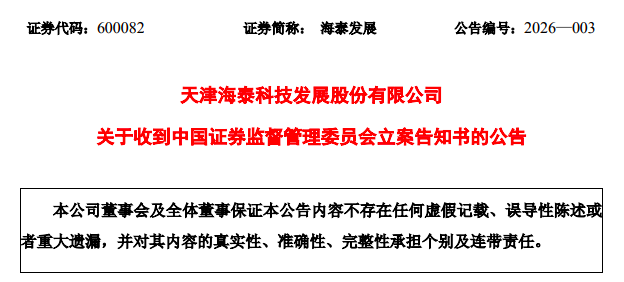
海泰发展突遭证监会立案!去年业绩预告大“变脸”
Shen Zhen Shang Bao· 2026-02-28 00:44
Core Viewpoint - Haitai Development has been subjected to an investigation by the China Securities Regulatory Commission (CSRC) due to suspected violations of information disclosure laws, which has raised concerns about the company's financial performance and future operations [1][3]. Group 1: Company Operations and Financial Performance - Haitai Development reported that all business activities are currently operating normally and the company will cooperate with the CSRC during the investigation [3]. - The company forecasts a significant decline in its 2025 net profit, estimating a loss between 57 million to 85.5 million yuan, representing a year-on-year decrease of 694.82% to 992.22% from a profit of 9.583 million yuan in the previous year [3]. - The expected net profit after deducting non-recurring items is also projected to be between 57 million to 85.5 million yuan, reflecting a year-on-year decline of 711% to 1016.50% from a profit of 9.329 million yuan in the previous year [3]. Group 2: Financial Data and Market Conditions - The financial data of Haitai Development has shown a volatile trend, with a reported revenue of 445 million yuan in the third quarter of 2025, a year-on-year increase of 1256.49%, and a net profit of 2.422 million yuan, up 105% [5]. - However, the company’s full-year performance forecast indicates a stark contrast, with expected losses attributed to intensified competition in the industrial park development market and a high supply of office products leading to longer sales cycles [5]. - The company has adjusted its pricing strategy to accelerate the recovery of investments, which has resulted in a decrease in profit from sales compared to the previous year [5]. Group 3: Strategic Moves and Challenges - Haitai Development announced plans for a major asset restructuring to acquire control of Zhixueyun (Beijing) Technology Co., Ltd. in June 2025, aiming to diversify into the education technology sector [6]. - However, the restructuring efforts were ultimately terminated in December 2025 due to disagreements on key transaction terms, and the company has committed to not planning any major asset restructuring for at least one month [6].

越泰印尼去东京开会,美国突然放话加关税,这背后到底啥意思
Sou Hu Cai Jing· 2026-02-27 11:36
Group 1 - Japan recently hosted a defense dialogue in Tokyo, ostensibly discussing maritime security with Pacific island nations, but also invited seven ASEAN countries, including Vietnam, Thailand, and Indonesia, which attended as observers without signing any agreements or participating in joint statements [1] - Vietnam's participation appears to align with Japan, but it has recently completed cooperation with the US and removed from the entity list, while its trade with China exceeds $70 billion more than with the US [3] - Thailand's military budget has increased by nearly 20% amid ongoing border conflicts, and Japan has pledged ¥50 billion in low-interest loans for port construction, yet Thailand remains reliant on China for practical support, such as a recent ceasefire agreement with Cambodia [3] Group 2 - Indonesia's new government faces security policy divisions, having purchased Japanese P-1 anti-submarine aircraft while receiving $1 billion in credit support from China for undersea cable construction, indicating a strategy to maximize technical support and funding from multiple sources [5] - Japan aims to expand its influence in the region through this meeting, but its economic situation is challenging, with the yen hitting a 53-year low and defense budget growth not keeping pace with inflation [5] - ASEAN countries maintain their stance that security issues should be led by ASEAN itself, reflecting a cautious approach to external influence [9][10]
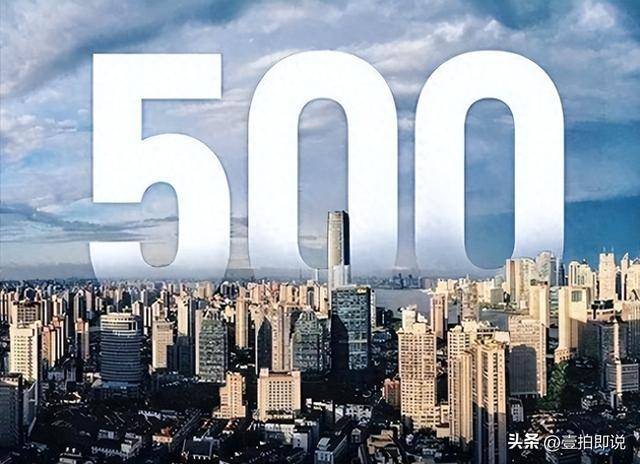
世界首次五百强断崖:日本149家,美国151家,中国3家,现在呢
Sou Hu Cai Jing· 2026-02-27 09:13
Group 1 - The World’s 500 Strong list reflects the shifts in global economic power, showcasing the rise of China and the decline of Japan over the past three decades [1][3][31] - In 1995, the list was dominated by the US and Japan, with 151 and 149 companies respectively, accounting for nearly 60% of the total [5][9] - By 2026, Japan's representation has drastically decreased to about 40 companies, while China has surged to 133, nearly matching the US's 139 [9][19] Group 2 - The decline of Japan's economic power can be traced back to the Plaza Accord in 1985, which led to a significant appreciation of the yen, adversely affecting Japan's export-driven economy [11][15] - Following the economic bubble burst in 1991, Japan entered a prolonged period of stagnation, with many companies failing to adapt to new technological trends [15][17] - In contrast, China's economic trajectory has been upward since joining the WTO in 2001, becoming a global manufacturing hub and investing heavily in infrastructure [19][22] Group 3 - The rise of Chinese companies is marked by significant advancements in technology and manufacturing, with firms like BYD leading in electric vehicles and Huawei excelling in smartphones [24][26] - The US maintains a strong corporate presence, exemplified by Walmart's annual revenue exceeding $640 billion, but faces challenges such as rising national debt and trade restrictions [26][27] - The global industrial landscape is undergoing a complex reshuffling, with competition now focusing on addressing future challenges like aging populations and technological advancements [27][31]



突发立案!新华锦实控人占用4.06亿未还,受损股份维权需抓紧
Xin Lang Cai Jing· 2026-02-27 01:23
Group 1 - The China Securities Regulatory Commission (CSRC) has initiated an investigation into Xinhua Jin for suspected violations of information disclosure regulations, marking a significant escalation in compliance issues for the company [1][4] - The company has been previously warned by the Qingdao Securities Regulatory Bureau regarding illegal non-operational fund occupation by its actual controller, with a reported amount of 406 million yuan involved [1][4] - Due to the failure to recover the occupied funds within a month, the company has already been subjected to other risk warnings by the Shanghai Stock Exchange [1][4] Group 2 - If the company fails to resolve the fund occupation issue within six months, it will face suspension of trading, and it has already entered a suspension period of up to two months following the investigation notice [2][5] - Should the company not complete the necessary rectifications within the suspension period, it may face delisting risk warnings from the Shanghai Stock Exchange [2][5] - The company's future will depend on its ability to achieve full compliance before the deadline, with significant volatility expected in its fundamentals and stock price during the investigation [6] Group 3 - Investors who purchased shares between May 8, 2025, and August 26, 2025, and sold or still hold them after August 27, 2025, or those who bought before February 26, 2026, and sold or still hold them after that date, may be eligible for compensation [7]

敦促减少贸易限制,IMF警告美国:政策不确定性可能造成超预期拖累
Huan Qiu Shi Bao· 2026-02-26 22:46
Group 1 - The International Monetary Fund (IMF) criticizes the U.S. government's economic policies, particularly regarding tariffs, suggesting a need for a different approach to avoid negative economic consequences [1] - The IMF's statement highlights that tariffs have a "negative supply effect" and are a "headwind to growth," predicting a 0.5% increase in the personal consumption expenditure price index and a 0.5% decrease in output levels by early 2026 [1] - The IMF emphasizes that international trade is crucial for economic growth, job creation, and resilience, warning that increased tariffs will distort resource allocation, disrupt global supply chains, and weaken trade benefits, leading to additional costs [1] Group 2 - The IMF warns that the U.S. government's fluctuating tariff policies disrupt global supply chains and financial markets, potentially causing unexpected drag on U.S. economic activity, especially if supply chain restructuring is not achievable in the short term [2] - Concerns are raised regarding significant layoffs among federal workers, with a reported 15% reduction in the federal workforce over the past year, which could impact the functions of statistical, regulatory, and tax authorities [2] - The IMF forecasts that stricter border controls and increased deportations will slow job growth and slightly raise inflation, leading to a projected 0.4% reduction in U.S. economic activity by 2027, alongside rising public debt as a percentage of GDP posing risks to both U.S. and global economies [2]
英国2025年货物贸易逆差创历史新高
Shang Wu Bu Wang Zhan· 2026-02-26 16:44
Group 1 - The core point of the article highlights the significant shift in the UK economy from manufacturing to services, with a record trade deficit in goods and a substantial surplus in services for 2025 [1][2] Group 2 - The UK's goods trade deficit is projected to reach £248.3 billion in 2025, an increase of £30.5 billion from the previous year, marking the largest deficit since records began in 1997 [1] - Service exports exceeded imports by £191.8 billion, with an increase of £16.4 billion compared to the previous year, indicating a strong performance in the services sector [1] - Overall, the total trade deficit expanded by £14.1 billion to £56 billion, driven by a 3.4% increase in imports, which rose by £32 billion to £959.2 billion, while exports grew by £17.9 billion, a 2% increase, reaching £902.8 billion [1] - The economist from Make UK attributes the goods trade deficit to a long-term decline in industrial production, influenced by the strong performance of the pound and lower energy and production costs in other countries [1] - The data from the service sector reflects the UK's long-term advantage, as global service trade growth has outpaced goods trade, benefiting the UK as the second-largest service exporter after the US [2]
亨泰(00197.HK)中期营业额约1.58亿港元 同比减少约33.6%
Ge Long Hui· 2026-02-26 10:29
Core Viewpoint - The company reported a significant decline in revenue and incurred losses due to various operational challenges and market conditions [1] Financial Performance - The group's revenue for the six months ending December 31, 2025, was approximately HKD 158 million, representing a year-on-year decrease of about 33.6% [1] - The loss attributable to shareholders during this period was HKD 33.44 million, equating to a loss per share of HKD 0.175 [1] Revenue Decline Factors - The decrease in revenue was primarily due to a drop in income from the import goods trading business and upstream farming operations, as well as the cessation of operations in securities brokerage and margin financing, which resulted in no related income [1] - A slight increase in revenue from domestic agricultural product trading partially offset the overall decline [1] Market Conditions - The economic environment in China remains weak, largely due to the ongoing real estate and debt crisis, leading to soft market demand [1] - Intense competition has emerged from domestic brands engaging in aggressive pricing and large-scale advertising campaigns, further exacerbating market challenges [1] Strategic Adjustments - In response to these challenges, the company has strategically reduced several unprofitable import product trading and fertilizer trading operations, and has fully exited non-core businesses such as securities brokerage and margin financing to lower operational expenses and indirect costs [1] - To maintain competitiveness, the company has also lowered prices on various products, including imported goods and self-cultivated agricultural products, resulting in revenue declines across all business segments during the period [1]