航空业碳减排

Search documents
基础化工行业深度报告:SAF助力航空减排,国内具备UCO特色优势
Huajin Securities· 2026-02-06 08:24
Investment Rating - The report maintains an "Outperform" rating for the industry [1] Core Insights - Sustainable Aviation Fuel (SAF) is a crucial method for reducing carbon emissions in aviation, capable of reducing carbon emissions by up to 85% compared to traditional aviation fuels [2][20] - Policies in regions such as the EU, the US, and China are driving the development of SAF, creating significant market opportunities [2][39] - The SAF production landscape is diverse, with various technologies being developed, although there are differences in maturity and feasibility [2][11] - Used Cooking Oil (UCO) is a key raw material for SAF production, and China is the largest exporter of UCO, with an estimated annual collection capacity of about 8.1 million tons [2][5] - Investment recommendations include companies such as Jiaao Environmental Protection, Haineng Technology, and others involved in the SAF sector [2][6] Summary by Sections SAF as a Key Method for Carbon Reduction - SAF is a direct substitute for traditional aviation fuel, with high energy density and compatibility with existing aviation systems, requiring minimal infrastructure changes [20][22] - The SAF supply chain includes various raw materials, primarily waste cooking oils and agricultural residues, with significant potential for carbon reduction [22][23] Policy Driving SAF Development - The EU has set ambitious SAF blending targets of 6% by 2030, 34% by 2040, and 70% by 2050, while the US primarily uses subsidies to promote SAF production [2][39][44] - The global demand for SAF is expected to grow significantly, with projections indicating a need for 35 million tons by 2050 [38][39] Diverse SAF Production Routes - The report highlights multiple production technologies for SAF, with HEFA being the most commercially viable, but AtJ and GFT technologies showing long-term potential [2][29] - The cost of SAF remains high due to technological maturity, limited raw material supply, and an underdeveloped supply chain [23][24] UCO Resource Attributes - UCO is a critical feedstock for SAF production, and China's large population and developed catering industry contribute to a significant UCO supply [2][5] Related Companies - The report suggests monitoring companies such as Jiaao Environmental Protection, Haineng Technology, and others for investment opportunities in the SAF sector [2][6]
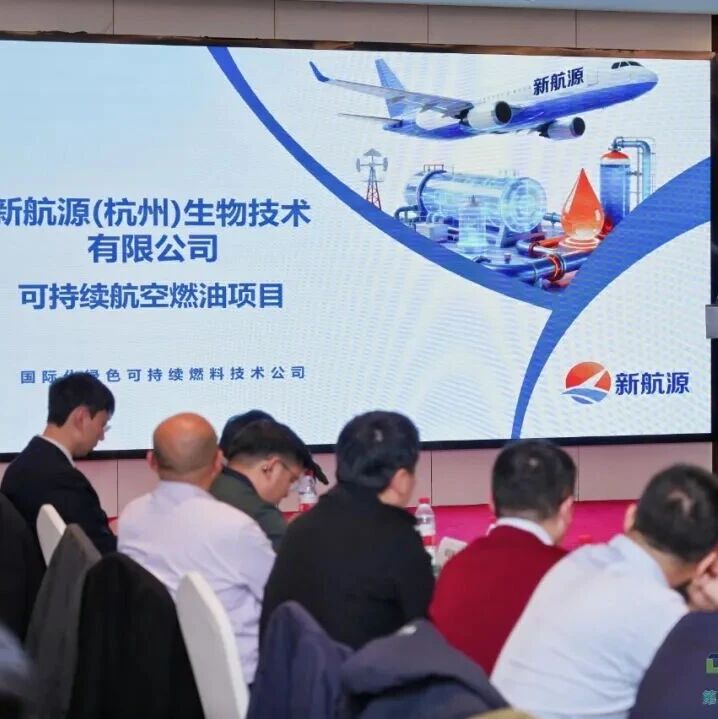
破局航空碳减排,共话SAF新未来 | 可持续航空燃油产业交流会在杭举行
合成生物学与绿色生物制造· 2025-12-04 08:11
Core Insights - The article emphasizes that the three core challenges for the industrialization of Sustainable Aviation Fuel (SAF) are policy, certification, and raw materials [1][2]. Group 1: Event Overview - The SAF industry exchange conference was successfully held on November 27, 2025, in Hangzhou, organized by the National Key Laboratory of Bio-based Transportation Fuel Technology and DT New Materials [2]. - The conference gathered 30 top experts and representatives from various institutions, including Zhejiang University and China Southern Airlines, to discuss key issues in SAF development [2]. Group 2: SAF Market and Technology - The aviation industry accounts for 12% of carbon emissions in the transportation sector, with annual emissions reaching 1 billion tons. According to IATA, 65% of carbon reduction in aviation must come from SAF by 2050, indicating a trillion-dollar market potential [8]. - The report compares four main technological routes for SAF production: HEFA, AtJ, G+FT, and PtL. The AtJ route is identified as the most investment-worthy due to its wide raw material sources and high emission reduction efficiency of 85%-100% [8][6]. Group 3: Technological Innovations - The new generation AtJ technology developed by Zhejiang University has achieved three core breakthroughs: flexible raw material adaptability, innovative pathways for simultaneous conversion of low-carbon raw materials, and comprehensive utilization of biomass components [9]. - The AtJ technology has transitioned from laboratory to industrialization, leading to the establishment of New航源 (Hangzhou) Biotechnology Co., Ltd. [9]. Group 4: Economic Viability and Market Trends - The AtJ technology significantly reduces SAF production costs, enhancing profit margins. Current market prices in Europe reach $2,950 per ton, with the technology expected to address the economic bottleneck of SAF [11]. - The new PtL technology has completed laboratory development and is rapidly advancing towards scaling up [12]. Group 5: Industry Challenges and Recommendations - Experts agree that the SAF industry faces challenges in policy clarity, certification standards, raw material supply stability, and cost-sharing mechanisms among stakeholders [16][17][18][20]. - A complete ecosystem for SAF, including raw materials, processing, certification, and usage, is essential for industry growth. Investment institutions are particularly interested in the lower fixed asset investment required for the AtJ route [23]. Group 6: Future Outlook - The SAF industry in China is entering a golden period of development, driven by expanding pilot programs, continuous technological breakthroughs, and an improving industrial chain [23].