航空运行安全保障

Search documents
山东东营机场多措并举防范应对寒潮雨雪天气
Zhong Guo Min Hang Wang· 2026-01-18 12:02
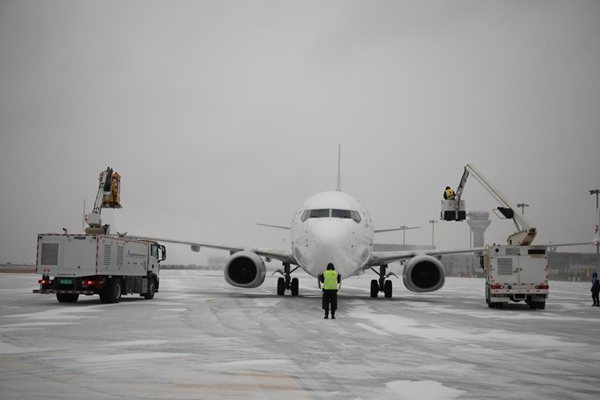
Group 1 - The core viewpoint of the article highlights the effective response of Dongying Airport in Shandong Province to snowfall, ensuring flight safety and smooth travel for passengers [1] - After the snowfall warning was issued, Dongying Airport promptly activated its winter snow support plan, holding a special preparation meeting to coordinate flight operations, snow removal, and passenger services [3] - The airport conducted comprehensive checks on special equipment such as snowplows and de-icing vehicles, ensuring readiness for the snowfall [5] Group 2 - Dongying Airport enhanced passenger service by providing timely updates on weather changes and flight information through various channels, thereby alleviating passenger anxiety [6] - The airport implemented a collaborative emergency support state, utilizing a "mechanical first, manual second" operation mode for snow removal, ensuring the runway and taxiway remained in a suitable condition for flights [7] - Moving forward, Dongying Airport will continue to monitor weather changes and optimize winter operation support measures to enhance emergency response capabilities [8]

民航局协同港澳防“风”险 29架港澳客机安全高效转降内地
Zhong Guo Min Hang Wang· 2025-09-26 03:38
Core Viewpoint - The aviation operations in the Guangdong-Hong Kong-Macao region are facing significant challenges due to the impact of Typhoon "Haikashan" No. 18, prompting the Civil Aviation Administration to activate emergency plans to ensure flight safety and improve recovery efficiency after the typhoon passes [1][2]. Group 1: Emergency Response and Coordination - The Civil Aviation Administration's Operations Monitoring Center initiated an emergency response plan, coordinating with Hong Kong and Macao aviation units to manage the risks posed by the typhoon [1]. - The center simplified the approval process for aircraft repositioning requests, ensuring efficient implementation of the repositioning plans [1][2]. - Real-time communication and coordination were established with air traffic control and flight planning centers to monitor key flights and facilitate emergency relocations [1][2]. Group 2: Timeliness and Efficiency of Operations - The urgency of the repositioning operations was highlighted, with Hong Kong Airlines submitting four repositioning requests on the night of September 22, and Cathay Pacific receiving a notification for repositioning just 12 hours before the planned suspension of flights [2]. - The demand for repositioning surged to 25 aircraft due to a change in the typhoon's path, with the first repositioning flight scheduled to depart at 12:35 PM on September 23, leaving less than six hours for approval [2]. - The Operations Monitoring Center successfully processed all repositioning requests, with Cathay Pacific's 25 aircraft and Hong Kong Airlines' 4 aircraft departing safely on September 23 [2]. Group 3: Future Coordination and Recovery Plans - As the impact of Typhoon "Haikashan" diminishes, the Operations Monitoring Center will continue to monitor residual effects and assist Hong Kong and Macao airlines in developing recovery plans for returning flights [3]. - There is an intention to establish a more robust operational coordination mechanism with Hong Kong and Macao to enhance the ability to respond to special situations in the future [3]. Group 4: Safety Measures for Aircraft - Aircraft, despite their weight, cannot be secured on the ground during high winds, necessitating measures such as tethering to prevent them from being displaced [4]. - The Civil Aviation regulations require that aircraft be secured during severe weather to mitigate risks, and relocating aircraft to unaffected airports is considered a safer alternative [4][5]. - The selected temporary locations for aircraft were chosen based on the absence of typhoon impact and passenger demand, ensuring operational continuity for travelers [5].

海南空管迎战台风“韦帕” 保障航空运行安全平稳
Zhong Guo Min Hang Wang· 2025-07-21 05:11
Core Viewpoint - The Hainan Air Traffic Management Bureau has taken comprehensive measures to ensure the safety and orderly operation of flights during Typhoon "Wipha," demonstrating strong coordination and response capabilities in extreme weather conditions [1][2][4]. Group 1: Emergency Response Measures - The Hainan Air Traffic Management Bureau held a special meeting on July 17, emphasizing "safety first" and implementing various typhoon prevention measures [1]. - Key leaders and frontline personnel were on duty ahead of time from July 20 to ensure sufficient staffing and responsibility [1]. - A multi-round consultation mechanism was initiated with airports and airlines to adjust flight plans and minimize passenger impact [2]. Group 2: Coordination and Communication - The Bureau closely collaborated with meteorological departments to track the typhoon's dynamics and provide precise flight instructions [2]. - Dynamic optimization of special plans was conducted based on the typhoon's predicted path, detailing procedures for diversions, returns, and alternate landings [2]. - Coordination with military and civil aviation units was enhanced to adjust airspace resources and improve return and diversion support capabilities [4]. Group 3: Training and Preparedness - All personnel were organized to learn typhoon prevention plans and thunderstorm support measures, conducting inspections throughout the typhoon's impact period [4]. - Emergency response plans were communicated with telecommunications and power sectors to enhance fault response times during the typhoon [4]. - The successful execution of these preventive measures showcased the Bureau's comprehensive support capabilities and collaborative operational level in ensuring civil aviation safety [4].