
航运数智化

Search documents
出炉!2025年全球十大航运新闻
Sou Hu Cai Jing· 2026-01-02 13:21
Core Insights - The shipping industry in 2025 experienced significant changes driven by geopolitical tensions, particularly between the US and China, affecting port fees and operational costs [2][4] - The transition towards decarbonization and digitalization has become essential for companies to navigate challenges, with the International Maritime Organization (IMO) delaying the adoption of the Net-Zero Framework, impacting regulatory certainty [2][9] - The emergence of new shipping routes and supply chains, such as the Simandou iron ore project, is reshaping global shipping dynamics and demand [2][11] Group 1: US-China Port Fee Dispute - In 2025, the US and China escalated their policy conflict to the level of port fees, with the US imposing fees on certain Chinese vessels starting October 14, 2025, followed by China's retaliatory fees [4] - The suspension of these fees on November 10, 2025, led to a restructuring of shipping routes and strategies, with a notable decline in freight rates and a shift in capacity deployment [4][5] - The compliance premium has been systematically priced into various operational aspects, affecting costs and accessibility across the shipping industry [5] Group 2: IMO Net-Zero Framework Delay - The IMO's Net-Zero Framework was delayed until 2026 due to unresolved key issues, pushing back the industry's need for regulatory certainty and extending the uncertainty window for investments [9][10] - Despite the delay, the overall goals of the IMO 2023 reduction strategy remain unchanged, creating a paradox where regulatory delays coexist with ongoing industry actions towards decarbonization [9] - Shipping companies are increasingly focusing on tangible emission reductions and diversifying fuel strategies, including LNG, methanol, and future zero-carbon fuels [9] Group 3: Simandou Iron Ore Project - The Simandou iron ore project commenced commercial operations in November 2025, with the first shipment of approximately 200,000 tons of high-grade iron ore to China [11] - This project is expected to create a new long-haul shipping route from West Africa to China, significantly impacting the dry bulk market and potentially replacing some Australian iron ore routes [11] - The project's success will depend on the stability and reliability of its export rhythm and the efficiency of its transportation infrastructure [11] Group 4: Container Shipping Market Dynamics - In 2025, container shipping companies shifted their competitive focus from fleet size to reliable delivery capabilities, driven by increased market uncertainty [12][16] - Major players like MSC expanded their capacity significantly, leading to heightened competition and a simultaneous push towards integrated logistics and terminal control [12][16] - The trend of integrating logistics and terminal operations is expected to continue, although it may introduce asset burden and return on invested capital (ROIC) pressures if freight rates decline [13] Group 5: Shadow Fleet and Sanctions - The global shadow fleet, involved in transporting sanctioned oil, reached approximately 1,423 vessels, with 921 already sanctioned by the US and its allies [19] - Enforcement methods have shifted from financial sanctions to direct maritime actions, with the US actively seizing vessels involved in transporting oil from Venezuela [19][20] - The expansion of the shadow fleet has increased the premium for compliant vessels, while also raising operational risks and insurance costs [19] Group 6: Chinese Shipbuilding Dominance - Despite temporary disruptions from US port fees, Chinese shipbuilding orders rebounded quickly, maintaining a dominant position with over 60% of global orders [21][23] - In the first half of 2025, China received new orders totaling approximately 44.33 million deadweight tons, while deliveries were around 24.13 million deadweight tons, indicating a backlog in shipbuilding capacity [23] - The profitability of Chinese shipyards is improving, providing cash flow for continued investment in advanced and green ship designs [23] Group 7: Electric Vessels and Green Transition - 2025 marked a significant push towards electric vessels in China's inland and coastal shipping, with numerous electric cargo ships launched and operational [24][25] - The Chinese government supported the transition to clean energy vessels, with plans for 1,000 new energy vessels over the next five years [25] - Internationally, notable advancements in electric vessel technology were observed, indicating a shift towards larger and faster electric ships [25] Group 8: Crew Welfare and Regulations - The importance of crew welfare gained prominence in 2025, with new agreements enhancing protections and raising minimum wages for seafarers [26][27] - The industry is increasingly recognizing crew welfare as a measurable management issue, driven by rising health and psychological risks among seafarers [27] - Future focus will be on implementing actionable governance for crew welfare and integrating respect for seafarers into compliance and delivery standards [27] Group 9: Emerging Markets and Nationalization of Shipping - Emerging markets are increasingly elevating shipping and port development as national strategic initiatives, with India leading by establishing a maritime development fund [28][29] - Investments in port infrastructure and shipping capabilities are being made to enhance regional hub positions, with significant projects underway in various emerging markets [28][29] - This trend suggests that competition in the future will extend beyond shipping routes to include vessel registration, compliance, and local service capabilities [29]

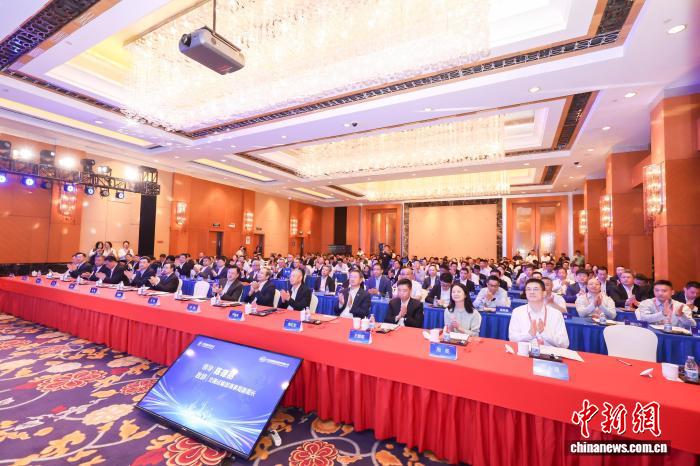
聚焦绿色数智趋势·促进航运产融合作——2025航运投融资对接大会圆满举办|航运界
Sou Hu Cai Jing· 2025-12-06 02:22
Core Insights - The "2025 Shipping Investment and Financing Matchmaking Conference" was held in Shanghai, focusing on shipping technology and green energy industry chains [2][3] - The event gathered over 50 guests from domestic and international shipping tech companies, investment institutions, government departments, banks, and leasing companies to discuss financial investment and industry integration [3][6] Group 1: Event Overview - The conference is part of the "2025 Pudong Shipping Week" series and is co-hosted by Shangyang Private Equity Fund Management Company and Shipping World Network, with support from local government agencies [2][3] - The event aims to promote deep integration between quality enterprises in shipping technology and green decarbonization with capital [6] Group 2: Industry Context - Pudong New Area is highlighted as a key area for shipping industry investment, housing over 13,000 shipping companies, including more than 1,100 shipping technology firms [5] - The region aims to leverage its policy and industrial advantages to foster the development of new productive forces in shipping [5] Group 3: Participating Companies and Innovations - Eight leading domestic companies and three award-winning overseas companies presented at the conference, focusing on various aspects of shipping technology and services [6][7] - Companies included those specializing in autonomous freight trucks, navigation systems, high-end marine power systems, and digital platforms for cross-border logistics [7] Group 4: Investment Opportunities - The event featured participation from various investment and financial institutions, facilitating discussions and exchanges between capital providers and innovative enterprises [7][9] - Shangyang Private Equity Fund is establishing a "Shipping ESG Industry Fund" to support the digital, intelligent, and green transformation of the shipping industry [9]

中国船东协会数智航运专业委员会在沪成立
Zhong Guo Xin Wen Wang· 2025-07-30 09:08
Core Viewpoint - The establishment of the Smart Shipping Professional Committee by the China Shipowners' Association marks a significant milestone in the shipping industry's embrace of digital transformation and intelligent upgrades [1][2]. Group 1: Committee Establishment and Objectives - The Smart Shipping Professional Committee aims to promote the construction of intelligent ship collaborative platforms, supply chain digital platforms, and industry public service platforms [1]. - The committee will serve as a bridge and hub, uniting government, enterprises, academic institutions, and research organizations to focus on core platform development and key technology breakthroughs [1]. Group 2: Industry Support and Development - The committee is expected to drive the application of smart shipping technologies and foster a stronger internal momentum for the development of intelligent shipping in China [2]. - The establishment of the committee is timely and will inject new energy into the high-quality development of the shipping industry [2]. Group 3: Expert Insights - A keynote speech by an academician discussed the evolution of smart shipping technologies, emphasizing that intelligent ships will transform from mere transportation tools to data hubs, floating energy platforms, and mobile sensing terminals within the global logistics system [3].
中远海运国际纯利同比增加19%至7.09亿港元 核心业务经营绩效创新高
Xin Hua Cai Jing· 2025-03-26 09:54
Core Insights - The company reported a 19% year-on-year increase in net profit to HKD 709 million, with basic and diluted earnings per share at HKD 0.4838 [3] - The board proposed a final dividend of HKD 0.215 per share, totaling an annual dividend of HKD 0.48 per share, reflecting a payout ratio of approximately 99% [3] - Total revenue for the period was HKD 3.627 billion, a 9% increase year-on-year, with core shipping services revenue rising 26% to HKD 3.488 billion, accounting for 96% of total revenue [3] Financial Performance - The pre-tax profit from core shipping services increased by 25% to HKD 628 million, marking a historical high [3] - The company has committed to enhancing shareholder returns by maintaining a near 100% payout ratio since 2020 [3] Strategic Focus - The company aims to focus on "green intelligent shipping services" and "marine green energy" as part of its strategic direction for 2024 [4] - It plans to leverage digital technology, new energy applications, and low-carbon services to strengthen its core competitiveness and promote synergy among its shipping service divisions [4] Future Outlook - The company intends to develop into a technology-driven shipping service provider, offering comprehensive green and low-carbon digital solutions for the entire lifecycle of vessels [4] - It aims to explore the marine new energy industry, starting with a green methanol production demonstration project, contributing to sustainable development in the shipping industry [4]
