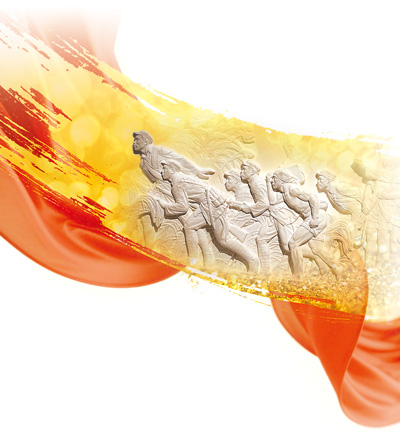
英雄气概

Search documents
【光明论坛·温故】天地英雄气,千秋尚凛然
Xin Lang Cai Jing· 2026-01-05 19:46
Core Viewpoint - The article emphasizes the importance of heroism in Chinese culture, highlighting that heroes embody the spirit and values that drive the nation towards its rejuvenation and progress [1][4]. Group 1: Definition of Heroism - In traditional Chinese culture, heroism transcends individual achievements and represents a spiritual symbol that connects morality and civilization [2]. - Heroic qualities include self-improvement, moral integrity, dedication, and a sense of responsibility towards the nation [2][3]. Group 2: Philosophical Foundations - The essence of heroism is rooted in the moral power of the universe, where following the natural order leads to the welfare of the majority, which is the essence of heroism [3]. - Confucian teachings emphasize that righteousness is more valuable than life itself, shaping the character of the Chinese nation [3]. Group 3: Historical Context - The article references the Anti-Japanese War as a significant historical period that showcased the spirit of heroism, with numerous individuals demonstrating unwavering commitment and sacrifice [4]. - The sacrifices made by heroes during this time are not only military acts but also a profound expression of the ethical spirit of Chinese civilization [4]. Group 4: Legacy and Inspiration - Heroes serve as the brightest coordinates of the nation and their spirit continues to inspire future generations towards the goal of national rejuvenation [4]. - Remembering and inheriting the spirit of heroes is crucial for preserving the cultural resilience of the Chinese civilization [4].
微视频|山河永志
Xin Hua She· 2025-08-30 04:53
Core Viewpoint - The articles commemorate the 80th anniversary of the victory in the Chinese People's War of Resistance Against Japanese Aggression and the World Anti-Fascist War, emphasizing the sacrifices and heroism of those who fought during this tumultuous period [1][3]. Group 1 - The micro-video "Mountains and Rivers Will Remember" is launched by Xinhua News Agency, showcasing the national memory through printmaking and visual storytelling [3]. - The video aims to reflect the tragic and glorious aspects of the 14-year war, honoring the enduring spirit of heroes and inspiring the current generation [3]. - The production involves a collaborative effort from various creators and institutions, highlighting the importance of collective memory in shaping national identity [4].

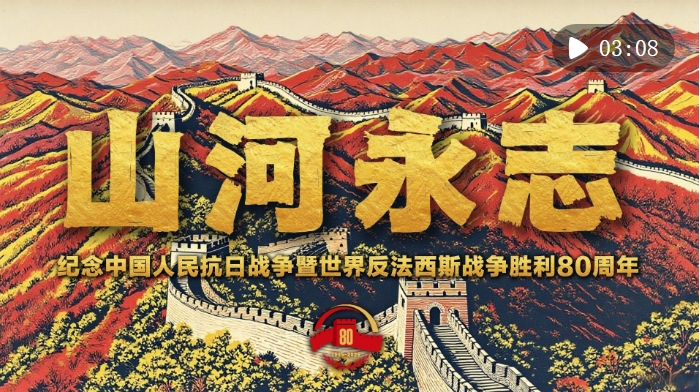
微视频丨山河永志
Xin Hua She· 2025-08-30 04:50
Group 1 - The article commemorates the 80th anniversary of the victory in the Chinese People's War of Resistance against Japanese Aggression and the World Anti-Fascist War, highlighting the sacrifices made during that tumultuous period [1] - It emphasizes the indelible memory of the heroic figures who fought valiantly and selflessly, ensuring that their legacy is never forgotten [1] - The piece reflects on the historical significance of the struggle, portraying it as a testament to resilience and courage in the face of adversity [1] Group 2 - Xinhua News Agency has launched a micro-video titled "Mountain and River Eternal Memory," which uses printmaking to depict national memories and showcase the spirit of the times [3] - The video aims to recreate the tragic yet glorious narrative of the fourteen years of resistance, paying tribute to the enduring heroism that inspires contemporary efforts [3] - The production involves a collaborative effort from various creators and institutions, highlighting the importance of collective remembrance and artistic expression in honoring history [4]

历史记忆塑造民族精神
Zhong Guo Qing Nian Bao· 2025-07-17 23:00
Core Viewpoint - The article reflects on the 80th anniversary of China's victory in the War of Resistance Against Japanese Aggression, emphasizing the historical significance and the sacrifices made by countless individuals for national dignity and survival [1][2][4]. Group 1: Historical Significance - The victory in the War of Resistance marked the end of a long history of foreign invasions and signified a spiritual rebirth for the Chinese nation [1]. - The sacrifices made during the war are highlighted as foundational to the resilience and cultural continuity of the Chinese people [2]. Group 2: Contributions and Sacrifices - Over 3,200 overseas Chinese returned to China during the war, transporting over 500,000 tons of military supplies via the Burma Road from 1939 to 1942 [2]. - Many young individuals left their stable lives to contribute to the war effort, with over 1,000 losing their lives on the "Lifeline of Resistance" [2]. Group 3: National Spirit and Identity - The article emphasizes that national spirit is not a bargaining chip, illustrated by figures like Qi Baishi, who refused to sell his art to the invaders, and scholars who contributed to the war effort through research and writings [3]. - The heroism displayed by soldiers and civilians during the war is portrayed as a testament to their unwavering loyalty and commitment to the nation [3]. Group 4: Lasting Impact - The War of Resistance has had a profound and lasting impact on modern China, shaping national identity and influencing contemporary geopolitical relations [4]. - The spirit of unity and resistance developed during the war continues to serve as a guiding principle for China's domestic and foreign policies [4]. Group 5: Historical Memory - The article stresses the importance of confronting historical realities to honor the sacrifices made and to ensure the lessons learned are not forgotten [5]. - Personal artifacts and memories serve as tangible connections to history, shaping the collective understanding of national identity [6].

弘扬伟大抗战精神 汇聚民族复兴力量
Ren Min Ri Bao· 2025-07-06 22:52
Core Viewpoint - The article emphasizes the enduring spirit of patriotism and heroism among the Chinese people during the Anti-Japanese War, highlighting the importance of national responsibility and the sacrifices made for the country's independence and dignity [3][4][5]. Group 1: Patriotism and National Responsibility - The love for the country is described as a profound and lasting emotion that motivates generations of Chinese to strive for national prosperity [5]. - The phrase "天下兴亡、匹夫有责" (the rise and fall of the nation is the responsibility of every individual) encapsulates the collective spirit of the Chinese people during the war [4][5]. - The Communist Party of China is portrayed as the backbone of the national resistance, uniting people from all walks of life in the fight against foreign aggression [4]. Group 2: Heroic Spirit and Sacrifice - Numerous accounts of heroism are recounted, such as the "Eight Hundred Heroes" who defended the Sihang Warehouse against overwhelming odds, showcasing the spirit of fighting to the last breath [6][8]. - The article highlights the sacrifices made by individuals, including mothers and soldiers, who chose death over surrender, reinforcing the theme of unwavering commitment to the nation [8][9]. - The legacy of these heroes continues to inspire contemporary Chinese citizens to uphold the values of courage and resilience in the face of challenges [10][11]. Group 3: Unyielding Belief in Victory - The article discusses the steadfast belief in eventual victory that characterized the Chinese resistance, as articulated in the writings of leaders during the war [15][16]. - Examples of perseverance in overcoming natural and social challenges are provided, illustrating the spirit of determination that has been passed down through generations [16][17]. - The narrative concludes with a call to draw strength from the past to face current and future challenges, emphasizing the importance of maintaining a fighting spirit [17].