
民族记忆

Search documents
人民家书这一年(人民家书)
Ren Min Ri Bao Hai Wai Ban· 2026-01-08 22:55
Core Viewpoint - The "People's Letters" initiative, launched by the People's Daily Overseas Edition, aims to commemorate historical events and express national sentiments through personal letters, weaving individual stories into the broader narrative of national memory and cultural identity [5][6][10]. Group 1: Historical Context and Significance - The initiative was launched on July 7, 2025, marking the 88th anniversary of the outbreak of the War of Resistance Against Japan and the 80th anniversary of the victory in the World Anti-Fascist War [5][6]. - Over six months, "People's Letters" published more than 100 letters across 30 special editions, connecting personal emotions with national history [5][6][10]. Group 2: Thematic Focus - The "Anti-Japanese War Letters" featured letters from notable figures like Zuo Quan and Zhao Yiman, highlighting the spirit of resistance and patriotism during the war [6][7]. - The initiative also included themes such as "Nanjing Massacre Remembrance" and "Letters from the Korean War Volunteers," emphasizing historical memory and the sacrifices made by individuals [7][9]. Group 3: Cultural and Emotional Resonance - "People's Letters" serves as a medium to explore cultural roots and collective responsibility, using the format of letters to evoke empathy and connection [6][8]. - The initiative has expanded to include contemporary themes, such as "Military Parade Letters" and "Sports Letters," reflecting modern Chinese values and the spirit of perseverance [8][9][14]. Group 4: Innovative Communication Strategies - The project employs innovative methods, including voice readings by national actors and AI technology to recreate historical contexts, enhancing audience engagement [10][16]. - A combination of online and offline interactions has been utilized to encourage public participation, transforming the act of writing letters into a cultural practice [10][16]. Group 5: Future Directions - The "People's Letters" initiative plans to continue documenting the intersection of ordinary lives with historical narratives, aiming to reflect the evolving spirit of the Chinese people [11][17].


台胞走进四川追寻文化抗战记忆
Ren Min Ri Bao Hai Wai Ban· 2025-10-09 22:47
Core Viewpoint - The event commemorates the 80th anniversary of the victory in the Anti-Japanese War and Taiwan's recovery, emphasizing the importance of cultural memory and historical education for the younger generation of Taiwan [1][8]. Group 1: Historical Significance - The cultural exchange event in Li Zhuang aims to help Taiwanese youth understand the shared history of the Chinese nation during the Anti-Japanese War, highlighting the sacrifices made [1][3]. - Li Zhuang served as a significant cultural center during the war, hosting numerous educational and research institutions that contributed to the preservation of Chinese culture [2][4]. Group 2: Personal Reflections - Participants expressed that their experiences in mainland China provided them with a deeper emotional connection to the history, with some moved to tears by the stories of resilience and dedication from that era [3][6]. - The historical context of Taiwan's recovery is underscored by personal anecdotes, illustrating the lasting impact of the war on families and the collective memory of the Taiwanese people [6][4]. Group 3: Cultural Legacy - The event emphasizes the need for the younger generation to inherit the spirit of patriotism and cultural continuity, as articulated by various speakers [7][8]. - There is a call to counteract historical revisionism and promote a unified understanding of history between the two sides of the Taiwan Strait [8].
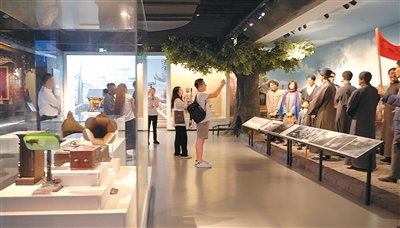
【抗战胜利80周年】探访北京三条将军路:从北平忠魂到民族记忆
Zhong Guo Xin Wen Wang· 2025-09-02 07:47
Core Points - The article highlights the significance of three streets in Beijing named after anti-Japanese war generals, symbolizing the collective memory and unity of the Chinese people during the war [1] - The streets mentioned are Tong Lin Ge Road, Zhao Deng Yu Road, and Zhang Zi Zhong Road, which serve as reminders of the sacrifices made during the war [1] - The article emphasizes the importance of remembering history to promote peace and national unity, as stated by Hu Cheng, a vice president of the Chinese Red Culture Research Association [1] Summary by Sections - **Historical Significance**: The streets named after war heroes reflect the historical struggle and resilience of the Chinese nation during the anti-Japanese war [1] - **Cultural Remembrance**: Public facilities named after war figures contribute to the collective memory of the nation, encouraging future generations to cherish peace [1] - **Expert Commentary**: Hu Cheng's insights underline the role of these memorials in fostering a sense of national identity and historical awareness [1]
微视频丨山河永志
Xin Hua She· 2025-08-30 04:50
Group 1 - The article commemorates the 80th anniversary of the victory in the Chinese People's War of Resistance against Japanese Aggression and the World Anti-Fascist War, highlighting the sacrifices made during that tumultuous period [1] - It emphasizes the indelible memory of the heroic figures who fought valiantly and selflessly, ensuring that their legacy is never forgotten [1] - The piece reflects on the historical significance of the struggle, portraying it as a testament to resilience and courage in the face of adversity [1] Group 2 - Xinhua News Agency has launched a micro-video titled "Mountain and River Eternal Memory," which uses printmaking to depict national memories and showcase the spirit of the times [3] - The video aims to recreate the tragic yet glorious narrative of the fourteen years of resistance, paying tribute to the enduring heroism that inspires contemporary efforts [3] - The production involves a collaborative effort from various creators and institutions, highlighting the importance of collective remembrance and artistic expression in honoring history [4]

纪念抗战胜利80周年重点电视新作激发爱国热情
Xin Hua She· 2025-08-22 22:20
Core Viewpoint - The article highlights the significance of commemorating the 80th anniversary of the victory in the Chinese People's War of Resistance Against Japanese Aggression and the World Anti-Fascist War through a series of television productions that evoke patriotism and honor the spirit of resistance [1][12]. Group 1: Overview of Television Productions - A total of 12 new television dramas and documentaries are being showcased from August to October, aiming to inspire patriotism and promote the great spirit of the anti-Japanese war [1][12]. - The productions utilize diverse narrative perspectives and artistic expressions to revisit the historical epic of national resistance [1][12]. Group 2: Themes and Narratives - The series of works vividly illustrate the great spirit of the Chinese people during the anti-Japanese war, showcasing their bravery and determination in the face of adversity [2][3]. - Documentaries like "Northeast Anti-Union" and "Taiwan's Restoration 80 Years" highlight the contributions of various groups in the resistance against foreign invasion [2][3]. Group 3: Personal Stories and Human Emotions - The productions emphasize personal narratives, such as letters from soldiers, to convey the emotional depth and human experiences during the war [5][6]. - The documentary "Home Letters - The Memory of 40 Million People's War of Resistance" focuses on personal letters to reveal individual inner worlds during the war [5][6]. Group 4: Historical Accuracy and Artistic Expression - The showcased works strive for a balance between historical accuracy and artistic representation, utilizing archival footage and interviews with war veterans to ensure authenticity [9][11]. - Technological enhancements, such as 3D animation and AI, are employed to recreate historical events and enhance the visual storytelling [11][12]. Group 5: Cultural and International Perspectives - The productions also reflect on the cultural resistance during the war, showcasing the role of artists and educators in fostering national spirit [7][8]. - International collaborations and contributions, such as those from the Flying Tigers and Norman Bethune, are highlighted to illustrate the global dimension of the anti-Japanese war [8][12].
又见丨一个英雄名字背后的三重人生
Yang Shi Xin Wen· 2025-07-24 01:45
Group 1 - The article highlights the story of Zhao Yiman, a national hero, whose true identity and familial connections were hidden for many years due to her revolutionary activities and eventual martyrdom [1][2] - Zhao Yiman, originally named Li Kuntai, severed ties with her family upon joining the revolution, leading to her sister and son searching for her under different names without success [1] - The emotional reunion of Zhao Yiman's son, Chen Yexian, and her sister, Li Kunjie, is depicted as a moment of profound connection, revealing Zhao Yiman not only as a hero but also as a mother and sister [2] Group 2 - In 1957, Chen Yexian received a letter from his mother, which emphasized her sacrifice for the country and the enduring nature of her love, illustrating the personal sacrifices made by heroes [2] - The narrative underscores the importance of recognizing the human aspects behind heroic figures, emphasizing that heroes are ordinary people who face extraordinary challenges [2]