荒谬

Search documents
如何练就“致命”表达力:敢于“大声思考”,比给出完美答案更重要
3 6 Ke· 2025-12-28 23:09
Group 1 - The core idea emphasizes that the world is designed to make individuals compliant rather than creative, and clear expression is a powerful tool for overcoming this design [2][4][5] - True expression is not about showcasing intelligence but about embracing uncertainty and engaging in genuine thought [15][19][20] - The article discusses the importance of learning to express oneself clearly and powerfully as a competitive advantage in a world that often discourages independent thinking [1][6][7] Group 2 - The author reflects on personal struggles with expression during school, highlighting how shyness can hinder opportunities [10][12][13] - The piece argues that many people misunderstand expression, equating it with certainty and perfection, while true expression involves embracing mistakes and uncertainties [17][18][20] - The article suggests that the journey of improving expression is akin to the myth of Sisyphus, where the struggle itself is a source of fulfillment [67][71][75] Group 3 - The author draws on philosophical insights from figures like Albert Camus to illustrate the absurdity of seeking certainty in an uncertain world [28][30][31] - Embracing uncertainty is presented as a foundational element for developing powerful expression, allowing individuals to explore and articulate their thoughts more freely [34][35][37] - The article encourages readers to pursue their curiosities and interests passionately, as this will lead to unique perspectives and insights [45][46][48][60] Group 4 - Practical steps for enhancing expression include reading widely, practicing verbal articulation, and connecting personal interests to broader questions [79][80][81] - The author emphasizes the importance of viewing expression as a creative act that contributes to personal growth and understanding [75][76][78] - The article concludes that the pursuit of expression is a continuous journey, where the process itself is as valuable as the outcome [72][74][75]
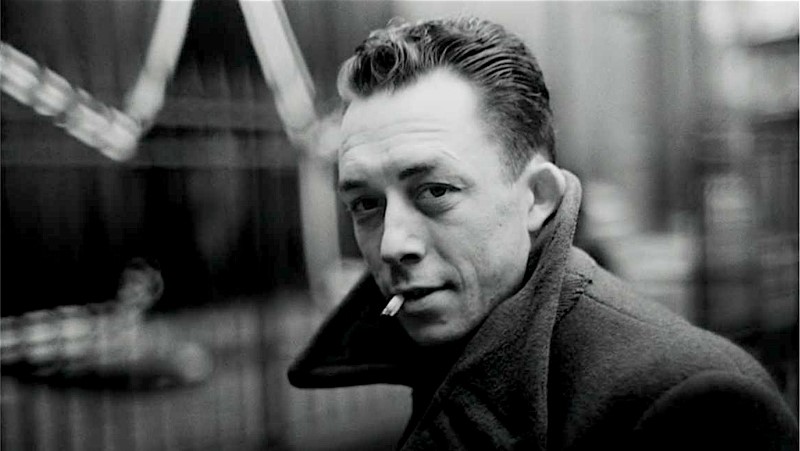
加缪:反抗无法推翻的处境,承受随之而来的巨大孤独感
Di Yi Cai Jing· 2025-07-04 01:54
Core Viewpoint - The ongoing relevance of the "Sartre-Camus dispute" highlights the enduring impact of Albert Camus's works, particularly "The Outsider" and "The Plague," which continue to resonate with readers today [1][3] Group 1: Historical Context - Camus wrote "The Rebel" during a time of societal division and political turmoil, reflecting on the aftermath of World War II and the rise of violence justified under various ideological banners [1][3] - The writing of "The Rebel" was influenced by Camus's observations of post-war France, where political purges and a toxic atmosphere of self-justification prevailed [1][3] Group 2: Philosophical Insights - Camus posits that regardless of the justification—be it revolutionary or counter-revolutionary—violence is often legitimized, and the focus should be on halting the violence itself rather than debating moral correctness [3][4] - The essence of Camus's philosophy is encapsulated in the idea that "I rebel, therefore we exist," emphasizing the necessity of rebellion against absurdity and the indifference of the universe [6][7] Group 3: Literary Contributions - "The Rebel" serves as a theoretical elevation of Camus's anti-violence stance, where he critiques the historical misuse of philosophical ideas, particularly those of Nietzsche, in justifying violence [6][7] - Camus's literary style in "The Rebel" is marked by a more argumentative tone compared to his previous works, reflecting the contentious nature of the subject matter [9][10] Group 4: Personal and Political Implications - The publication of "The Rebel" positioned Camus in opposition to Sartre, leading to a significant ideological divide among French intellectuals during the 1945-1952 period [8][10] - Despite the risks associated with his stance, Camus remained committed to his principles, advocating for a moral opposition to political violence, which ultimately led to his isolation in a politically charged environment [10][12]