不确定性

Search documents
“这不是巧合!伊朗战争发生在特朗普输掉‘高院关税战’后几天” 野村辜朝明最新研判
华尔街见闻· 2026-03-25 09:21
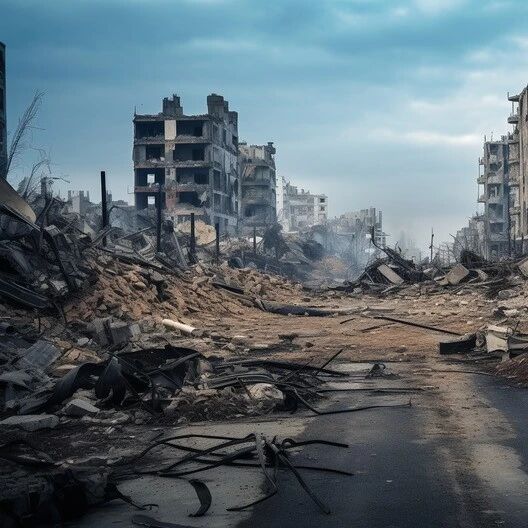
Core Viewpoint - The article discusses the intertwining issues of U.S. tariffs and the geopolitical crisis in the Middle East, particularly the implications of the U.S. Supreme Court ruling against "equal tariffs" and the military actions against Iran, which have exacerbated global supply chain disruptions and economic uncertainty [1][3][23]. Group 1: Tariff Implications - The Supreme Court's ruling on February 20 deemed "equal tariffs" illegal, marking a significant setback for the Trump administration's first-year policies, potentially requiring the return of approximately $300 billion in tariff revenue, which could lead to fiscal and political turmoil [3][23]. - The uncertainty surrounding tariffs is expected to hinder corporate expansion decisions, as businesses face challenges in pricing, investment, and hiring due to the lack of stability [6][7]. - The ongoing legal battles and the need for new legislation to impose tariffs will likely be slow and labor-intensive, further complicating the situation for businesses [3][4]. Group 2: Economic Slowdown Evidence - Employment data indicates a significant slowdown, with the February report showing a decrease of 92,000 jobs month-over-month, corroborating the findings of the Federal Reserve's Beige Book, which described hiring as "extremely weak" in many regions [7][8]. - The GDP growth forecast for Q4 2025 has been revised down from 1.4% to 0.7% (annualized), reflecting the broader economic slowdown linked to tariff uncertainties [7][8]. Group 3: Geopolitical Tensions and Supply Chain Disruptions - The military actions against Iran and the subsequent blockade of the Strait of Hormuz have led to significant supply chain disruptions, affecting oil, LNG, and fertilizer supplies, which could result in higher prices and shortages [1][12][13]. - The blockade has already caused shipping fuel prices to nearly double in Singapore and has led to operational halts in some fisheries due to unprofitable conditions [12][13]. - The agricultural sector is particularly vulnerable, as one-quarter of global fertilizer production comes from the affected region, raising concerns about potential food crises and inflationary pressures if the situation persists [13][14]. Group 4: Political Dynamics and Future Outlook - The article suggests that the Trump administration's handling of the tariff and military issues may lead to a loss of credibility in negotiations, as international partners may distrust the U.S. following the Supreme Court ruling [5][6]. - The potential for a prolonged military engagement in Iran is highlighted, with the risk of entering a "quagmire" similar to the Iraq War, complicating the administration's objectives and timelines [17][18]. - The article concludes with a warning that the combination of unresolved tariff issues and the oil crisis could further slow down the global economy, including the U.S. [23].

Iran Briefly Rattled Markets. It’s Still a Chance to Buy the Dip.
Barrons· 2026-03-02 17:56
Core Viewpoint - The article discusses the recent market volatility triggered by the U.S. attack on Iran, suggesting that this presents a buying opportunity for investors looking to capitalize on temporarily depressed stock prices [1]. Group 1: Market Reaction - The uncertainty surrounding geopolitical events, such as the U.S. attack on Iran, has historically caused fluctuations in Wall Street, similar to past concerns over tariffs and AI [1]. - Experts indicate that purchasing stocks that have been significantly impacted by such events can be a successful strategy, as it has worked in previous market downturns [1]. Group 2: Investment Strategy - The article emphasizes the potential for investors to "buy the dip" during times of market distress, suggesting that this approach can yield positive results in the long run [1].
东西问丨过去一周,四大不确定性,都跟这个国家有关
Xin Lang Cai Jing· 2026-02-22 05:33
Group 1: Geopolitical Uncertainty - The ongoing military tensions involving Iran and the U.S. have escalated, with the U.S. deploying over 60 attack aircraft to Jordan, tripling their usual presence, indicating a serious military threat [4][5] - The potential for conflict in the Middle East, particularly around the Strait of Hormuz, poses a significant risk to global oil supply, which could lead to soaring oil prices and impact U.S. voters ahead of midterm elections [5][8] Group 2: Energy Supply Uncertainty - The geopolitical situation has led to a spike in international oil prices, with the Middle East accounting for about one-third of global oil supply and nearly 20% of oil transport passing through the Strait of Hormuz [4][5] - Any disruption in this critical shipping lane could severely impact the global energy supply chain, heightening uncertainty in energy markets [5] Group 3: Climate Governance Uncertainty - The U.S. Energy Secretary has threatened to withdraw from the International Energy Agency (IEA) if it does not abandon its "net-zero emissions" agenda, undermining global climate efforts and multilateral governance [7] - The U.S. withdrawal from the Paris Agreement has already had a detrimental effect on global climate action, exacerbating divisions in international governance [7] Group 4: Trade Uncertainty - A recent U.S. Supreme Court ruling has limited the President's ability to impose large tariffs, creating uncertainty in trade policy and potentially leading to a refund of up to $175 billion in tariffs [8] - In response, the Trump administration has announced a new global import tariff of 10%, which is set to increase to 15%, further complicating the trade landscape and impacting global economic recovery [8][11] Group 5: Overall Impact on Global Stability - The combination of geopolitical, energy, climate, and trade uncertainties is likely to create a more volatile global environment, affecting millions of ordinary citizens worldwide [11] - The call for collective action in addressing these uncertainties highlights the challenges posed by the U.S.'s unpredictable strategies in international relations [11]

加拿大央行称美国的政策加剧不确定性,使其难以判断下一步利率行动
Sou Hu Cai Jing· 2026-02-11 23:47
Core Viewpoint - The Bank of Canada management committee indicates that recent actions by the United States regarding trade, foreign policy, and central bank independence are contributing to a more "volatile" world and increasing uncertainty [1] Group 1: Interest Rate Decisions - In January, the Bank of Canada maintained its interest rate at 2.25% for the second consecutive time, citing rising uncertainty as the main reason for indecision on whether to raise or lower rates [1] - The minutes from the February 11 meeting highlight the challenges of effectively weighing and assigning probabilities to various risks in an unpredictable environment with little historical precedent [1] Group 2: Future Policy Direction - The Bank of Canada reiterated the difficulty in predicting the timing and direction of the next policy interest rate adjustment [1]
【静夜·悦读】摆脱焦虑,从接受“不确定性”开始
Xin Lang Cai Jing· 2026-02-08 13:23
Group 1 - The core idea emphasizes the importance of accepting uncertainty rather than succumbing to anxiety, suggesting that anxiety does not solve problems but rather drains energy and disrupts focus [3] - It highlights that life is filled with uncertainties, and while people often set expectations, outcomes may differ from what is anticipated, which can lead to unexpected opportunities [4][5] - The article suggests that embracing uncertainty can lead to personal growth and new experiences, as opportunities often lie within the unknown [5] Group 2 - It proposes methods to cultivate the ability to coexist with uncertainty, such as changing perspectives from viewing uncertainty as a threat to seeing it as a possibility [6] - Taking action is recommended as a way to mitigate anxiety related to uncertainty, encouraging individuals to focus on present tasks [6] - The article advises against perfectionism, suggesting that allowing oneself to make mistakes can lead to valuable learning experiences [7]

【夜读】摆脱焦虑,从接受“不确定性”开始
Xin Lang Cai Jing· 2026-02-07 15:36
Group 1 - The core idea emphasizes the importance of accepting uncertainty rather than succumbing to anxiety and pressure, suggesting that anxiety does not solve problems but rather consumes energy and disrupts focus [3] - It highlights that life is filled with uncertainties, and while people often set expectations, outcomes may differ from what is anticipated, which can lead to unexpected opportunities [4][5] - The article suggests that uncertainty can be a source of new experiences and opportunities, encouraging individuals to embrace the unknown rather than fear it [5] Group 2 - It proposes methods for cultivating the ability to coexist with uncertainty, such as changing perspectives from viewing uncertainty as a threat to seeing it as a possibility [6] - Taking action is recommended as a way to alleviate anxiety related to uncertainty, with practical advice like creating daily task lists to maintain focus [6] - The article advises against perfectionism, encouraging individuals to allow mistakes and learn from them, which can lead to valuable experiences [7]

特稿丨风高浪急,更见定力——中国经济稳健前行的世界坐标
Xin Hua Wang· 2026-02-06 14:39
Core Viewpoint - China's economy is demonstrating resilience and stability amid global uncertainties, contributing significantly to world economic growth, with a projected GDP of 140 trillion yuan by 2025, maintaining a contribution rate of around 30% to global growth [1][2]. Economic Performance - In 2025, high-tech manufacturing and equipment manufacturing sectors are expected to grow significantly faster than the industrial average, driven by technological innovation and productivity improvements [2]. - The Chinese economy is anticipated to provide stable market opportunities and investment sources for developing countries, showcasing a replicable development experience [2]. International Relations and Cooperation - There is a notable increase in foreign leaders visiting China, highlighting the opportunities presented by China's 14th Five-Year Plan, with leaders from countries like South Korea, Canada, and the UK expressing optimism about economic collaboration [3]. - International financial institutions, including the IMF and World Bank, have raised their growth forecasts for China, citing strong performance in exports, high-end manufacturing, and digital economy sectors [3]. Open Economy and Global Integration - China is actively promoting high-level openness and deepening reforms in service sector access, contributing to a more stable and predictable business environment for global investors [4]. - The commitment to multilateralism and the maintenance of a multilateral trade system reflects China's long-term vision for mutual benefits and shared development with other countries [4].
帮主郑重:市场“用脚投票”回应美联储新掌门,背后在担忧什么?
Sou Hu Cai Jing· 2026-01-31 00:05
Group 1 - The market reacted negatively to the nomination of Kevin Walsh as the next Federal Reserve Chairman, with major U.S. stock indices, particularly the Nasdaq, experiencing a nearly 1% decline, indicating that this leadership change may signal a significant shift in global capital flows and market dynamics [1][3] - Concerns in the market center around two key terms: "hawkish" and "uncertainty." Walsh is known for his strong stance on inflation, which associates him with faster interest rate hikes, and analysts suggest he may provide less clear guidance than his predecessor, Powell, leading to increased market volatility [3][4] - The implications for A-shares are significant, as the Federal Reserve's monetary policy acts as a global liquidity control mechanism, affecting the strength of the dollar and foreign capital flows, which in turn influences the pricing of core assets in the A-share market [3] Group 2 - Investors are advised to reassess their holdings in "interest rate-sensitive" assets, particularly high-valuation tech growth stocks and sectors reliant on global liquidity, to evaluate their resilience in a potentially tighter global interest rate environment [3][4] - There is an increased emphasis on the "endogenous" and "certainty" of assets, suggesting that companies driven by domestic policies with stable cash flows will become more attractive as external macroeconomic noise increases [3][4] - The market is expected to experience heightened volatility due to the ambiguity of the Federal Reserve's policy path, necessitating cautious position management and strict profit-taking and stop-loss disciplines [4]

本次加拿大央行利率决议充斥不确定性
Sou Hu Cai Jing· 2026-01-28 15:12
Core Viewpoint - The Bank of Canada maintains the key interest rate at 2.25%, aligning with market expectations, while emphasizing heightened uncertainty in the economic outlook for 2026 [1] Group 1: Interest Rate Decision - The Bank of Canada has decided to keep the main interest rate unchanged at 2.25%, which is consistent with market predictions [1] - The central bank's decision reflects a cautious approach amid significant uncertainty regarding future economic conditions [1] Group 2: Economic Uncertainty - Governor Macklem highlighted the exceptionally high level of uncertainty regarding the economic outlook, mentioning it seven times during the press conference [1] - The official statement indicates that while the benchmark interest rate is deemed appropriate, the bank is closely monitoring risks due to increasing uncertainty [1] - In the previous December decision, the bank described uncertainty as "high," indicating a shift in the perception of economic risks [1]
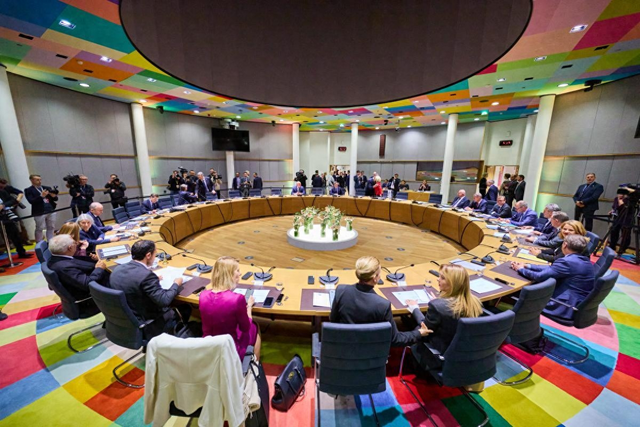
冰层未融,信任先化:美欧利益重心正在分叉
Xin Lang Cai Jing· 2026-01-25 02:50
Core Viewpoint - The relationship between the US and Europe is deteriorating, as evidenced by the recent Greenland issue, highlighting a shift in trust and cooperation between the two regions [1][18]. Group 1: EU Response to US Actions - The EU held an emergency summit on January 22 to address the recent developments regarding Greenland, where US President Trump retracted threats of new tariffs, alleviating immediate concerns but raising questions about long-term implications [3][6]. - Danish Prime Minister Frederiksen emphasized the need for Europe to remain united and assertive in defending its interests, warning that the recent threats from the US serve as a wake-up call for Europe [5][10]. - EU's High Representative for Foreign Affairs, Borrell, noted that the transatlantic relationship has suffered significant damage and that Europe must prepare for increasing uncertainty in its dealings with the US [6][12]. Group 2: Diverging Strategies Among EU Members - There are notable divisions among EU member states regarding how to respond to the US. Some countries advocate for a unified EU stance to send a counter-signal to the US, while others prefer to strengthen communication through NATO channels [6][12]. - Poland's Prime Minister Tusk expressed a willingness to push for trade retaliation against the US, indicating a shift in the perception of the US as a reliable ally [12][18]. - The Baltic states have considered military deployments to Greenland as part of NATO's assessment tasks, reflecting a growing concern over security dynamics in the region [12][18]. Group 3: Changing Perceptions of US as an Ally - European leaders are increasingly viewing the US as a "risk variable" rather than a default security provider, indicating a significant shift in the strategic landscape [12][18]. - The recent summit highlighted a consensus among EU leaders that the old order is breaking down, and Europe must adapt to a new reality where it cannot rely solely on the US for security and stability [15][18]. - The ongoing geopolitical tensions suggest that issues like Greenland are symptomatic of deeper, systemic divides between US and European interests, with potential implications for future cooperation [18].