
药品价格谈判

Search documents
八成创新药上市两年内入医保,仿制药进入微利时代
Di Yi Cai Jing· 2026-02-05 12:55
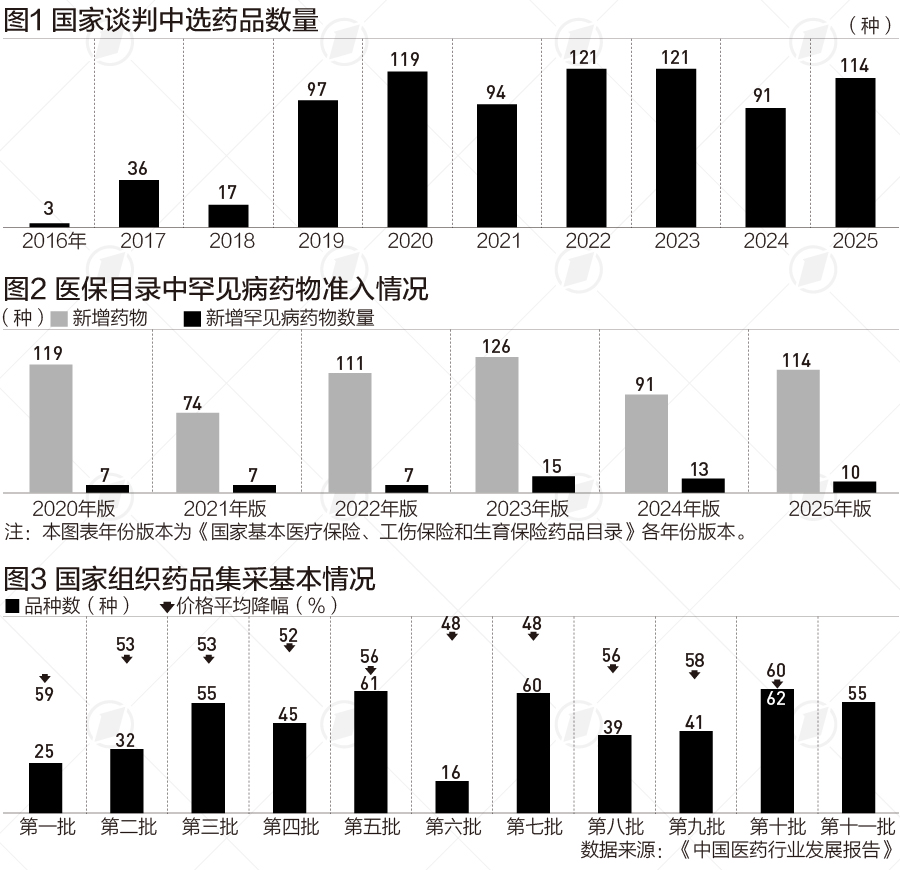
Core Insights - The core viewpoint of the news is that China's medical insurance purchasing mechanism, centered on centralized bulk procurement and drug price negotiations, is reshaping the pharmaceutical industry landscape in China [1] Group 1: Policy Changes and Trends - Since 2018, China's pharmaceutical policy has entered a new phase focused on value orientation and collaborative governance, transforming medical insurance from a passive payer to an active strategic purchaser [1] - The current policy shift emphasizes "cost-effectiveness" and "value-based healthcare," moving away from mere cost control [2] - The establishment of a national drug price negotiation mechanism supports the accessibility of innovative and high-priced drugs [2] Group 2: Drug Procurement and Pricing - The bulk procurement policy has transitioned from pilot programs to normalization, effectively reducing prices for generic and chronic disease medications [2] - The proportion of newly listed drugs entering the medical insurance directory within the same year of approval increased from 32% in 2019 to 97.6% in 2023 [2] - The number of drugs procured through national centralized procurement has reached 490, covering various treatment areas including chronic diseases and anti-tumor medications [3] Group 3: Innovation and Market Dynamics - Domestic innovative drugs account for 71% of newly added varieties, indicating a rapid shift towards high-value areas in the pharmaceutical industry [3] - The report anticipates that by 2025, the patient burden will be reduced by over 50 billion yuan, while improving the efficiency of medical insurance fund usage by 22% [3] - The introduction of fast-track approval channels for rare disease drugs has significantly shortened the time for new drugs to enter the medical insurance directory [4] Group 4: Challenges and Recommendations - The report highlights challenges such as the lack of a robust quality supervision mechanism for bulk procurement and insufficient collaboration between medical insurance and pharmaceutical innovation [8] - Recommendations include enhancing the drug value assessment system and establishing a unified drug usage tracking system to monitor the procurement and usage of selected drugs [9] - The report suggests building a multi-tiered payment system to address the accessibility issues of innovative drugs [9]

八成创新药上市两年内入医保,仿制药进入微利时代|晋观医养
Di Yi Cai Jing· 2026-02-05 12:40
Core Insights - The report highlights the transformation of China's pharmaceutical industry driven by a strategic purchasing mechanism that emphasizes value-oriented healthcare and collaborative governance [1][2] Group 1: Policy Changes and Trends - The focus of current policies has shifted from mere cost control to pursuing "cost-effectiveness" and "value-based healthcare" [2] - The establishment of a national drug price negotiation mechanism supports the accessibility of innovative and high-priced drugs [2] - The percentage of new drugs included in the insurance catalog within the same year of approval has increased from 32% in 2019 to 97.6% in 2023 [2] Group 2: Market Dynamics - Domestic innovative drugs account for 71% of newly added varieties, while biological drugs represent 18%, indicating a rapid shift towards high-value sectors in the pharmaceutical industry [3] - The cumulative expenditure of the medical insurance fund during the 14th Five-Year Plan period is approximately 13 trillion yuan, maintaining an annual growth rate of around 10% [3] Group 3: Rare Diseases and Drug Accessibility - The basic medical insurance system faces challenges in resource allocation for rare disease medications, which often have high costs and limited patient populations [4] - The number of rare disease drugs included in the insurance catalog has increased from 7 in 2020 to 15 in 2023, with 10 new drugs added in the latest catalog [4] Group 4: Challenges and Recommendations - The report identifies shortcomings in the clinical monitoring system for selected drugs under centralized procurement, emphasizing the need for improved quality control [8][9] - Recommendations include establishing a nationwide drug usage tracking system and enhancing the multi-tiered payment system to address the accessibility of innovative drugs [9]
Medicare Just Cut the Price of Wegovy: Should You Sell Novo Nordisk Stock?
The Motley Fool· 2025-12-03 14:30
Core Insights - Novo Nordisk has faced significant challenges over the past two years, including disappointing earnings, clinical trial setbacks, and increased competition, leading to a loss of market share [1] - Recent regulatory changes in the U.S. pose additional obstacles for the company, particularly concerning the pricing of its key drug, Wegovy [1][3] Pricing Impact - The Inflation Reduction Act allows the Centers for Medicare and Medicaid Services (CMS) to negotiate drug prices, resulting in a 71% price cut for Wegovy, Ozempic, and Rybelsus, reducing the list price from $959 to $274 for a 30-day supply [3][4] - Semaglutide, Novo Nordisk's primary growth driver, has not met performance expectations, and the price reduction could further hinder top-line growth [5] Market Reaction - Following the announcement of the price cuts, Novo Nordisk's stock price increased by approximately 4%, indicating that investors may have anticipated even larger price reductions [6][7] - The company had previously indicated that the negotiated price cuts would have a minimal negative impact on revenue growth, estimated at low single digits [7][8] Future Growth Potential - The price cuts will take effect on January 1, 2027, by which time semaglutide is expected to have new indications approved, potentially adding over $1 billion to annual sales [9][10] - New approvals for semaglutide include its use in treating metabolic dysfunction-associated steatohepatitis (MASH) and an oral version for weight loss, which could enhance revenue opportunities [10][11] Product Pipeline and Valuation - Novo Nordisk is advancing its product pipeline, including CagriSema, which has shown superior weight loss efficacy compared to semaglutide, and amycretin, which is being developed for both weight management and type 2 diabetes [14][15] - Despite recent challenges, Novo Nordisk's stock is trading at 12.5 times forward earnings, below the healthcare industry average of 18.8, suggesting it may be undervalued at current levels [16]

