蓝碳资源市场化

Search documents
全国首笔“中葡”碳汇交易落地珠海
Zhong Guo Zi Ran Zi Yuan Bao· 2025-11-13 01:54
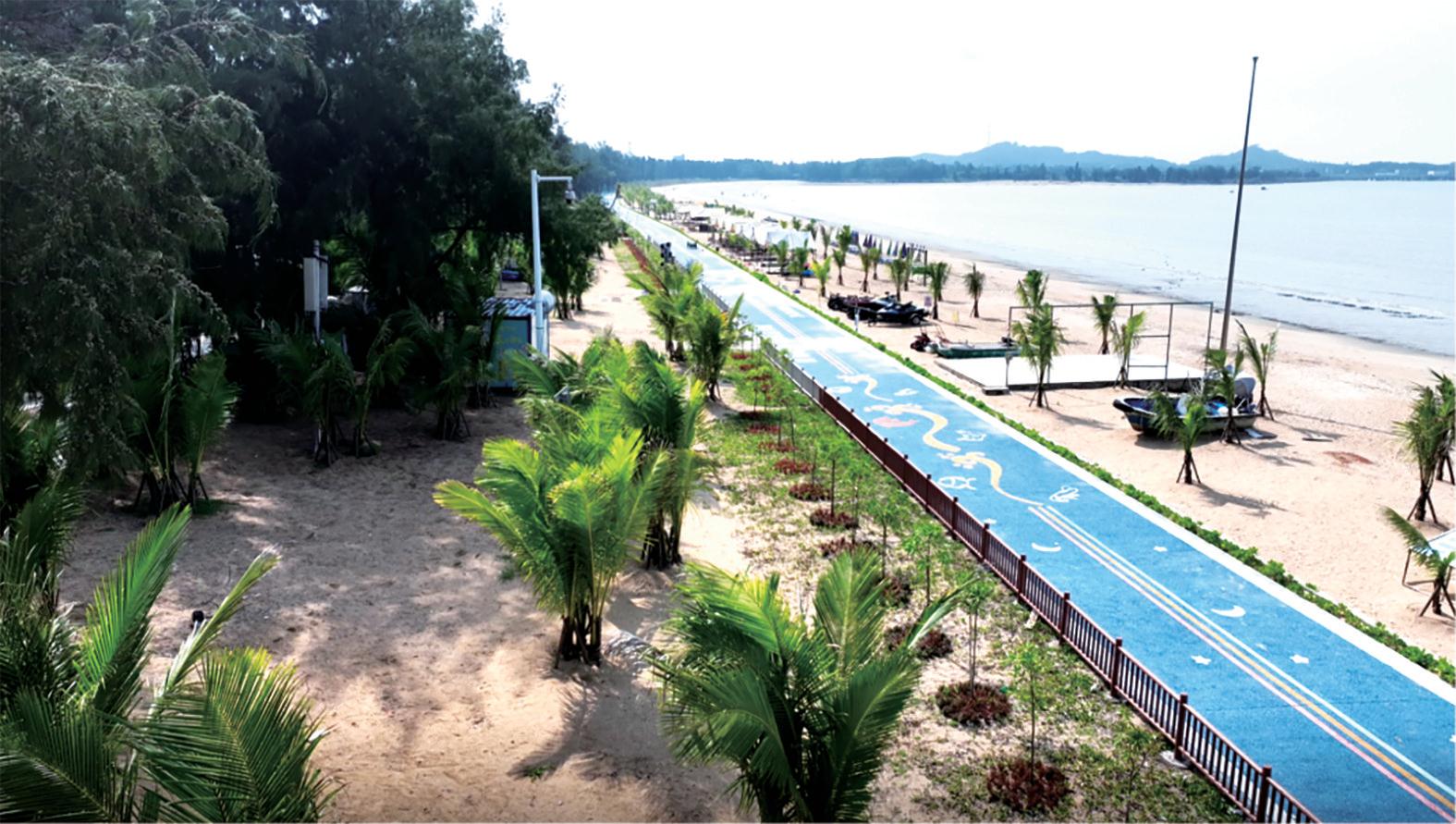
Core Insights - The first "China-Portugal" carbon trading transaction took place in Zhuhai, Guangdong, marking a significant step in ecological product value internationalization and green economic cooperation between China and Portuguese-speaking countries [1][2] Group 1: Transaction Details - The transaction involved a combination of local Zhuhai species carbon credits from the golden beach tamarisk and internationally certified carbon credits from Portuguese-speaking countries, successfully listed on the Macau International Carbon Emission Trading Exchange [1] - Zhuhai Jinwan Enterprise, Maike Hotel, purchased the carbon credit combination specifically for the low-carbon hotel project for the 15th National Games, aiming to offset operational carbon emissions [1] Group 2: Research and Development Support - The transaction was supported by the South China Sea Ecological Center's blue carbon research achievements, which focused on the unique golden beach tamarisk ecosystem in Nanshui Town, Zhuhai [1] - The center has been actively conducting research on carbon credit measurement methodologies, mechanisms, and trading systems, successfully quantifying the carbon credits from the golden beach tamarisk for this transaction [1] Group 3: Future Implications - This successful transaction serves as a "Guangdong model" for the market-oriented utilization of blue carbon resources, providing a practical case for expanding ecological product value realization channels [2] - The South China Sea Ecological Center plans to continue deepening blue carbon scientific research and standardizing measurement methodologies in collaboration with various parties, contributing to high-level ecological protection and quality development in the Guangdong-Hong Kong-Macao Greater Bay Area [2]
碧海红树间的全球海湾治理方案
Zhong Guo Zi Ran Zi Yuan Bao· 2025-10-21 06:07
Core Viewpoint - The ecological restoration practices in Qinzhou, Guangxi, have gained international recognition, showcasing a successful model for coastal ecological governance and sustainable development [2][4]. Group 1: International Recognition - The Qinzhou Bay ecological disaster reduction case has been recognized as one of the nine global exemplary cases, marking the third time Guangxi's coastal ecological restoration projects have appeared on the international stage this year [4]. - The case was awarded as an excellent example at the third United Nations Ocean Conference in Nice, France, and received funding as a key project under the "Ocean Decade" initiative in Qingdao, Shandong [4]. Group 2: Historical Context - Qinzhou Bay faced severe ecological crises due to storm surges and human activities, leading to significant coastal erosion and habitat degradation [6]. - The area, crucial for the Beibu Gulf Economic Zone, experienced a retreat of the coastline and damage to its natural resources, impacting local fisheries and tourism [6]. Group 3: Ecological Restoration Efforts - A comprehensive coastal protection system has been established, integrating "beach-slope-protective forest" and "mangrove-ecological slope" strategies to enhance ecological resilience [8]. - The region has successfully restored 512.99 hectares of mangroves and 33.94 kilometers of coastline, achieving wave height reduction rates of up to 63.7% [8]. Group 4: Economic and Social Impact - The ecological restoration has translated into tangible economic benefits, with the first mangrove carbon trading in Guangxi completed in 2024, promoting the marketization of blue carbon resources [11]. - Tourism in the restored areas surged, with 3.213 million visitors and a consumption of 2.722 billion yuan in 2024, significantly boosting local employment and economic activity [12].