薪酬问责机制

Search documents
重磅文件落地!事关基金经理薪酬改革
凤凰网财经· 2025-12-06 12:39
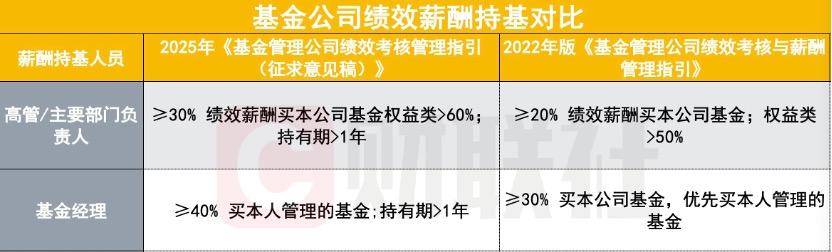
Core Viewpoint - The article discusses the newly released "Guidelines for Performance Assessment and Compensation Management of Fund Management Companies (Draft for Comments)", which aims to standardize performance assessment and compensation management in the fund industry, ensuring long-term incentives are aligned with the interests of fund shareholders [3][9]. Summary by Sections Performance Assessment and Compensation Structure - The guidelines emphasize strengthening performance assessments, requiring that the weight of long-term performance indicators (over three years) in overall quantitative assessments should not be less than 80% [4][10]. - For senior management, the weight of investment return indicators in performance assessments should be at least 50% [11]. Investment in Own Funds - Senior management and key personnel are required to invest a minimum of 30% of their total performance compensation in their company's funds, with at least 60% of that in equity funds [5][15]. - Fund managers must invest at least 40% of their total performance compensation in the funds they manage, excluding non-equity products [5][15]. Salary Adjustments Based on Performance - Fund managers whose performance lags behind the benchmark by more than 10% over three years and have negative profit margins will see a minimum 30% reduction in their performance compensation [6][16]. - The guidelines establish a tiered adjustment mechanism for performance compensation based on the fund's performance relative to benchmarks [16]. Long-term Incentives and Accountability - The guidelines allow for the use of equity, options, and other long-term incentives to align employee interests with the long-term benefits of fund shareholders [9][18]. - A strict accountability mechanism is introduced, which includes salary stoppage, recovery, and clawback provisions applicable even to departing employees [19]. Overall Compensation Management - Fund management companies are encouraged to manage total compensation budgets effectively, linking changes in total compensation to fund performance and company profitability [17]. - The structure of compensation should include basic salary, performance pay, benefits, and long-term incentives, ensuring a balanced approach to avoid risks associated with unreasonable compensation structures [18].

见证历史!基金经理薪酬重大改革来了,信息量很大
中国基金报· 2025-12-06 11:34
Core Viewpoint - The recently issued "Guidelines for Performance Assessment and Compensation Management of Fund Management Companies (Draft for Comments)" emphasizes the binding mechanism between compensation and performance for fund personnel, aiming to prioritize the interests of fund shareholders and promote the sustainable development of the public fund industry [2][4]. Summary by Sections Performance Assessment System - The guidelines advocate for a performance assessment system centered on fund investment returns, combining quantitative and qualitative methods to determine performance indicators while ensuring consistency and continuity [4][17]. Key Performance Indicators - The guidelines stress the importance of indicators such as "fund product performance" and "profitable investor ratio" [5][17]. - For quantitative assessment, the weight of long-term indicators (over three years) in fund investment returns should not be less than 80% [6]. - For senior management, the weight of fund investment return indicators should be at least 50% [7]. Self-Purchase Requirements - Senior management must use at least 30% of their total performance compensation to purchase the company's funds, while fund managers must invest at least 40% of their performance compensation [9]. Salary Adjustment Mechanism - Fund managers whose performance lags the benchmark by over 10% and have negative profit margins must face a salary reduction of at least 30% [10]. Accountability Mechanism - The guidelines require the establishment of a strict accountability mechanism for compensation management, applicable even to departing employees [11]. Dividend Distribution Constraints - Fund management companies should lower dividend frequency and ratios for funds with poor performance and significant investor losses over the past three years [12]. Compensation Structure Optimization - The guidelines call for an optimized compensation distribution structure, favoring frontline and grassroots employees while controlling salary increases for senior management [14]. Long-term Incentive Mechanism - Fund management companies are encouraged to implement long-term incentive mechanisms linked to the company's development and the long-term interests of fund shareholders [15]. Basic Principles - The guidelines adhere to principles that align with national policies, prioritize shareholder interests, effectively motivate personnel, and balance the interests of shareholders and other stakeholders [17].

基金经理薪酬重大改革征求意见 业绩不达标可能降薪超30%
Sou Hu Cai Jing· 2025-12-06 09:53
Core Viewpoint - The newly released "Guidelines for Performance Evaluation and Compensation Management of Fund Management Companies (Draft for Comments)" aims to standardize performance evaluation and compensation management in the fund management industry, promoting sustainable development and robust operations by aligning employee incentives with long-term fund performance [1][2]. Summary by Sections Performance Evaluation - The guidelines emphasize strengthening performance evaluation, requiring that the weight of long-term investment return indicators (over three years) in overall quantitative assessments must not be less than 80% [2][9]. - For senior management, the weight of investment return indicators should be at least 50%, while for active equity fund managers, the performance indicators should account for no less than 80% [2][10]. Compensation Structure - Fund company executives must invest at least 30% of their annual performance compensation in their own company's funds, with fund managers required to invest at least 40% [3][16]. - The deferred payment of performance compensation must last for at least three years, with a minimum of 40% of the deferred payment for senior management and key personnel [3][16]. Salary Adjustments - Fund managers whose performance lags behind the benchmark by more than 10% over three years and have negative profit margins will face a minimum 30% reduction in their performance compensation [4][17]. - A tiered adjustment mechanism for performance compensation is established based on the fund's performance relative to benchmarks [17][18]. Long-term Incentives - The guidelines allow for the use of equity, options, and other long-term incentives to align with the long-term interests of fund shareholders [6][19]. - The compensation structure should include basic salary, performance pay, benefits, and long-term incentives, ensuring a balanced approach to avoid risks associated with unreasonable compensation structures [19][20]. Accountability Mechanism - A strict accountability mechanism is mandated, which includes salary suspension, recovery, and clawback provisions applicable even to departing employees [7][21]. - Fund management companies must clearly define the conditions under which performance compensation can be reduced or reclaimed in their internal management systems and contracts [21].